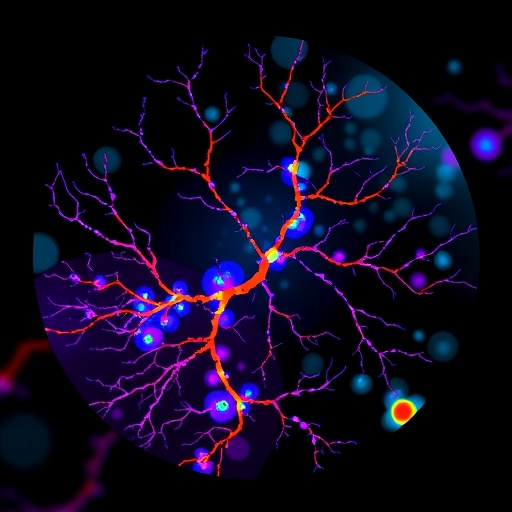
Anti-angiogenic drugs were expected to starve tumors by cutting off their blood supply. Yet many cancers eventually adapt, finding alternative ways to grow new vessels even when vascular endothelial growth factor, or VEGF, is blocked. A new study published in Science Bulletin points to a previously underappreciated driver of this resistance: tumor-educated pericytes, the vessel-associated cells that surround and stabilize blood vessels inside tumors.
Researchers from Sun Yat-sen University Cancer Center and collaborating institutions have constructed what they describe as the first systematic pan-cancer single-cell atlas of tumor angiogenesis. The team analyzed approximately 1.24 million individual cells from 381 tumor samples representing 13 common cancer types, including breast, colorectal, gastric, liver, and lung cancers. By examining gene activity cell by cell, the investigators mapped the cellular networks that promote abnormal blood-vessel formation across diverse malignancies.
Angiogenesis is essential for tumors that outgrow the oxygen and nutrients available through diffusion. Cancer-associated blood vessels are typically disorganized, leaky, and structurally unstable, creating regions of hypoxia that can further alter tumor and stromal cells. Drugs such as bevacizumab and other anti-VEGFR therapies interfere with this process by blocking signals that stimulate endothelial cells, the cells lining blood vessels. Although these treatments can slow disease in some patients, their benefits are often temporary, and resistance is common.
The new atlas revealed that pericytes and the molecules they release are strongly associated with angiogenic activity across cancer types. Pericytes normally wrap around microvessels and help regulate vascular stability, permeability, and blood flow. Within tumors, however, these cells can be reprogrammed by abnormal signaling and a hostile microenvironment. The researchers identified a distinct population known as MCAM-positive immature pericytes, or MCAM+ imPCs, which emerged as a major source of two potent pro-angiogenic factors: placental growth factor, known as PGF, and angiopoietin-2, or ANGPT2.
PGF and ANGPT2 can support blood-vessel growth through pathways that are not fully dependent on VEGF. ANGPT2, in particular, can destabilize existing vessels and make them more responsive to additional angiogenic signals, while PGF can promote endothelial-cell activation and vascular remodeling. The study indicates that MCAM+ imPCs are shaped by dysregulated Notch signaling and hypoxic stress in the tumor microenvironment. In effect, these cells appear to function as an alternative angiogenic engine, allowing tumors to maintain or restore vascular growth despite VEGF pathway inhibition.
Laboratory experiments provided evidence that the MCAM+ imPC population is not merely correlated with treatment failure but actively contributes to it. In cell-based and animal studies, the pericytes stimulated alternative vascular responses and reduced the effectiveness of anti-VEGFR treatment. Clinical analyses reinforced the finding. Among patients with ovarian cancer, urothelial cancer, and glioblastoma who received bevacizumab, higher levels of MCAM+ imPCs were associated with shorter overall survival and progression-free survival. These observations suggest that the abundance of these cells could eventually serve as a biomarker for identifying tumors likely to resist anti-angiogenic therapy.
The investigators then tested a strategy designed to eliminate the cellular source of the resistance signals. They developed an MCAM-targeting antibody-drug conjugate, or ADC, capable of recognizing the MCAM protein on the surface of the immature pericytes and delivering a cytotoxic payload. Rather than blocking a single secreted factor, the approach is intended to remove the pro-angiogenic cell population responsible for producing PGF and ANGPT2. This distinction could be important because tumor cells and stromal cells often compensate when one signaling molecule is inhibited.
When the MCAM ADC was combined with anti-VEGFR therapy, the treatment produced stronger suppression of angiogenesis and tumor growth than either treatment alone in mouse models of breast, renal, and lung cancers. The researchers describe the approach as dual endothelial-cell and pericyte inhibition. Anti-VEGFR drugs primarily disrupt signaling to endothelial cells, while the ADC targets the pericyte compartment that supports alternative vessel formation. By attacking both parts of the tumor vascular system, the combination may make it more difficult for tumors to bypass treatment.
Safety studies in the experimental models also produced encouraging results. The MCAM ADC did not cause significant changes in body weight, blood-cell counts, liver function, kidney function, or blood-brain barrier integrity. These findings do not establish clinical safety, but they provide preliminary support for further development. A humanized version of the therapy, AMT-253, is already being evaluated in a first-in-human Phase I trial listed under ClinicalTrials.gov identifier NCT05906862. Early-stage trials are primarily designed to assess safety, dosing, and tolerability rather than to prove effectiveness.
The study reframes anti-angiogenic resistance as a problem involving more than endothelial cells and VEGF. It suggests that the tumor microenvironment contains specialized support cells capable of preserving vascular growth through parallel molecular routes. If the findings are confirmed in larger clinical studies, MCAM+ immature pericytes could become both a therapeutic target and a predictive marker for anti-angiogenic treatment. The researchers say their pan-cancer atlas and dual-targeting strategy may help guide more durable vascular therapies, although the clinical value of MCAM ADCs will depend on results from ongoing human trials.
The work was led by Professors Xu Ruihua, Liu Zexian, and Luo Huiyan of Sun Yat-sen University Cancer Center, who served as co-corresponding authors. Dr. Zheng Yongqiang, Dr. Sun Hui, Dr. Fu Zhe, Dr. Chen Haojie, and Dr. Cai Guangyao were listed as co-first authors. The research was supported by Chinese national, provincial, and institutional funding programs, including the National Key R&D Program of China, the National Natural Science Foundation of China, and programs supporting young investigators and postdoctoral researchers.
Subject of Research: Tumor angiogenesis, anti-angiogenic therapy resistance, MCAM-positive immature pericytes, and MCAM-targeting antibody-drug conjugates.
Web References: https://doi.org/10.1016/j.scib.2026.06.022; ClinicalTrials.gov identifier NCT05906862
References: Science Bulletin, DOI: 10.1016/j.scib.2026.06.022
Image Credits: © Science Bulletin / Authors
Keywords: cancer research, tumor angiogenesis, pericytes, VEGF, anti-angiogenic therapy, bevacizumab, MCAM, MCAM ADC, AMT-253, PGF, ANGPT2, cancer drug resistance, single-cell analysis, tumor microenvironment, antibody-drug conjugate
Tags: anti-VEGF therapy resistancecellular networks in tumor angiogenesiseffects of anti-angiogenic drugs on tumormechanisms of tumor blood vessel formationpan-cancer analysis of angiogenesisresistance mechanisms like tumor-educated pericytes can promote anti-angiogenic therapy resistancerole of pericytes in tumor progressionsingle-cell genomics in cancertumor angiogenesistumor hypoxia and microenvironmenttumor microenvironmenttumor vasculature normalizationtumor-altered vascular stability