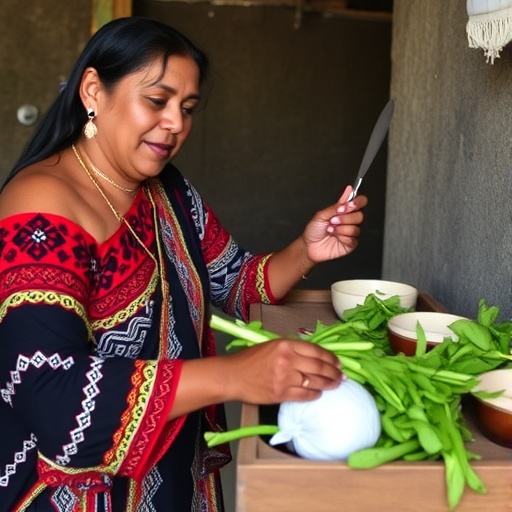
Indigenous and traditional knowledge is increasingly recognized as a resource for addressing the intertwined crises of climate change, biodiversity loss, and public health and nutrition failures. Yet a persistent mismatch remains: health and nutrition education often arrives through top-down, medicalized programming that sidelines local food knowledge and communicative practices. A new systematic review now asks a sharper question—why does this pattern endure, and what would it take to change it?
Drawing on 39 peer-reviewed studies, the research maps the mechanisms that keep conventional approaches dominant across Indigenous health and nutrition contexts. The review highlights how curricula, institutional incentives, and professional norms can privilege biomedical explanations over community-defined food priorities. As a result, learning is frequently framed as information transfer rather than as shared practice, reducing space for culturally grounded learning.
At the center of the proposed shift is “food systems literacy”—a set of knowledge, skills, and communicative practices that help people engage with food systems as living networks. These networks include production, processing, distribution, preparation, and cultural meaning. The review argues that literacy, not just nutrition facts, is what enables learners to connect diet to ecosystems, labor, governance, and wellbeing.
The studies also emphasize the role of worldviews and knowledge production in shaping what counts as evidence. When interventions treat Indigenous knowledge as anecdotal or supplementary, participatory methods struggle to take root. In contrast, interventions that treat local knowledge as co-equal generate learning environments where community members steer goals, methods, and evaluation.
Across regions and program types, the review identifies examples of communicative and learning practices that strengthen food systems literacy. These include participatory teaching, community-driven information exchange, and education formats that embed food practices in daily routines and seasonal cycles. Institutions that enable these approaches—through long-term partnerships and culturally responsive facilitation—show greater alignment between nutrition outcomes and food sovereignty goals.
Importantly, the review does not romanticize “traditional” knowledge; it points to the practical challenge of implementing knowledge pluralism within health systems. That means building institutional pathways for translating community priorities into program design, rather than forcing communities to adapt to externally defined categories.
The findings arrive as urgency grows for solutions that can be both health-promoting and ecologically resilient. By reframing nutrition education as a literacy project grounded in Indigenous worldviews, the review outlines a pathway toward more equitable, sustainable, and healthier food systems.
Subject of Research: Indigenous health and nutrition; food systems literacy
Article Title: Food systems literacy in Indigenous health and nutrition
Article References: Rao, N., Binesse, H. & Vinod, A. Food systems literacy in Indigenous health and nutrition. Nat Food (2026). https://doi.org/10.1038/s43016-026-01392-3
Image Credits: AI Generated
DOI: https://doi.org/10.1038/s43016-026-01392-3
Tags: challenges of top-down health education in indigenous contextscommunity-based nutrition literacyconnecting ecosystems and nutrition through food literacyculturally grounded food practicesfood systems literacy for indigenous communitiesimpact of biomedical approaches on indigenous healthIndigenous food systems educationindigenous knowledge preservation and health outcomesparticipatory learning in indigenous food systemsrole of communicative practices in indigenous nutritionsystemic change in indigenous health educationtraditional knowledge integration in public health