A new spatial genomics platform is aiming to make cancer immunotherapy more precise by revealing where, in a patient’s tumor, the immune system is actually recognizing malignant targets. The approach, called Slide-GoTags, combines single-nucleus RNA sequencing with targeted transcript genotyping and T-cell receptor (TCR) sequencing, all from the same slice of frozen tissue. By keeping molecular and positional information in register, it promises a more direct way to connect specific neoantigens to their cognate T cells.
Neoantigens—mutated peptides presented on tumor cells—are widely viewed as key drivers of effective immune responses. Yet mapping which T cells recognize which neoantigens has been difficult, especially in tissues where immune cells and tumor cells coexist in complex, changing microenvironments. Existing methods often infer interactions indirectly, using dissociated cells that lose spatial context.
Slide-GoTags addresses that limitation using a droplet-based single-nucleus spatial transcriptomics workflow. The technique captures transcript sequences from individual nuclei while also performing targeted transcript genotyping to identify neoantigen expression. In parallel, TCR sequencing profiles clonotypes, enabling researchers to trace whether expanded T-cell lineages align with the presence of their predicted or observed neoantigen targets.
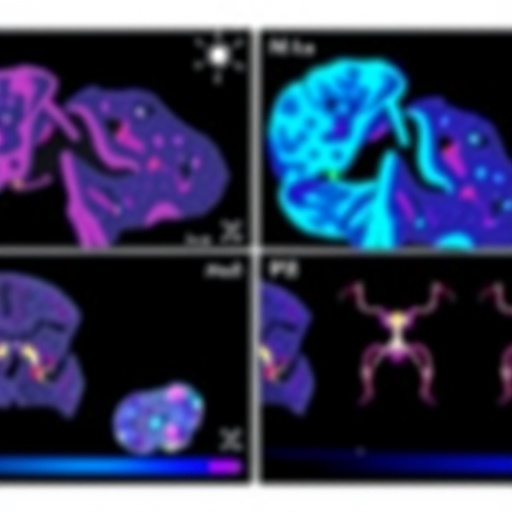
When tested in mouse and human tumors, the method revealed spatial colocalization between clonally expanded, neoantigen-specific T cells and tumor cells expressing the corresponding cognate neoantigen. Rather than showing immune signals as diffuse averages, the results highlight that recognition occurs in localized regions where tumor cells and responding T cells occupy the same neighborhood.
The study also explored how therapies reshape these immune neighborhoods. In a mouse colorectal cancer model, tumors treated with either anti-PD1 or anti-CTLA4 displayed distinct spatial immune landscapes, indicating that checkpoint blockade does not merely increase T-cell activity but reorganizes the tissue-level layout of antitumor immunity.
Across multiple human tumor types, Slide-GoTags detected TCR–neoantigen interactions through spatial proximity. Importantly, it distinguished immunologically “hot” tumors from “cold” tumors by identifying enrichment of interferon-driven immunogenicity niches. These niches represent localized microenvironments where innate and adaptive signaling programs converge.
Within the interferon-driven niches, the researchers found three T-cell clonotypes that colocalized with genotyped neoantigens. That concordance suggests a spatially organized antitumor response, where specific expanded lineages are repeatedly recruited to regions where their targets are presented.
By translating neoantigen specificity into in situ maps at single-nucleus resolution, Slide-GoTags provides a framework for directly visualizing T cell–tumor interactions from individual tissues. If it scales to clinical workflows, the approach could accelerate the matching of patients to precision immunotherapies based on which neoantigen–TCR pairs are actually active in their own tumors.
Subject of Research: Cancer immunotherapy and spatial transcriptomics
Article Title: Single-nucleus multimodal spatial transcriptomics reveals spatial colocalization of neoantigen-expressing tumor cells and cognate T cells.
Article References: Nagler, A., Sud, A., Ghannam, J.Y. et al. Nat Biotechnol (2026). https://doi.org/10.1038/s41587-026-03194-1
Image Credits: AI Generated
DOI: https://doi.org/10.1038/s41587-026-03194-1
Keywords: Slide-GoTags; single-nucleus multimodal spatial transcriptomics; neoantigen; TCR sequencing; interferon-driven immunogenicity; checkpoint blockade; spatial colocalization
Tags: cancer immunotherapy precision mappingdroplet-based single-nucleus RNA sequencingmapping T-cell recognition of neoantigensneoantigen tumor cell mappingneoantigen-specific T cell clonal expansionsingle-nucleus spatial transcriptomicsspatial genomics of cancer immunotherapyspatial transcriptomics in mouse and human tumorsT-cell receptor sequencing in tumor microenvironmenttargeted transcript genotyping for neoantigen detectiontumor microenvironment spatial profilingtumor-immune cell colocalization analysis