


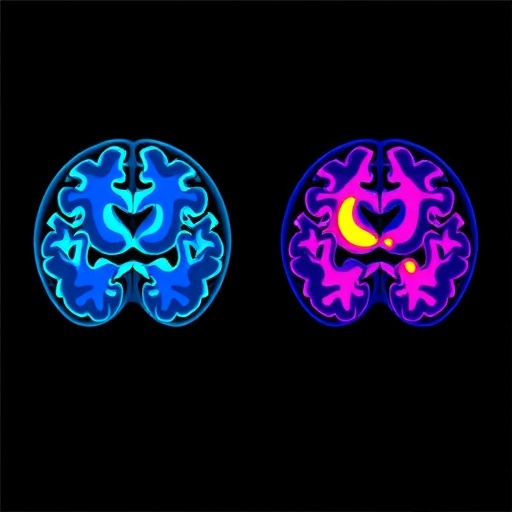
A new review in Nature Reviews Neurology argues that the striking variability of Lewy body disease—ranging from fluctuating symptoms to different patterns of neurodegeneration on brain scans—may be explained by a “brain-first versus body-first” (BvB) framework. Rather than treating Lewy pathology as a single, uniform process, the authors propose that it can originate in fundamentally different peripheral or central sites, leading to distinct clinical trajectories.
In the BvB model, Lewy pathology may begin either in autonomic nerves serving the gut and other peripheral neurons (“body first”) or in the olfactory bulb, from which it spreads into limbic circuits (“brain first”). In both routes, the earliest steps are thought to occur largely outside the central nervous system, potentially after exposure to external triggers such as infectious agents or toxins.
The review highlights how timing differences in early symptoms can map onto these pathways. Some people develop autonomic dysfunction and sleep disturbances years before a formal diagnosis, whereas others show these features only after clinical onset—suggesting non-identical underlying origins.
A key technical observation concerns neurodegeneration sequence. Among individuals with prodromal sleep disorders, cardiac sympathetic denervation reportedly appears about a decade before nigrostriatal degeneration. In contrast, in those lacking such sleep prodromes, the order of degeneration is reversed, aligning with the idea that pathology may start in different anatomical “entry points.”
Pathology gradients at post-mortem also support the model. Studies frequently report either bottom-up patterns consistent with peripheral initiation (“body first”) or top-down patterns consistent with an olfactory-first route (“brain first”), implying that spread follows anatomy-dependent routes rather than a single linear cascade.
The review critically evaluates these findings while acknowledging limitations, including variability in how prodromal symptoms are recorded and differences across imaging and pathology methods. It also emphasizes that not all cases may fit neatly into two categories, and mixed or intermediate patterns could occur.
Beyond explaining heterogeneity, the BvB framework could reshape diagnostics. It points toward stratifying patients based on early autonomic and sleep signatures, and toward imaging or biomarker strategies that reflect the expected temporal order of neuronal loss in each subtype.
Therapeutic implications are equally important: interventions aimed at early peripheral processes might benefit body-first patients differently than strategies targeting central spread would for brain-first patients. Preventive approaches could likewise leverage the model’s hypothesis of exogenous triggers that initiate pathology before CNS involvement becomes detectable.
Finally, the authors outline future research directions, including tighter longitudinal studies linking peripheral biomarkers, imaging, and post-mortem patterns in larger cohorts. If validated, the BvB model could become a practical blueprint for translating mechanistic diversity into precision medicine for Lewy body disease.
Subject of Research: Lewy body disease subtypes; brain-first vs body-first progression model
Article Title: Brain-first and body-first subtypes of Lewy body disease.
Article References: Borghammer, P., Van Den Berge, N., Berg, D. et al. Brain-first and body-first subtypes of Lewy body disease. Nat Rev Neurol (2026). https://doi.org/10.1038/s41582-026-01241-8
Image Credits: AI Generated
DOI: 10.1038/s41582-026-01241-8
Keywords: Lewy body disease, brain-first, body-first, prodromal sleep disorders, autonomic dysfunction, olfactory bulb, cardiac sympathetic denervation, nigrostriatal degeneration
Tags: autonomic dysfunction in Lewy body diseasebrain-first versus body-first subtypesearly clinical symptoms in Lewy body diseaseheterogeneity of Lewy body disease clinical trajectoriesinfectious triggers and toxins in Lewy disease developmentLewy body diseaseneurodegeneration pathways in Lewy pathologyneurodegenerativeneuroimaging patterns in Lewy body diseaseolfactory bulb involvement in Lewy pathologyperipheral versus central origins of Lewy diseaseprogression of sleep disturbances in Lewy pathology


