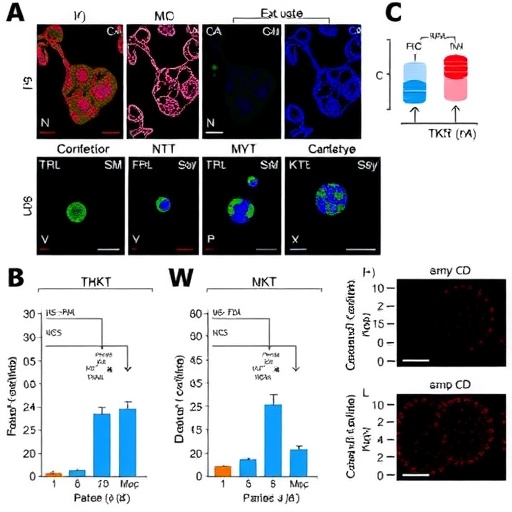
A brief update published in Cell Death Discovery revisits how a signaling circuit helps hepatocellular carcinoma (HCC) withstand one of the clinic’s key tools: TACE, or transarterial chemoembolization. The correction concerns a study claiming that a self-reinforcing molecular loop links the enzyme transketolase (TKT) with the oncogenic transcription factor c-Myc. Together, they are reported to amplify pathways that blunt the therapy’s effectiveness.
TACE works by delivering chemotherapy directly into liver tumors and simultaneously blocking blood flow, creating a stress environment that cancer cells must survive. However, many HCC cases eventually show resistance, reducing long-term control. Understanding the molecular “survival logic” behind that resistance is therefore central for developing better therapeutic combinations.
The study’s core concept is a positive feedback mechanism. According to the corrected framework, changes involving TKT increase activity or expression of c-Myc, while c-Myc in turn promotes upstream and downstream gene programs that sustain TKT-associated metabolic and stress-adaptation traits. This looping reinforcement helps tumor cells tolerate treatment-induced damage rather than succumbing.
Mechanistically, the TKT–c-Myc axis is tied to cancer metabolism and transcriptional regulation. By coupling metabolic support to growth-promoting gene expression, the circuit is positioned to improve redox balance, biosynthetic supply, and survival under the hypoxic, nutrient-stressed conditions created by TACE.
Importantly for translational implications, such a loop suggests that simply applying TACE repeatedly may fail if the tumor can rapidly re-engage the same resistance program. Instead, the findings point toward the possibility of combining TACE with strategies that disrupt either TKT function or c-Myc-driven transcriptional outputs.
Because the publication is a correction rather than a new experimental study, readers are encouraged to focus on what specifically has been amended—whether it affects data interpretation, figure labeling, or reported causal relationships within the proposed signaling model. Even small inaccuracies can matter when the proposed mechanism motivates future drug targeting.
Still, the corrected message keeps the broader narrative intact: resistance in HCC may be actively programmed through an internal regulatory circuit rather than arising solely from random selection. Viral science news reporters emphasize that corrections like this are part of how biomedical literature self-corrects while refining which molecular targets might be most actionable.
Taken together, the update strengthens the rationale for evaluating TKT and c-Myc as candidate nodes for combination therapies designed to prevent or reverse TACE resistance in liver cancer patients.
Subject of Research: Hepatocellular carcinoma (HCC) and TACE resistance
Article Title: Correction: A positive feedback loop between TKT and c-Myc drives TACE resistance in hepatocellular carcinoma
Article References: Xiao, Y., Liu, M., Zhou, Y. et al. Correction: A positive feedback loop between TKT and c-Myc drives TACE resistance in hepatocellular carcinoma. Cell Death Discov. 12, 308 (2026). https://doi.org/10.1038/s41420-026-03216-6
Tags: cancer metabolic pathwayschemotherapy resistance in liver cancerfeedback loops in cancer signalinghepatocellular carcinomamolecular basis of TACE failureredox balance in cancer cellsstress adaptation in hepatocellular carcinomaTACE resistance mechanismtargeted therapy development for HCCTKT–c-Myc signaling looptranscriptional regulation in HCCtumor survival under hypoxia