Multiple myeloma has long been puzzling: two patients with “the same” diagnosis can diverge dramatically in progression and therapy response. A new study from The University of Texas MD Anderson Cancer Center tackles this problem by looking past the cancer cells alone and instead charting the immune ecosystem living inside bone marrow.
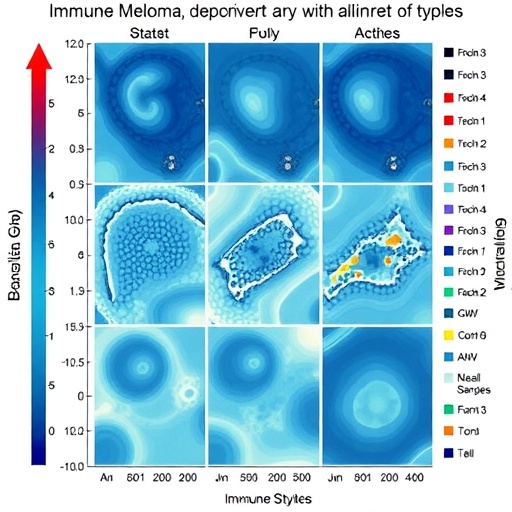
Using advanced single-cell sequencing, the researchers built an atlas from 235 participants spanning precursor conditions, newly diagnosed disease, and relapsed multiple myeloma. Rather than averaging signals across tissues, the team resolved distinct immune-cell populations and the communication patterns linking them.
The resulting map revealed five immune-microenvironment “ecotypes,” each defined by characteristic signaling programs and genetic activity. Crucially, these ecotypes were not fully explained by disease stage. In other words, the immune contexture added structure to the biology that clinicians could not infer from stage alone.
Some ecotypes displayed limited immune infiltration, suggesting a tumor environment that is biologically harder for immune cells to access or activate. Others showed signatures consistent with immune surveillance, cytotoxic T-cell programs, inflammatory signaling, or stress-related immune-cell states.
These differences help explain why tumors can appear more “visible” to the immune system in some patients while remaining suppressed in others—an effect that likely shapes responsiveness to immunotherapies. The study found ecotypes associated with tumor burden, survival, and outcomes after immune-based treatments, including CAR T-cell therapy and T-cell engager approaches.
Notably, several ecotypes were detectable even in precursor conditions. That observation points to a future risk stratification strategy: identifying patients whose immune landscapes already resemble higher-risk disease before overt progression.
The work also highlights therapeutic targets embedded in the immune microenvironment—pathways involving inflammation, metabolic stress, and immune suppression—suggesting combination approaches designed to recondition host immunity rather than treating the tumor in isolation.
As next steps, the team plans to validate the ecotypes in larger cohorts and determine whether they can be measured using practical clinical assays. If successful, the atlas could become a resource for turning immune profiling into more personalized prognostic and treatment decisions.
The journal publication is available in Blood, with the study co-led by Robert Orlowski, M.D., Ph.D., and Linghua Wang, M.D., Ph.D.
Subject of Research: Tumor immune microenvironment in multiple myeloma
Article Title: Single-Cell Analysis of the Tumor Microenvironment
News Publication Date: July 14, 2026
Web References: https://ashpublications.org/blood/article-abstract/doi/10.1182/blood.2025032630/569579/Single-Cell-Analysis-of-the-Tumor-Microenvironment?redirectedFrom=fulltext
References: Blood (doi: 10.1182/blood.2025032630)
Image Credits: The University of Texas MD Anderson Cancer Center
Keywords: multiple myeloma; tumor microenvironment; single-cell sequencing; immune ecotypes; CAR T-cell therapy; cancer immunotherapy; immune infiltration; T-cell activation; tumor immune signaling; biomarker risk stratification
Tags: immune contexture beyond disease stagingimmune ecosystem mapping in hematologic cancersimmune ecotypes in bone marrowimmune response variability in cancerimmune signaling pathways in myelomaimmune surveillance signaturesimmunotherapy response predictors in multiple myelomaMultiple myeloma immune microenvironmentprognostic immune cell populationssingle-cell sequencing in multiple myelomatumor immune infiltration patternstumor-immune communication networks