


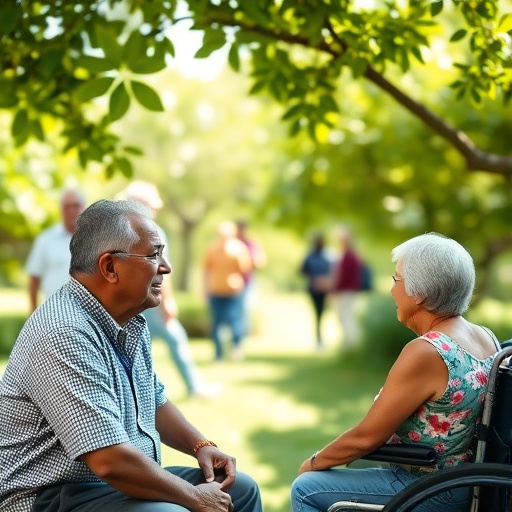
A groundbreaking new study delves into the social challenges facing older adults with disabilities in Brazil, revealing critical factors linked to low social support and participation. Leveraging comprehensive data from Brazil’s 2019 National Health Survey, researchers provide unprecedented insight into the intersection of aging, disability, and social engagement in a rapidly aging society.
The study meticulously analyzes a vast dataset using advanced cross-sectional methodologies, shedding light on the complexities of social dynamics among the disabled elderly population. Social support and active participation are widely recognized as determinants of well-being, yet older adults with disabilities frequently confront barriers that isolate them from these vital resources.
By employing multivariate statistical models, the researchers identified a constellation of risk factors that contribute to diminished social connectivity. Notably, physical limitations significantly reduce opportunities for interactions within community and familial networks. Moreover, socio-economic status emerged as a key modifier, with individuals experiencing financial hardships exhibiting lower levels of social integration.
Geographical disparities, including urban versus rural residence, also influence participation rates. The data indicate that older adults living in remote or underserved areas face compounded challenges, where infrastructural deficiencies and limited access to support services exacerbate isolation. This spatial dimension underscores the need for targeted policy interventions addressing regional inequities.
Mental health status was another critical variable revealed by the study. Depression and other psychological conditions often coincided with reduced social support, suggesting a bidirectional relationship where poor mental health both results from and contributes to social withdrawal. This finding amplifies calls for integrated health and social care programs tailored to older disabled populations.
Importantly, the research highlights gender differences, with women reporting lower social participation despite often holding central roles in familial caregiving. This paradox accentuates complex societal dynamics and points to the necessity for gender-sensitive approaches in support frameworks.
The implications of these findings are profound. They not only emphasize the urgent requirement to bolster social capital and reduce isolation among the elderly disabled but also provide a data-driven foundation for crafting nuanced, multifaceted public health strategies. Enhanced social inclusion promises not only improved quality of life but also potential reductions in healthcare costs associated with chronic conditions and mental health decline.
Ultimately, this extensive study contributes a vital piece to the global puzzle of aging in place and disability support. By illuminating the multifactorial challenges impeding social participation, it paves the way for innovative interventions and policies designed to foster resilience and community integration in Brazil’s aging population—a model that could inspire similar efforts worldwide.
Subject of Research:
Article Title:
Article References:
da Silva, É.G.C., de Sousa Mata, M., de Souza, D.E. et al. Factors associated with low social support and participation among Brazilian older adults with disabilities: a cross-sectional study based on the 2019 national health survey. BMC Geriatr (2026). https://doi.org/10.1186/s12877-026-07910-z
Image Credits: AI Generated
DOI: 10.1186/s12877-026-07910-z
Keywords: Social support, elderly disability, social participation, aging population, Brazil, mental health, socio-economic factors
Tags: aging and disability in BrazilBrazil National Health Survey data analysis on agingcommunity and familial support for disabled elderlydisabled older adults in Brazilimpact of socioeconomic status on social supportinfrastructure challenges affecting disabled seniorsphysical limitations and social connectivity among older adultspolicy interventions for social inclusion of disabled elderlyrural-urban disparities in elderly social engagementsocial isolation risk factors in disabled older populationssocial participation barriers in elderly populationssocial support for elderly with disabilities


