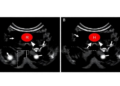
Scientists have unveiled a cutting-edge method to predict genetic mutations driving lung cancer, bypassing the need for conventional, costly, and time-consuming laboratory genetic tests. This innovative technology harnesses fluorescence lifetime imaging microscopy (FLIM) combined with artificial intelligence to analyze natural light emissions from biopsy tissues, offering a rapid, non-destructive alternative for detecting key mutations.
Lung cancer remains the foremost cause of cancer mortality globally, with mutations in genes like EGFR playing a crucial role in guiding targeted therapies. Traditional mutation detection relies heavily on genetic sequencing or tissue staining, processes that may consume precious biopsy material and require extended turnaround times. The scarcity of biopsy samples, especially from early detected cancers, compounds these challenges.
The research team from the University of Edinburgh and NHS Lothian employed FLIM, a technique that captures the fluorescence decay properties of cellular molecules under a microscope. By applying AI algorithms to these fluorescence signatures, the system identifies patterns indicative of EGFR mutations with remarkable precision. Not only can it detect the presence of mutations, but it also differentiates between the two predominant EGFR mutation types that influence treatment regimens.
This breakthrough has profound clinical implications. As lung cancer screening becomes more widespread, the demand for rapid and accurate diagnostics using minimal tissue is increasing. The FLIM-AI approach preserves biopsy samples intact, enabling further analyses if required, and drastically shortens diagnostic timelines from weeks to mere minutes, potentially reducing costs from thousands to hundreds of pounds. This efficiency is particularly transformative for healthcare settings with limited access to molecular testing infrastructure.
Previously, the same group demonstrated FLIM’s ability to discriminate among major categories of non-small cell lung cancer and benign tissues. Building on that success, their current findings push the frontiers of personalized medicine by enabling mutation-specific insights without genetic sequencing.
Looking ahead, the researchers aim to validate these results in clinical trials and explore extensions of the technology to other cancer types and actionable mutations. Integration into standard clinical workflows could revolutionize cancer diagnostics, fostering faster, more precise therapeutic decisions.
This research was published in the journal Cancer Research and supported by NVIDIA Academic Hardware, the Pathological Society, and UK Research and Innovation. The team’s pioneering work promises to reshape how lung cancer mutation testing is conducted worldwide.
Subject of Research: Lung cancer mutation detection using fluorescence lifetime imaging microscopy and AI
Article Title: New FLIM-AI Technique Enables Rapid, Non-Destructive EGFR Mutation Detection in Lung Cancer
Web References: http://dx.doi.org/10.1158/0008-5472.CAN-25-5589
Keywords: Lung cancer, EGFR mutations, fluorescence lifetime imaging microscopy, FLIM, artificial intelligence, cancer diagnostics, non-invasive testing, biopsy preservation
Tags: advanced imaging technologies for early cancer detectionAI-driven genetic mutation prediction in lung cancerclinical impact of fluorescence lifetime imaging in oncologyEGFR mutation detection in lung cancerfluorescence lifetime imaging microscopy for cancer diagnosticsinnovative cancer diagnostic tools using AI and microscopyintegration of AI and microscopy in cancer mutation analysislung cancer mutation detectionnon-destructive biopsy analysis techniquespersonalized targeted therapy for lung cancer patientsrapid lung cancer mutation testing methodsreducing biopsy sample requirements in cancer testing