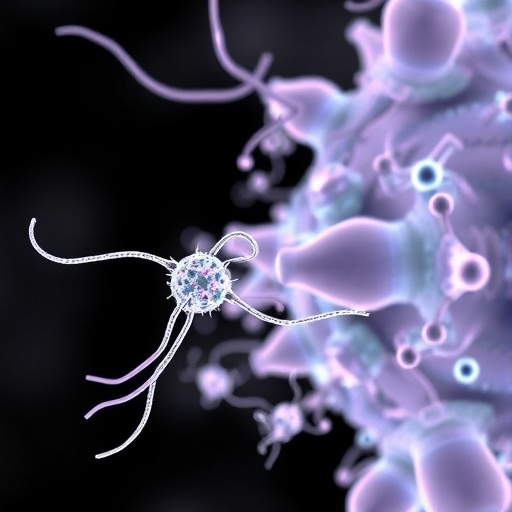
Bacteriophages, viruses specialized in infecting bacteria, are emerging as a powerful foundation for next-generation biosensors capable of rapid and precise pathogen detection. With antimicrobial resistance on the rise, traditional bacterial detection faces challenges, including lengthy culture times and the inability to distinguish live from dead cells. Phages, due to their unparalleled specificity and ability to infect only metabolically active bacteria, present an innovative solution to these limitations.
Unlike polymerase chain reaction (PCR), which can detect nucleic acids from dead bacteria, and antibody-based assays, often sensitive to environmental variations and batch inconsistencies, phage-based biosensors exploit the natural biology of phages. Their intrinsic capacity to target bacteria at the strain level allows for unprecedented specificity. Additionally, the robust proteinaceous capsid of phages imparts environmental stability, enhancing sensor durability in diverse conditions.
The current review, published in Biocontaminant, categorizes phage biosensing into three main modalities. Immobilization-based systems anchor phages onto sensor surfaces, directly capturing target bacteria. Amplification-based approaches harness the phage’s own infection cycle to propagate the signal, amplifying detection sensitivity. Reporter phages, genetically engineered through synthetic biology techniques, emit detectable signals such as fluorescence or electrochemical changes upon infecting viable bacterial hosts. This modular design allows integration with diverse readout technologies, including optical and mass-sensitive platforms, enabling detection times as swift as 30 minutes—dramatically quicker than conventional culture methods.
A critical focus of the review is the engineering of the phage-sensor interface. Random phage immobilization can inadvertently block essential receptor-binding proteins, diminishing capture efficiency. Precision strategies, such as electrostatic orientation, affinity tagging, and bioorthogonal chemistry, ensure proper phage alignment and maintain the accessibility of bacterial recognition domains. These advancements enhance sensor reproducibility and performance.
Synthetic biology also unlocks new potentials for phage biosensors. Techniques like CRISPR-based genome editing allow insertion of reporter genes and modification of host specificity. Directed evolution refines receptor-binding proteins to improve affinity or retarget phages to different bacterial strains. Such iterative design-build-test cycles accelerate the development of adaptive, tailored biosensor platforms.
Looking forward, artificial intelligence promises to revolutionize phage biosensor design by predicting phage-host interactions, optimizing sensor architecture, and anticipating real-world sample complexities before physical trials. The integration of pathogen detection with antibiotic resistance profiling and even immediate therapeutic responses could transform infection management into a seamless, intelligent process.
Despite their promise, phage biosensors face hurdles, including limited host ranges, challenges in complex sample matrices, manufacturing standardization, biosafety considerations, and regulatory pathways. The authors advocate for phage cocktails, modular receptor libraries, standardized databases, and genetic safeguards to overcome these barriers. Ultimately, phage biosensors embody an interdisciplinary convergence of biology, engineering, and computational science, advancing toward portable, adaptive systems that will redefine clinical diagnostics, food safety, and environmental surveillance.
Subject of Research: Pathogen detection using bacteriophage-based biosensors
Article Title: Phage-based biosensors for pathogen detection
News Publication Date: April 21, 2026
Web References: https://doi.org/10.48130/biocontam-0026-0004
References: Wang W, Xue Y, Xu Z, Lin M, Guo Q, et al. 2026. Phage-based biosensors for pathogen detection. Biocontaminant 2: e007
Image Credits: Wei Wang, Yuanyuan Xue, Zihan Xu, Mao Lin, Qingshun Guo & Li Cui
Keywords: Bacteriophages, Biosensors, Synthetic biology, Pathogen detection, Antimicrobial resistance, CRISPR, Artificial intelligence
Tags: amplification-based phage biosensorsbacteriophage biosensorsenvironmental stability of phage biosensorsimmobilization-based bacterial detectionintegration of phage biosensors with optical and electrochemical readoutsnext-generation biosensing technology for bacteriapathogen detection sensors using bacteriophagesphage-based antimicrobial resistance diagnosticsrapid bacterial pathogen detection methodsreporter phages for bacterial detectionstrain-specific bacteriophage detectionsynthetic biology in pathogen sensing