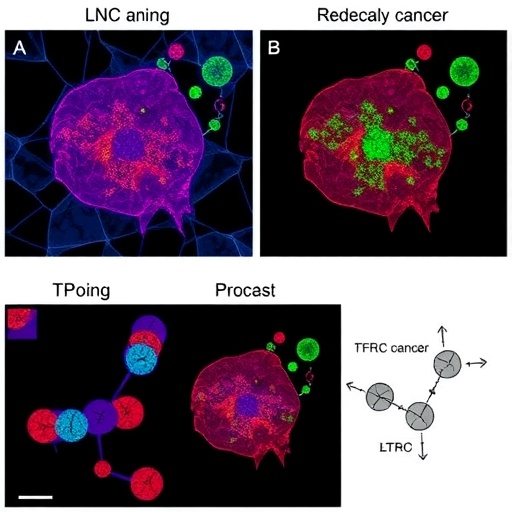
A newly published study reveals a groundbreaking molecular pathway that could reshape our understanding of breast cancer progression. Researchers have identified the long non-coding RNA (lncRNA) LINC01929 as a critical promoter of breast cancer growth, operating through a novel ferroptosis-associated mechanism linked to the transferrin receptor (TFRC).
LINC01929, a previously underexplored RNA molecule that does not code for proteins, has been implicated in various cancers but its precise role remained elusive. This study, appearing in Cell Death Discovery, uncovers how LINC01929 significantly enhances breast tumor development by mediating ferroptosis—a distinct form of regulated cell death characterized by iron-dependent lipid peroxidation.
Central to this mechanism is the transferrin receptor (TFRC), a protein crucial for iron uptake within cells. The research demonstrates that LINC01929 interacts closely with TFRC, ultimately modulating intracellular iron levels. Elevated iron facilitates lipid peroxidation, a hallmark of ferroptosis, but intriguingly, the study shows that cancer cells hijack this pathway to evade death and promote their survival and proliferation.
Using a combination of molecular biology techniques, the team mapped how LINC01929 upregulates TFRC expression, thereby altering the balance of ferroptotic signaling in breast cancer cells. This axis appears to create a permissive environment where cancer cells avoid ferroptosis-driven cell death, enabling sustained tumor growth.
Moreover, the study highlights that interfering with LINC01929 expression or blocking the LINC01929-TFRC interaction sensitizes breast cancer cells to ferroptosis inducers. This finding opens up promising therapeutic avenues, suggesting that targeting this lncRNA or the related ferroptosis pathway may halt tumor progression or enhance the efficacy of existing treatments.
The implications of this discovery are profound. Ferroptosis, once considered a niche cell death modality, is increasingly linked to cancer biology, and this research places LINC01929 as a pivotal regulator within this context. By exploiting ferroptotic pathways, breast cancer cells gain a survival advantage, potentially contributing to treatment resistance and metastasis.
Importantly, the study provides a molecular framework that could guide future drug development focused on lncRNAs and ferroptosis regulators. Given the complexity of ferroptosis in cancer, the identification of LINC01929’s role offers a novel biomarker for prognosis and a new target to enhance therapeutic responses.
As breast cancer remains a leading cause of cancer-related deaths globally, understanding these underlying molecular mechanisms is critical. The research team’s insights into the LINC01929-TFRC-ferroptosis axis shed light on the delicate interplay between iron metabolism, cell death, and tumor biology, highlighting new frontiers for intervention.
Ultimately, this work exemplifies how intricate non-coding RNA networks orchestrate cancer cell fate decisions, underscoring the importance of integrating ferroptosis research into future oncological strategies.
Subject of Research: Breast cancer progression and ferroptosis pathways regulated by long non-coding RNA LINC01929.
Article Title: LINC01929 promotes breast cancer progression through a TFRC-associated ferroptosis pathway.
Article References:
Li, G., Yu, Z., Xu, H. et al. LINC01929 promotes breast cancer progression through a TFRC-associated ferroptosis pathway. Cell Death Discov. (2026). https://doi.org/10.1038/s41420-026-03248-y
Image Credits: AI Generated
DOI: https://doi.org/10.1038/s41420-026-03248-y
Tags: breast cancer progressionferroptosis evasion strategies in breast cancerferroptosis in tumor developmentgene regulation by LINC01929 in canceriron-dependent cell death mechanismslncRNA regulation of ferroptosislong non-coding RNA in cancermolecular pathways in breast cancer growthnon-coding RNAs and tumor survivalnovel therapeutic targets in breast cancerrole of transferrin receptor in cancerTFRC-mediated iron regulation in cancer