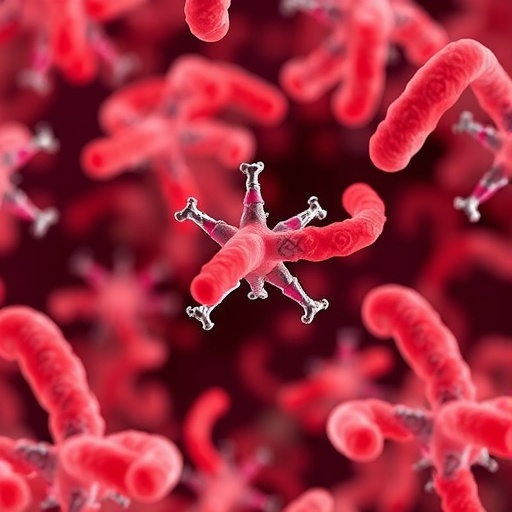
In the escalating battle against antibiotic-resistant infections, a remarkable breakthrough in understanding bacterial mechanics offers new hope. Each year, antibiotic-resistant bacteria claim over a million lives worldwide, largely due to their uncanny ability to evade medicinal interventions. Central to this resilience is a sophisticated bacterial apparatus: the type IV pilus, a microscopic fiber that functions as a biological grappling hook enabling bacteria to adhere to host tissues, form robust biofilms, and capture DNA fragments from their surroundings — including genes conferring antibiotic resistance.
Researchers at Indiana University Bloomington, collaborating with Dartmouth College and the Georgia Institute of Technology, have unveiled the intricate molecular dance that powers these fibers’ extreme mechanical strength. Their findings, recently published in the prestigious Proceedings of the National Academy of Sciences, expose the synergy and coordination between motor proteins PilT and PilU. These proteins are essential for reeling in type IV pili — one of nature’s most forceful biological mechanisms — that allow bacteria to perform feats critical to infection and resistance propagation.
Type IV pili extend from a bacterial surface like whip-like tendrils, capable of retracting with astounding force. This process lies at the heart of pathogenicity for numerous bacteria. For instance, Pseudomonas aeruginosa anchors itself to lung tissue in cystic fibrosis patients via these pili, while Neisseria gonorrhoeae employs them to colonize the urogenital tract. Perhaps most crucially, Vibrio cholerae, the cholera-causing pathogen examined in this study, deploys type IV pili as molecular fishing rods, pulling in DNA that encodes antibiotic resistance, effectively accelerating the spread of drug resistance through horizontal gene transfer.
Understanding how bacteria muster such enormous force through these molecular motors has eluded scientists for years. It was clear that PilT and PilU operate in tandem to snap pili back inside the cell, but the necessity and coordination of this duo remained a mystery until now. Through innovative computational modeling powered by AlphaFold 3 — one of the most advanced protein-structure prediction tools — the team simulated interactions among PilT, PilU, and PilC, the protein anchoring the motor complex to the pilus machinery.
The revelations were groundbreaking. PilT acts as the linchpin anchoring the motor complex, while PilU cannot tether itself independently. Once both motors assemble, they stack and interlock through a unique PilU tail domain that loops around PilT, akin to a hand gripping a handle. This physical interplay appears to synchronize their activity, enabling the motors to function as a single cohesive unit. This was further corroborated by molecular dynamics simulations—sophisticated animations at the atomic level — which visualized the proteins’ coordinated motion over hundreds of nanoseconds, pinpointing the precise molecular interfaces responsible for their binding.
To validate these computational insights, the team carried out meticulous laboratory experiments that strategically disrupted the molecular contacts between PilT and PilU. Intriguingly, while these disruptions did not kill the bacteria outright, they severely impaired the bacterial ability to uptake exogenous DNA via pili retraction. This highlights that the physical integration and coordination of these motors, rather than their mere presence, are critical for bacterial acquisition of advantageous genetic traits, such as antibiotic resistance.
Lead author Abigail Teipen from Indiana University described these molecular motors as some of the most powerful known in nature, underscoring the significance of decoding their mechanism. “This coordination is not just about having two engines; it’s about how their interactions amplify force beyond the capability of either alone,” she explained. The team’s calculations indicate a single motor protein produces up to approximately 50 piconewtons of force. However, simultaneous action of both motors, facilitated by their tail-to-handle linkage, more than doubles this output, generating an extraordinary mechanical punch at an atomic scale.
The implications of this discovery stretch beyond cholera bacteria. Comparative analyses reveal that this molecular coordination is evolutionarily conserved across diverse pathogenic bacteria, including Acinetobacter baylyi, Pseudomonas aeruginosa, and Legionella pneumophila, the agent behind Legionnaires’ disease. This evolutionary footprint suggests that the sophisticated PilT-PilU partnership emerged early and remained indispensable for bacterial survival and virulence.
Understanding the forces driving pilus retraction and its coordination unlocks a promising avenue for therapeutic intervention. Interrupting the PilT-PilU interaction may hinder bacteria’s ability to acquire antibiotic resistance genes and reduce their capacity to colonize human tissues. Such targeted disruption focuses not on killing bacteria directly but on neutralizing their mechanical tools vital for infection and adaptation, potentially minimizing the selective pressure that accelerates resistance emergence.
This study exemplifies the power of integrative techniques in modern biology — leveraging cutting-edge computational modeling alongside rigorous molecular biology to resolve longstanding biological enigmas. As antibiotic resistance continues to threaten global health, insights like these offer crucial intelligence for designing next-generation antimicrobials that disarm pathogens mechanically rather than chemically.
The research, funded by the National Institutes of Health, underscores the transformative potential when computer science and biology converge. By peeling back the layers of molecular choreography behind bacteria’s powerful surface structures, scientists inch closer to innovative solutions against a looming public health crisis.
Subject of Research: Cells
Article Title: Structural modeling reveals the mechanism of motor ATPase coordination during type IV pilus retraction
News Publication Date: 8-Jun-2026
References: Proceedings of the National Academy of Sciences
Web References: https://pubmed.ncbi.nlm.nih.gov/42258723/
Keywords
Type IV pili, antibiotic resistance, bacterial motors, PilT, PilU, molecular dynamics, AlphaFold 3, horizontal gene transfer, biofilms, bacterial adhesion, Vibrio cholerae, Pseudomonas aeruginosa, Legionella pneumophila, protein coordination, infection mechanisms
Tags: antibiotic resistance gene transferantibiotic-resistant bacteria mechanismsbacterial adhesion to host tissuesbacterial biofilm formationbacterial gene transfer processesbacterial infection pathogenicitycombating antibiotic resistanceDNA uptake in bacteriamolecular biology of bacterial piliPilT and PilU motor proteinsPseudomonas aeruginosa resistancetype IV pilus molecular mechanism