In a groundbreaking advancement at the intersection of biotechnology and artificial intelligence, researchers from the UCLA Health Jonsson Comprehensive Cancer Center have unveiled a revolutionary platform designed to transform cancer treatment monitoring and drug discovery. This innovative approach ingeniously combines three-dimensional bioprinting, state-of-the-art imaging technologies, and cutting-edge AI algorithms to track, in unprecedented detail, how tumors respond to various therapeutic agents. By creating sophisticated miniature replicas of patient tumors, known as organoids, this platform opens new frontiers in personalized medicine, promising more precise and rapid assessments of potentially effective cancer therapies.
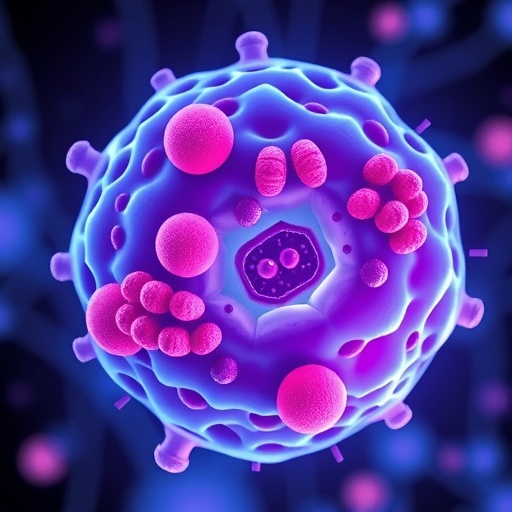
Organoids have emerged as transformative tools in cancer research due to their ability to mimic the three-dimensional architecture and cellular complexity of human tumors more accurately than conventional two-dimensional cell cultures. Despite their biological fidelity, scaling organoid production and analysis while maintaining consistency and speed has remained elusive. The newly developed platform addresses these limitations by integrating extrusion bioprinting, which fabricates uniform tumor organoids embedded within extracellular matrix constructs tailored for multiwell plate formats. This advancement ensures high-throughput generation of physiologically relevant tumor models suitable for comprehensive drug screening.
One of the defining features of this platform is its reliance on label-free quantitative phase imaging, a high-speed optical technique that captures intrinsic properties of living cells without the need for fluorescent or chemical dyes. This allows continuous, non-invasive monitoring of organoid biomass changes and growth dynamics over extended periods, providing vital insights into tumor fitness and treatment-induced alterations. The avoidance of staining protocols circumvents the potential perturbations and temporal limitations associated with traditional destructive assays, thereby enabling more accurate longitudinal studies of tumor response.
To handle the enormous volumes of complex imaging data generated during these monitoring sessions, the researchers incorporated advanced computational methodologies, including automated image reconstruction and deep learning-based segmentation. This enables precise delineation of individual organoids and their morphological features across thousands of samples. Subsequently, machine learning algorithms track the temporal evolution of each organoid’s response to diverse drug treatments, quantifying heterogeneity within tumor populations and unmasking subtle differences that could dictate therapeutic efficacy or resistance.
This comprehensive analytical framework was rigorously validated using both established cancer cell lines and patient-derived tumor samples, successfully capturing dynamic responses to a variety of clinically relevant chemotherapeutic compounds. By transcending the traditional bulk average responses, the system pinpoints discrete organoid subsets exhibiting sensitivity or resistance, thereby refining the resolution of drug response assessments. This granular perspective facilitates the identification of rare, treatment-refractory tumor cell populations which are often responsible for therapeutic failure and disease relapse.
Dr. Michael Teitell, the director of the UCLA Health Jonsson Comprehensive Cancer Center and a co-senior author of the study, emphasized the platform’s transformative potential. He highlighted how this technology allows researchers to move beyond averaged drug efficacy metrics, instead illuminating the heterogeneous landscape of tumor cell drug responses at a single-organoid level. This capability to dissect tumor complexity lays the groundwork for unraveling underlying biological mechanisms governing differential treatment responses, which can guide the development of more targeted and effective therapeutic strategies.
Integral to this study is the platform’s capability to generate high-quality datasets amenable to large-scale analysis. By leveraging artificial intelligence, the system can process and interpret multifaceted phenotypic data, thus enabling simultaneous screening of hundreds of drug candidates. This scalability accelerates the pace of drug discovery by swiftly identifying promising therapeutic agents and combinations, particularly for cancers that currently lack robust treatment options. The ability to evaluate organoid responses in a high-throughput manner heralds a significant leap forward for translational oncology research.
Beyond its research applications, the platform holds tremendous promise for clinical oncology. When applied to patient-derived tumor cells, it offers a novel avenue for personalized treatment planning by preemptively testing the efficacy of various drugs on a patient’s own tumor organoids prior to therapy initiation. This approach could minimize the uncertainty inherent in current cancer treatment regimens and reduce exposure to ineffective therapies, thereby enhancing patient outcomes and quality of life — especially for those afflicted with rare or treatment-resistant malignancies.
The incorporation of advanced automated imaging and AI-powered analytical tools in this platform addresses several critical barriers that have historically impeded the integration of organoid models into clinical decision-making. Key among these are the challenges of maintaining biological accuracy while achieving experimental throughput and real-time data acquisition. By harmonizing these factors, the research team has crafted a versatile and robust workflow that is not only poised to revolutionize laboratory investigations but also to inform precision medicine initiatives.
The collaborative nature of this research extends beyond UCLA, with contributions from experts at institutions such as the University of Colorado School of Medicine and Virginia Commonwealth University’s Massey Comprehensive Cancer Center. The multidisciplinary team, combining expertise in pathology, laboratory medicine, bioengineering, and computational sciences, exemplifies the integrative approach necessary to tackle the complexity of cancer biology and translate technological advances into tangible clinical benefits.
Financial support for this pioneering work came from several prestigious entities including the Air Force Office of Scientific Research, the U.S. Department of Defense, the National Science Foundation, and the National Institutes of Health. Such diverse funding underscores the broader recognition of the importance of advanced technological platforms that integrate biology with AI to combat cancer, one of the most formidable health challenges globally.
In summary, this innovative platform heralds a new era in cancer research and treatment by providing an unparalleled toolset to observe, quantify, and predict tumor responses to therapy with extraordinary precision and scale. It embodies a fusion of 3D bioprinting, sophisticated label-free imaging, and artificial intelligence, collectively empowering researchers and clinicians to unravel tumor heterogeneity, uncover mechanisms of drug resistance, and ultimately refine personalized treatment strategies for patients facing challenging cancer diagnoses.
Subject of Research: Development of an integrated 3D bioprinting and AI-based platform for monitoring cancer tumor organoid responses to therapy.
Article Title: Not specified in the provided content.
News Publication Date: Not specified in the provided content.
Web References:
– UCLA Health Jonsson Comprehensive Cancer Center: https://www.uclahealth.org/cancer
– Nature Protocols article: https://www.nature.com/articles/s41596-026-01375-5
References:
Wang, B., Tebon, P., Nguyen, T., Sartini, S., Murray, G., Guest, D., Reed, J., Soragni, A., & Teitell, M. (2026). [Article Title]. Nature Protocols. DOI: 10.1038/s41596-026-01375-5.
Image Credits: Not provided.
Keywords: Organoids, Cancer, Cancer research, 3D bioprinting, Quantitative phase imaging, Artificial intelligence, Tumor heterogeneity, Personalized medicine, Drug screening, High-throughput screening.
Tags: 3D bioprinting tumor organoidsadvanced imaging technologies in cancer researchAI algorithms for tumor response trackingAI-driven cancer drug discovery platformdrug screening using bioprinted organoidsextracellular matrix constructs for organoidshigh-throughput tumor model generationpersonalized cancer therapy monitoringprecision medicine in oncologyquantitative phase imaging in oncologyscalable organoid production methodsUCLA cancer research innovations