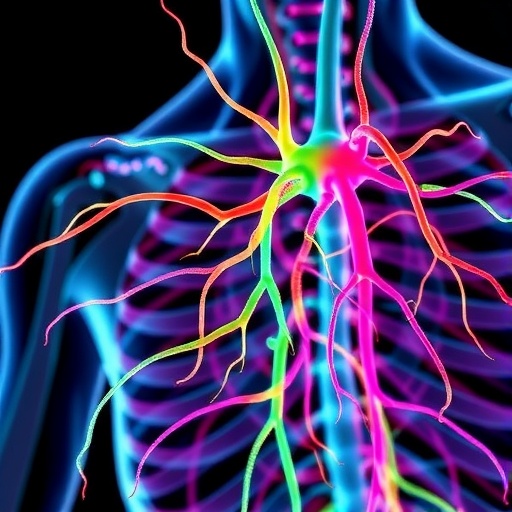
In the rapidly advancing field of bioelectronics, peripheral nerve interfaces have emerged as revolutionary tools that enable direct, bidirectional communication between implanted electronic devices and the peripheral nervous system. This breakthrough technology has vast implications for restoring sensory functions, enhancing motor control, and managing chronic diseases through therapeutic electrical stimulation and precise neural recording. However, the ultimate success of these interfaces hinges not merely on their initial performance at implantation but on their ability to maintain functional stability over months and even years. Recent research highlights that this is determined by a complex, evolving interaction known as dynamic biophysical coupling, which profoundly influences device longevity and efficacy.
Unlike traditional viewpoints that assess electrode performance as a static property fixed at the time of implantation, dynamic biophysical coupling proposes a paradigm shift. This concept encapsulates the continually evolving relationship between electrode materials and the host biological tissue. This relationship is modulated by a suite of interrelated factors including mechanical forces, geometrical adaptations, electrochemical reactions, biochemical processes, and biological responses. Together, these variables define the functional characteristics of the bioelectronic interface, such as impedance, electrical stimulation thresholds, signal fidelity, and selectivity, all of which impact how well the electrode can communicate with nerve fibers over extended durations.
The electrode-tissue interface is far from a passive boundary. Mechanical stresses resulting from body movements, pulsatile blood flow, and micromotion of implanted devices induce a dynamic set of biophysical alterations. Over time, these mechanical perturbations can cause subtle shifts in electrode positioning or tissue morphology, leading to changes in electrical coupling efficiency. The geometric configuration of electrodes, including size, shape, and spatial arrangement, also evolves as the surrounding biological environment remodels. These geometric factors crucially influence the spatial resolution and selectivity of neural stimulation and recording, especially in complex nerve fascicles with diverse fiber populations.
Electrochemical factors play a central role in the long-term stability of peripheral nerve interfaces. The interface mediates charge transfer between metallic or conductive polymer electrodes and the ionic environment of nerve tissues. This interface can undergo material degradation, corrosion, or formation of insulating layers due to electrochemical reactions, altering impedance and charge injection capacity. Additionally, biochemical processes in the tissue microenvironment, such as inflammation, protein adsorption, and fibrosis, further modulate the electrode surface properties and contribute to impedance drift. These biochemical changes can insidiously undermine signal fidelity and stimulation efficiency over time.
Simultaneously, biological variables dynamically shape the interface through cellular and molecular pathways. The implantation site activates host immune responses, invoking resident immune cells, fibroblasts, and other tissue-resident cells. Neuroinflammation, glial scarring, and extracellular matrix remodeling contribute to the sequestration of electrodes by dense biological barriers, effectively increasing impedance and reducing the ease of neural signal transduction. Moreover, axonal regeneration and plasticity within the peripheral nerve can also alter the spatial relationship and electrical coupling with the implanted electrodes, further complicating the long-term device-tissue interaction.
To realize clinically viable and durable peripheral nerve interfaces, it is crucial to understand and preserve this intricate biophysical coupling within an optimal operating window. Achieving this objective is an ongoing process that requires not only materials innovation but also iterative design approaches that incorporate mechanical compliance, geometric adaptability, electrochemical stability, and biological compatibility. Materials must be engineered to resist corrosion and biofouling, while device architectures should accommodate micromotion and anatomical variability to maintain stable contact with target nerve fibers. Furthermore, implantation strategies should be tailored to the specific anatomical and physiological contexts to minimize tissue trauma and adverse immune reactions.
A comprehensive systems-level perspective is essential, integrating electrode materials science with anatomy-specific implantation techniques and advanced system design, including closed-loop control. By continuously monitoring relevant interface metrics such as impedance spectroscopy, stimulation thresholds, and signal quality, it becomes possible to dynamically tune stimulation parameters and intervene before functional degradation occurs. Such adaptive strategies will enable interfaces to maintain optimal coupling, preventing the gradual decline in performance that has hampered prior generations of neuroprosthetic devices.
Measuring and modeling the dynamic biophysical coupling presents significant challenges but is key to unlocking long-term peripheral nerve interfacing success. Emerging techniques leverage high-resolution imaging, electrochemical impedance characterization, and computational models that incorporate multi-scale biophysical interactions. These models can predict device performance trajectories, guide design optimizations, and inform personalized therapeutic approaches. Moreover, standardized metrics are needed to evaluate long-term interface stability and compare novel electrode technologies effectively, thereby accelerating translation from experimental studies to scalable clinical solutions.
The complexity of dynamic biophysical coupling also calls for interdisciplinary collaboration, merging insights from materials science, biomedical engineering, neurophysiology, immunology, and computational biology. Such convergence facilitates holistic understanding and rapid innovation, ensuring designs that not only function effectively at implantation but adapt gracefully to the evolving tissue environment. This multidisciplinary synergy paves the path toward neurointerfaces that are reliable, predictable, and responsive across a patient’s lifespan, fulfilling the promise of bioelectronic medicine.
In practice, next-generation peripheral nerve interfaces could revolutionize therapies for conditions ranging from limb amputation and spinal cord injury to chronic pain and metabolic disorders. Improved selectivity and stability will provide precise control over discrete populations of nerve fibers, enabling richer sensory feedback and finer motor commands. Additionally, chronic disease management could benefit from stable long-term interfaces that continuously monitor physiological signals and deliver electrical neuromodulation, potentially reducing reliance on pharmaceuticals and invasive surgeries.
Underlying these ambitions is the recognition that maintaining a beneficial electrode-tissue relationship is an active, dynamic challenge. As biological tissues adapt and devices interact with their environment, the coupling state inevitably fluctuates. Engineering bioelectronic interfaces that embrace and accommodate these changes rather than resist them will yield resilient and transformative neural prosthetics. Research into dynamic biophysical coupling thus represents a critical frontier, charting a roadmap toward sustainable and scalable peripheral nerve modulation technologies.
The ongoing refinement of this concept challenges researchers and clinicians to rethink device evaluation metrics, implant strategies, and long-term follow-up methods. By fostering innovation in materials that adapt and self-heal, system architectures that accommodate dynamic mechanical environments, and modeling tools that anticipate biological evolution, the field can overcome longstanding barriers to clinical translation. This promise of stability and scalability renews enthusiasm for neural interfaces and reinforces their potential as cornerstones of future bioelectronic medicine.
In summary, the lifespan and functionality of implanted peripheral nerve interfaces depend fundamentally on the intricate, evolving dance between electrodes and biological tissues—a coupling that is mechanical, geometric, electrochemical, biochemical, and biological all at once. Recognizing and engineering for this dynamic interplay transforms the challenge from an adversary into an opportunity, enabling interfaces that are not only effective upon implantation but remain so throughout their service. As this research unfolds, it will shape the next horizon for neuroprosthetics, bringing durable, responsive, and personalized therapies within reach.
Subject of Research:
Peripheral nerve interfaces and their long-term dynamic biophysical coupling with implanted electrodes for nerve modulation.
Article Title:
Dynamic biophysical coupling in bioelectronic interfaces for peripheral nerve modulation.
Article References:
Pan, W., Yang, J., Zhao, Y. et al. Dynamic biophysical coupling in bioelectronic interfaces for peripheral nerve modulation. Nat Rev Electr Eng (2026). https://doi.org/10.1038/s44287-026-00301-x
Image Credits: AI Generated
DOI: 10.1038/s44287-026-00301-x
Keywords:
Peripheral nerve interfaces, bioelectronic interfaces, dynamic biophysical coupling, electrode-tissue interface, neuroprosthetics, impedance stability, neural stimulation, chronic implantation, electrochemical stability, neuroinflammation, biocompatibility, long-term neural modulation
Tags: bidirectional neural communicationbioelectronic device longevity factorschronic disease management with bioelectronicsdynamic biophysical coupling in nerve interfaceselectrical stimulation for sensory restorationelectrode-tissue interaction dynamicsenhancing motor control with nerve interfacesimpedance changes in nerve interfaceslong-term stability of bioelectronic devicesmechanical and biochemical effects on electrodesneural recording in peripheral nervesperipheral nerve interface technology