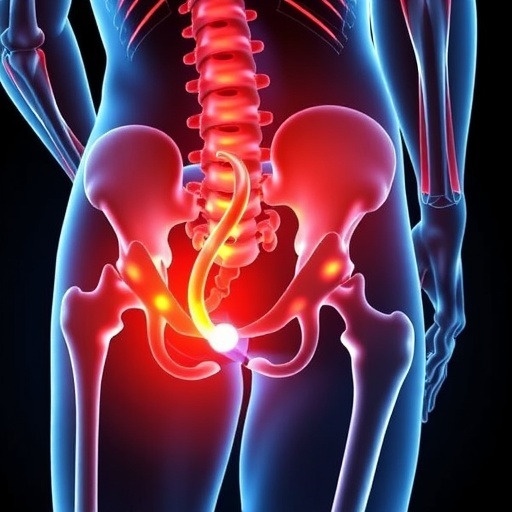
In the continually evolving field of anesthesiology, recent research spearheaded by Liu, Shi, Hu, and colleagues has unveiled compelling evidence that challenges and potentially reshapes traditional approaches to anesthesia in older adults undergoing surgery for hip fractures. Their retrospective study, published in BMC Geriatrics in 2026, meticulously examines the efficacy and safety profile of unilateral epidural anesthesia specifically tailored for geriatric patients with hip fractures—a demographic notoriously susceptible to complications during and after surgery.
Hip fractures in the elderly represent a significant clinical challenge worldwide, characterized by high morbidity and mortality rates. Managing pain effectively while minimizing systemic side effects from anesthesia remains a crucial concern for anesthesiologists and surgeons alike. Traditional modalities often involve bilateral epidural or general anesthesia; however, these methods can carry notable risks, including hemodynamic instability and prolonged motor blockade. This study shifts the spotlight onto unilateral epidural anesthesia, a targeted anesthetic technique designed to provide localized nerve blockade on the operative side only.
Unilateral epidural anesthesia distinguishes itself by confining the anesthetic effect predominantly to the surgical side, thereby reducing sympathetic nervous system disruption contralaterally. This precision results in better hemodynamic stability, which is particularly advantageous in older patients frequently burdened by cardiovascular comorbidities. The retrospective analysis conducted by Liu et al. rigorously evaluates patient outcomes, highlighting that unilateral epidural anesthesia may significantly diminish perioperative complications without sacrificing analgesic efficacy.
The study’s methodology encompasses a comprehensive evaluation of clinical records, encompassing various parameters including hemodynamic changes, pain scores, motor function recovery, and incidences of postoperative delirium—a common and serious complication in the elderly. Quantitative data reveal that patients receiving unilateral epidural anesthesia experienced a more stable intraoperative blood pressure profile and reduced incidence of postoperative cognitive dysfunction, underscoring the approach’s beneficial role beyond pain control alone.
Technically, the procedure involves the careful placement of an epidural catheter at thoracolumbar levels corresponding to the surgical site, followed by administration of low-concentration local anesthetics. This approach fosters segmental blockade, sparing contralateral nerve roots and thereby encouraging earlier mobilization and reduced nursing care needs post-surgery. The pharmacodynamics of this anesthetic technique emphasize minimizing systemic absorption and maximizing localized action, which collectively contribute to the observed safety profile.
Another compelling aspect underscored in the research is the opioid-sparing effect of unilateral epidural anesthesia. Opioid analgesics, although effective, carry risks of respiratory depression, constipation, and delirium—ailments especially precarious for the elderly. By reducing opioid requirements, unilateral epidural anesthesia could potentially curtail these adverse effects, enhancing postoperative recovery trajectories and overall patient satisfaction.
Moreover, Liu and colleagues discuss the implications of unilateral epidural anesthesia on resource utilization within healthcare settings. The technique’s association with fewer hemodynamic disturbances reduces the need for advanced cardiovascular monitoring intraoperatively and in the intensive care environment. This efficiency gain could translate into shorter hospital stays and decreased healthcare expenditure, a critical consideration in systems strained by aging populations.
The retrospective nature of the study, while inherently limiting causal inferences, nonetheless offers a robust foundation for future prospective randomized trials. Such investigations could further illuminate the mechanistic underpinnings responsible for the favorable outcomes observed and refine patient selection criteria to optimize individualized anesthesia care in orthogeriatrics.
Technical challenges associated with unilateral epidural anesthesia are not overlooked. Precise catheter placement requires skilled practitioners well-versed in fluoroscopic or ultrasound-guided techniques to ensure unilateral spread and minimize inadvertent bilateral blockade. The study underscores the necessity for comprehensive training and corroborative imaging to maximize the procedure’s efficacy and safety.
From a physiological standpoint, the selective sympathetic blockade innate to unilateral epidural anesthesia not only stabilizes hemodynamics but also mitigates neuroinflammatory cascades triggered by surgical trauma. Emerging evidence suggests that blunting this inflammatory response could reduce the risk of postoperative cognitive decline, an area ripe for further interdisciplinary research bridging anesthesia, neurology, and geriatrics.
Complementary to these clinical insights, the study also revisits pharmacological considerations. The choice of local anesthetics, concentration gradients, and adjuvants such as clonidine or dexmedetomidine are deliberated, emphasizing the balance between achieving adequate sensory blockade and preserving motor function. This pharmacological fine-tuning is pivotal for enabling early postoperative mobilization—a key determinant of successful rehabilitation in elderly hip fracture patients.
Patient-centric outcomes encapsulated in the study extend beyond clinical parameters to patient-reported pain and satisfaction scores. The positive feedback corroborates that unilateral epidural anesthesia not only suits physiological and logistical needs but also aligns with patient comfort and quality of life goals, reinforcing its clinical appeal.
Given the growing incidence of hip fractures globally, driven principally by demographic shifts toward older age groups, the implications of this study are profound. It advocates for a paradigm shift in orthopedic anesthesia, promoting a minimally disruptive approach aligned with geriatric physiology and tailored to reduce perioperative risk, thus potentially setting a new standard of care.
The findings of Liu et al. resonate particularly in the context of value-based healthcare, where interventions delivering superior outcomes with cost-effectiveness are paramount. The integration of unilateral epidural anesthesia into clinical pathways could redefine perioperative protocols for vulnerable populations, fostering enhanced recovery and reduced healthcare burden.
In conclusion, this pivotal retrospective study paves the way for enhanced anesthetic strategies that prioritize safety without compromising efficacy. The promise of unilateral epidural anesthesia for older adults with hip fractures represents not just an incremental advance but a stride toward precision medicine in anesthesiology. Continued research and clinical adoption stand poised to transform surgical care paradigms, ultimately improving the lives of millions of elderly patients worldwide.
Subject of Research: The application and outcomes of unilateral epidural anesthesia in elderly patients undergoing hip fracture surgery.
Article Title: A retrospective study on the application of unilateral epidural anesthesia in older patients with hip fracture.
Article References:
Liu, P., Shi, X., Hu, J. et al. A retrospective study on the application of unilateral epidural anesthesia in older patients with hip fracture. BMC Geriatr (2026). https://doi.org/10.1186/s12877-026-07859-z
Image Credits: AI Generated
Tags: anesthesia in elderly hip fracture patientsanesthesia risk reduction in elderly patientscardiovascular safety in geriatric anesthesiageriatric anesthesia techniqueshemodynamic stability in elderly surgerylocalized nerve blockade benefitsminimizing motor blockade in hip fracture surgerypain management in elderly hip surgeryreducing anesthesia complications in older adultsretrospective anesthesia studies in geriatricstargeted epidural anesthesia advantagesunilateral epidural anesthesia for hip fracture