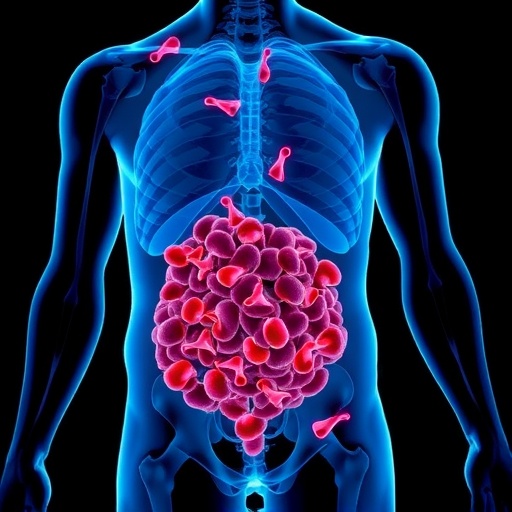
In an era where the global prevalence of obesity continues its relentless march, the intricate relationship between excess adiposity and cancer is emerging as a defining challenge for public health. Obesity’s role as a modifiable risk factor for at least nineteen distinct types of cancer reflects a complex interplay of biological pathways that critically influence tumor development and progression. A recent comprehensive review published in Nature Metabolism dissects these mechanisms, elucidating how obesity alters the body’s internal milieu to foster carcinogenesis and highlighting novel opportunities for intervention.
Obesity’s impact on cancer risk transcends simplistic calorie dynamics, involving multifaceted biological alterations including the dysregulation of sex hormone metabolism, imbalances in insulin signaling, and the persistence of chronic low-grade inflammation. These factors converge within the tumor microenvironment, creating conditions conducive to malignant transformation and growth. The review underscores the pivotal role of hyperinsulinemia, where elevated circulating insulin and insulin-like growth factors stimulate cellular proliferation, inhibit apoptosis, and potentiate cancerous processes, particularly in hormonally sensitive tissues such as the breast and endometrium.
Further deepening our mechanistic understanding, the review explores how adipose tissue is not merely an inert fat depot but a dynamic endocrine organ secreting a variety of bioactive molecules — adipokines and inflammatory cytokines — which modulate oncogenic signaling pathways. This endocrine function of adiposity supports a pro-tumorigenic state characterized by sustained inflammatory signaling and immune evasion, mechanisms that have been increasingly illuminated by recent advances in omics technologies.
The advent of multi-omics platforms integrating genomics, transcriptomics, proteomics, and metabolomics data has sparked a revolution in cancer research. These approaches have enabled the identification of novel biomarkers and mechanistic pathways linking obesity and tumor biology at an unprecedented resolution. They reveal, for instance, how specific genetic and epigenetic modifications in cancer cells are influenced by the adiposity-induced systemic environment, thereby prompting tumor heterogeneity and influencing responses to therapy.
Moreover, epidemiological studies now emphasize that adiposity and its cancer associations vary substantially by tumor subtype, signaling that the biological underpinnings differ across cancers categorized by their histology and molecular profiles. Such granularity compels a shift towards precision oncology that incorporates body composition metrics rather than relying solely on traditional measures such as BMI. Imaging-based assessments of adiposity distribution, including visceral and subcutaneous fat quantification through advanced radiological methods, are gaining traction as superior predictors of cancer risk and prognosis.
This emerging evidence crystallizes an urgent need for comprehensive biomarker-anchored strategies to elucidate causality and identify at-risk populations. Extending research efforts to encompass underrepresented groups, including populations from low- and middle-income countries, is essential. These populations often experience a disproportionate burden of obesity-related cancers but remain understudied due to resource constraints and systemic inequities in data collection.
Notably, this review accentuates the tremendous potential of novel obesity pharmacotherapies to transform cancer prevention paradigms. Current advances in medications capable of inducing substantial and sustained weight loss at scale represent a promising avenue to mitigate the obesity–cancer nexus. However, the landscape of obesity treatment continues to evolve, and rigorous clinical trials must evaluate whether these interventions translate into meaningful reductions in cancer incidence and mortality.
While lifestyle modification remains a cornerstone of obesity management, integrating pharmacological approaches with tailored prevention strategies could revolutionize public health efforts. Recognizing obesity as a chronic disease with far-reaching oncogenic consequences mandates a multidisciplinary response spanning oncology, endocrinology, epidemiology, and public health policy.
The review also emphasizes the critical role that chronic inflammation plays in the pathogenesis of obesity-associated cancers. Adipose tissue expansion induces inflammatory responses characterized by macrophage infiltration and cytokine secretion, which promote DNA damage and impair immune surveillance, fostering an environment ripe for tumor initiation and progression.
In addition, sex hormones modulated by adiposity are potent drivers of carcinogenesis, particularly in hormone-dependent cancers like breast, ovarian, and prostate cancer. Obesity alters the balance of estrogen and androgen production through peripheral conversion processes in adipose tissue, thus skewing hormonal homeostasis that can stimulate tumor growth and metastasis.
Notably, the interconnection between obesity, metabolic dysfunction, and cancer highlights the importance of insulin resistance as a link. Elevated levels of insulin and IGF-1 act as growth factors with mitogenic and anti-apoptotic properties, facilitating tumor development in various sites including the liver, colon, and pancreas, which are characteristically impacted by metabolic syndromes.
The authors recommend future research focus on integrating large-scale imaging and omics data sets, which would facilitate the unraveling of complex biological networks underpinning adiposity-driven carcinogenesis. These efforts would enable the identification of novel therapeutic targets and the refinement of patient stratification, paving the path towards personalized cancer prevention and treatment strategies.
In summary, excess adiposity is poised to become an even more formidable cancer risk factor in the coming decades, fueled by global trends in obesity prevalence. Addressing this burden requires a thorough mechanistic understanding, novel technologies, and equitable data capture to craft effective, scalable prevention and treatment modalities that can alter the trajectory of obesity-related cancers worldwide. This review crystallizes current knowledge while charting a visionary research agenda poised to transform the landscape of cancer epidemiology and therapeutic innovation in the 21st century.
Subject of Research: The biological mechanisms linking adiposity (obesity) with cancer development, epidemiological associations between excess adipose tissue and multiple cancer types, and emerging insights from advanced omics and imaging technologies.
Article Title: Adiposity and cancer: epidemiology, mechanisms and future perspectives.
Article References:
Watts, E.L., Gonzalez-Feliciano, A., Gunter, M.J. et al. Adiposity and cancer: epidemiology, mechanisms and future perspectives. Nat Metab (2026). https://doi.org/10.1038/s42255-026-01529-5
Image Credits: AI Generated
DOI: https://doi.org/10.1038/s42255-026-01529-5
Tags: adipokines role in canceradipose tissue as endocrine organbiological pathways linking adiposity to cancerchronic inflammation and carcinogenesishyperinsulinemia and tumor growthinsulin signaling in cancer progressioninterventions targeting obesity-induced cancer mechanismsmodifiable cancer risk factorsobesity and cancer riskobesity-related hormonal cancerssex hormone metabolism dysregulation in obesitytumor microenvironment and obesity