In the fleeting moment following an unexpected noise, the brain performs a critical computational feat: swiftly determining whether the sound originated from one’s own action or from an external source. This remarkable capability hinges on a neurophysiological process known as corollary discharge—a predictive neural signal that accompanies motor commands, effectively informing sensory systems about anticipated self-generated stimuli. This mechanism prevents sensory overload by allowing the brain to differentiate between self-produced and environmental sensory inputs.
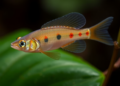
Recent groundbreaking research conducted by neuroscientists at Washington University in St. Louis has shed new light on the intricacies of this system. Published in the prestigious journal Current Biology, the study probes the neurobiological underpinnings of corollary discharge using an extraordinary model organism: the weakly electric fish. This species exemplifies the challenge faced by neural circuits tasked with filtering self-generated sensory noise, owing to its reliance on electric organ discharges (EODs) for communication and environmental perception.
Weakly electric fish generate transient electric pulses to navigate and communicate within their milieus. When these pulses are emitted, the fish’s sensory apparatus simultaneously detects the signal, risking confusion between self- and externally produced stimuli. Here, corollary discharge plays a vital role by sending a replica of the motor command to sensory neurons, allowing the brain to subtract the expected self-produced signal from the composite sensory input. This filtering preserves sensitivity to exogenous electric signals, which are essential for survival and social interactions.
What elevates this research is its investigation into how corollary discharge adapts to temporal changes in the electric pulses. Notably, the pulse duration can vary extensively due to evolutionary divergence across species, as well as hormonally induced shifts within individuals, particularly fluctuations in testosterone levels. Moreover, pulse characteristics dynamically evolve with age, introducing complexity to the timing calibration necessary for precise sensory prediction.
By employing electrophysiological recordings across multiple brain regions implicated in electric pulse production and sensory signal processing, the researchers meticulously tracked neural activity in fish exhibiting a range of pulse durations. This cohort included hormone-treated specimens and distinct species, providing a comprehensive view of the adaptive mechanisms. The study achieved an unprecedented level of resolution by capturing neural dynamics at each stage of the corollary discharge pathway within individual animals—data that had not previously been accessible.
Analysis revealed a pivotal neuroanatomical structure: the mesencephalic command-associated nucleus (MCA). This small yet central cluster of neurons emerged as the locus where timing adjustments first manifest. Remarkably, developmental maturation, hormonal modulation, and evolutionary divergence all converge upon this single neural hub. Through this central node, the system coordinates temporal recalibration efficiently, circumventing the necessity for independent timing adjustments across multiple pathways.
The MCA’s role transcends mere timing regulation; it branches into three distinct pathways that orchestrate communication, sensory processing, and electric signal generation. This architectural design underscores the evolutionary economy by which a conserved solution maintains sensory-motor integration fidelity across diverse temporal scales. Rather than reinventing mechanisms with each evolutionary shift, the brain capitalizes on the MCA’s capacity as a universal timing coordinator.
Beyond its implications for electric fish biology, this research illuminates fundamental principles of neural computation relevant to broader sensory processing contexts, including human neurophysiology. Corollary discharge mechanisms are critical across taxa for predictive sensory filtering, yet their precise neural circuitry remains elusive. Understanding the MCA’s integrative function could guide efforts to dissect analogous structures in mammals and inform interventions for disorders characterized by disrupted sensory predictability.
The study’s insights into the MCA highlight the importance of examining animals with specialized sensory adaptations to unravel universal neurobiological questions. Uncommon sensory modalities, such as those utilized by electric fish, offer unparalleled experimental opportunities to map neural circuits with clarity inaccessible in more conventional models. Such research exemplifies how unique behavioral phenotypes drive innovation in neuroscience.
Future research, as outlined by the team, will delve deeper into the cellular and molecular bases of MCA function. Intracellular recordings aim to pinpoint the specific physiological changes induced by developmental, hormonal, and evolutionary factors, moving beyond correlative timing shifts to uncover causative mechanisms. This work promises to refine our understanding of sensorimotor integration at the finest scales.
Furthermore, these advances bear relevance for human health, particularly concerning psychiatric conditions like schizophrenia, where sensory prediction errors are prominent. Although the current study does not directly examine clinical populations, elucidating standard sensory prediction pathways sets the foundation for identifying where and how these systems malfunction in disease states.
In sum, the Washington University investigators have pioneered a comprehensive characterization of corollary discharge timing adaptations within a complex neural circuit. Their findings reveal the MCA as a multifaceted timing hub, coordinating sensorimotor integration against a backdrop of dynamic electric signal variability. This discovery not only advances neuroethological knowledge but also paves avenues for translational research into sensory processing disorders.
Subject of Research: Neuroscience; Sensorimotor integration; Corollary discharge in weakly electric fish
Article Title: Developmental and evolutionary adaptations of corollary discharge timing in electric fish
News Publication Date: 2026
Web References:
Current Biology – Jarzyna & Carlson, 2026
References:
Jarzyna MW, Carlson BA. Developmental and evolutionary changes in sensorimotor integration to maintain coordination of corollary discharge and afferent input in electric fish. Current Biology, 2026.
Keywords: neuroscience, sensorimotor integration, corollary discharge, electrosensory processing, electric fish, neural timing, developmental plasticity, hormonal modulation, evolutionary neurobiology, MCA, neural prediction, sensory filtering
Tags: brain prediction revisioncorollary discharge mechanismCurrent Biology neuro researchelectric organ discharge communicationmotor command sensory integrationneural basis of sensory discriminationneurophysiology of sensory processingpredictive neural signalingpreventing sensory overload in brainself-generated sensory input filteringWashington University neuroscience studyweakly electric fish neural model