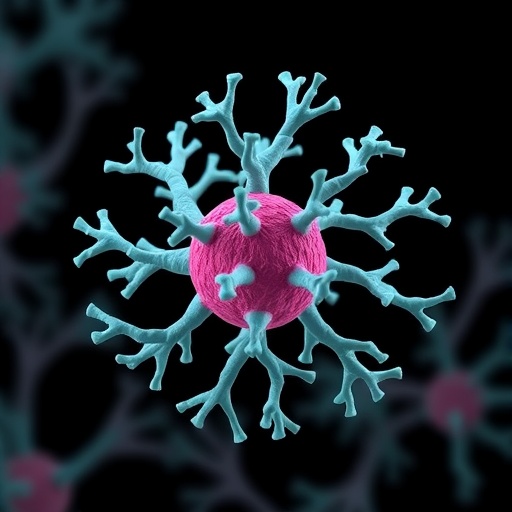
In recent years, the field of hematology has witnessed a groundbreaking shift in how researchers model lymphoid malignancies, thanks to the emergence of sophisticated three-dimensional (3D) culture systems. These next-generation models are rapidly becoming the cornerstone of translational research, offering unprecedented insight into the complex microenvironments that govern lymphoid cancers. The traditional two-dimensional (2D) culture techniques, once the gold standard, are now being eclipsed by 3D approaches that faithfully recreate the architecture, cellular interactions, and biochemical gradients inherent to human disease. This transformation is setting new benchmarks for both basic research and the development of targeted therapies.
Lymphoid malignancies encompass a diverse array of hematologic cancers, including various forms of lymphoma and leukemia. Their heterogeneous nature and intricate interplay with surrounding stromal cells have long posed significant challenges for effective disease modeling. Conventional 2D cultures, while simple and cost-effective, fall short in replicating the spatial and mechanical cues essential for authentic tumor behavior. In contrast, 3D culture systems mimic the extracellular matrix, cellular heterogeneity, and oxygen gradients, providing a more physiologically relevant platform. This leap in fidelity results in more predictive models, yielding data that better translate to clinical settings.
The architecture of 3D cultures varies widely, ranging from scaffold-based hydrogels embedded with extracellular matrix components to scaffold-free spheroids and organoids. These systems enable cells to inhabit environments that closely emulate the stiffness, porosity, and biochemical signaling present in vivo. As a result, cell proliferation, differentiation, and drug responsiveness observed in 3D cultures are strikingly similar to patient-derived tissues. Notably, lymphoid malignancies often provoke dynamic remodeling of their niche, a phenomenon more accurately recapitulated in these advanced models, allowing researchers to dissect tumor-stroma crosstalk with high precision.
A key challenge in hematology is the frequent discordance between preclinical findings and clinical outcomes. Drugs that demonstrate efficacy in 2D culture or animal models frequently falter in human trials, underscoring the need for more predictive platforms. 3D culture systems, especially those incorporating patient-derived cells, bridge this translational gap by offering models that better simulate human tumor biology and microenvironmental influences. This advancement facilitates the identification of novel therapeutic targets and the evaluation of drug resistance mechanisms that were previously masked in oversimplified systems.
Several cutting-edge 3D culture modalities are making significant strides in lymphoid malignancy research. Patient-derived organoids, for example, preserve the genetic and epigenetic landscape of the original cancer tissue, enabling personalized medicine approaches. Co-culture systems integrating immune cells and stromal components permit investigation of immune evasion tactics employed by malignant clones. Meanwhile, microfluidic devices—organ-on-a-chip platforms—recreate dynamic fluid flows and nutrient gradients, providing another layer of physiological relevance. These innovations collectively foster a deepened understanding of lymphoid cancer pathogenesis.
The integration of multi-omics technologies with 3D cultures is catalyzing transformative discoveries. Single-cell RNA sequencing and spatial proteomics analyses of 3D tumor models reveal heterogeneous cellular states and uncover rare subpopulations contributing to disease progression and relapse. Such detailed molecular characterization within an accurate microenvironmental context is invaluable for designing targeted interventions. Moreover, real-time imaging and biosensor technologies embedded in 3D cultures enable longitudinal monitoring of cellular responses and metabolic shifts, offering kinetic insights impossible to capture in static 2D models.
From a therapeutic perspective, 3D culture systems are revolutionizing drug screening pipelines. High-throughput screening of chemotherapeutics, targeted agents, and immunotherapies in these platforms offers more robust assessments of efficacy and toxicity. Importantly, resistance mechanisms that arise from cell-cell interactions or extracellular matrix barriers—critical in lymphoid malignancies—are faithfully reproduced, aiding in the identification of combination therapies to circumvent treatment failure. This approach accelerates biomarker discovery and facilitates stratification of patient cohorts to optimize clinical outcomes.
One fascinating aspect of lymphoid malignancies is their dependency on the tumor microenvironment (TME), comprising fibroblasts, endothelial cells, immune infiltrates, and extracellular matrix components. Traditional 2D culture strips away much of this complexity, providing an incomplete picture of disease biology. In contrast, 3D models embed malignant cells within a dynamic, interactive milieu that sustains paracrine signaling, cellular crosstalk, and metabolic interplay. This enhanced microenvironmental mimicry uncovers novel pathways underpinning tumor survival, dissemination, and immune suppression, opening new avenues for therapeutic intervention.
Despite their numerous advantages, 3D culture systems are not without limitations. The increased complexity and cost compared to 2D cultures necessitate optimized protocols and standardization to ensure reproducibility. The integration of multiple cell types requires meticulous cell sourcing and validation to avoid artifacts. Furthermore, the scalability of certain 3D models poses challenges for widespread drug screening applications. However, ongoing advances in biomaterials, automation, and computational modeling are steadily overcoming these barriers, making 3D culture systems increasingly accessible to hematology researchers worldwide.
Importantly, the adoption of 3D culture models in preclinical research is reshaping clinical trial design and patient management. By providing more accurate predictors of patient response, these models could reduce the high attrition rates seen in oncology drug development. Personalized organoid cultures derived from patient biopsies are beginning to inform treatment decisions in real time, embodying the promise of precision medicine. Moreover, the ability to model rare lymphoid malignancies in vitro enhances opportunities for targeted drug development where animal models are lacking or insufficient.
The interdisciplinary nature of 3D culture technology development, involving biomaterials scientists, engineers, chemists, and clinicians, is fostering a vibrant research ecosystem. Collaborative centers specialize in integrating biological data with computational models to simulate tumor growth and predict therapeutic outcomes. Such systems biology approaches complement empirical data, enabling hypothesis-driven experimentation and accelerating discovery. The complexity captured by combining these modalities moves the field closer to replicating the human disease state ex vivo, thus transforming translational hematology.
Looking forward, the integration of artificial intelligence (AI) and machine learning (ML) with 3D culture experimentation holds tremendous potential. Automated image analysis and pattern recognition algorithms can rapidly identify phenotypic changes and drug responses at scale. Predictive models trained on multi-modal datasets derived from 3D systems can uncover hidden correlations and novel biomarkers of prognosis and treatment sensitivity. By enabling data-driven decision-making, these technologies will enhance the precision and efficiency of both research and clinical applications in lymphoid malignancies.
In parallel, innovations in microfabrication and bioengineering are giving rise to increasingly sophisticated organ-on-chip platforms that incorporate vascularization and immune system components. These dynamic models recreate physiological shear stresses and intercellular communications integral to tumor progression and immune modulation. Coupled with real-time biosensing, these systems provide granular control and monitoring, enabling unprecedented probing of hematologic malignancies in an accessible and manipulable setting. Such progress paves the way for transformative insights into cancer biology.
Educational efforts are essential to widen adoption and understanding of 3D culture systems among hematologists and oncologists. Workshops, dedicated courses, and collaborative networks disseminate protocols and best practices, bridging the gap between discovery science and clinical application. Funding initiatives targeting translational research promote integration of 3D models into drug development pipelines, ensuring sustained momentum. As these models become incorporated into standard practice, the landscape of lymphoid malignancy research and therapy is poised for a paradigm shift.
In conclusion, the rise of 3D culture systems represents a revolutionary advancement in modeling lymphoid malignancies. These next-generation platforms bridge longstanding gaps between laboratory models and human disease, faithfully recapitulating the complex tumor microenvironment and cellular heterogeneity. By enabling precise dissection of tumor biology, enhancing drug screening fidelity, and facilitating personalized medicine, 3D cultures are fundamentally reshaping translational hematology. The convergence of bioengineering, molecular biology, and computational analytics heralds a new era of cancer research with transformative potential for patient outcomes.
Subject of Research: Lymphoid malignancies and advanced 3D culture systems in translational hematology
Article Title: Next-generation models for lymphoid malignancies: the rise of 3D culture systems in translational hematology
Article References:
Houmera, N., Genestier, L. & Huet, S. Next-generation models for lymphoid malignancies: the rise of 3D culture systems in translational hematology. Br J Cancer (2026). https://doi.org/10.1038/s41416-026-03487-x
Image Credits: AI Generated
DOI: 10.1038/s41416-026-03487-x (Published 03 June 2026)
Tags: 3D culture systems for lymphoid cancercellular heterogeneity in 3D culturesextracellular matrix in cancer modelslymphoid malignancies researchlymphoma and leukemia modelingnext-generation hematology modelsoxygen gradients in tumor researchpredictive preclinical cancer modelsscaffold-based hydrogels for cancer modelingtargeted therapy development in hematologytranslational cancer research techniquestumor microenvironment simulation