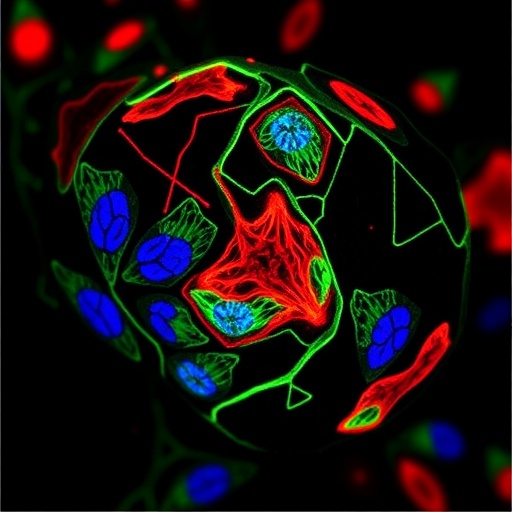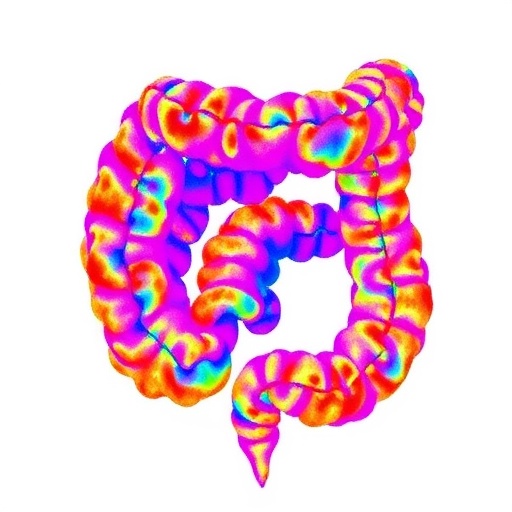
A groundbreaking advancement in the understanding of tumor complexity has been unveiled by a team of researchers who developed an innovative deep learning framework integrating high-resolution pathology imaging with spatial transcriptomics and proteomics data. This novel approach, termed Deep Visual Spatial Transcriptomics and Proteomics (DVSTP), empowers scientists to decode the intricate intra-tumor heterogeneity through comprehensive three-dimensional reconstruction of entire tumors. By facilitating the identification of molecular subtypes linked to immune infiltration patterns in colorectal cancer, DVSTP stands to revolutionize cancer biology and precision medicine.
Colorectal cancer remains one of the deadliest and most therapeutically challenging cancers globally. One of the primary obstacles in treating this malignancy stems from the tumor’s intrinsic heterogeneity: the varied cellular compositions and molecular profiles observed across different tumor regions. Traditional molecular techniques such as bulk sequencing aggregate signals from mixed cellular populations, obscuring the spatial context and thereby limiting insight into localized microenvironment interactions that govern tumor progression and drug resistance.
The research team, based at Union Hospital and Tongji Medical College, Huazhong University of Science and Technology, recognized the urgent need to preserve spatial context while interrogating molecular features. To this end, they engineered the DVSTP platform to harmonize three key modalities—high-resolution histopathology images stained with hematoxylin and eosin (H&E), spatially-resolved transcriptomic profiles, and high-dimensional spatial proteomic data acquired via mass spectrometry. This integrative method fosters a multi-omics perspective where morphological, transcriptomic, and proteomic attributes converge.
Initially, the team curated a large cohort of 123 colorectal cancer specimens to develop a convolutional neural network capable of discerning diverse cell types—malignant epithelial cells, immune infiltrates, and stromal constituents—based solely on H&E histology images. Impressively, the model achieved a classification accuracy of 94%, highlighting the rich, underexploited molecular information embedded within traditional pathology slides. This discovery underscores the untapped potential of computational pathology enhanced by artificial intelligence.
The true novelty of DVSTP arose when the researchers turned their attention to spatial heterogeneity within individual tumors. Utilizing serial sections from two anatomically distinct sites of a stage II colorectal carcinoma, they processed an extensive series of 380 tissue slices. The resulting datasets enabled meticulous three-dimensional reconstruction of tumor architecture, unveiling spatial cell organization and intercellular interactions with unprecedented resolution. This approach bridges a critical gap by revealing how cellular neighborhoods correlate with distinct molecular programs.
A comparative analysis between spatial transcriptomics and proteomics data revealed a surprisingly modest concordance between mRNA abundance and protein levels across tumor regions. With an average Spearman correlation coefficient of 0.37, these findings highlight the complex post-transcriptional regulatory mechanisms that modulate protein expression. This disparity affirms the necessity of incorporating direct proteomic measurements in spatial studies to authentically capture functional cellular states rather than relying solely on transcriptomic surrogates.
The proteomics component of the DVSTP analysis identified 2,805 proteins exhibiting diverse expression patterns throughout tumor territories. Clustering based on protein signatures stratified the tumor into four molecularly distinct subtypes, each defined by unique compositions of signaling pathways and biological processes. This granular classification offers a refined understanding of tumor biology that may inform stratified therapeutic interventions targeting specific tumor niches.
Strikingly, the study demonstrated that computational evaluation of routine pathological images alone could robustly predict molecular profiles. The deep learning model achieved an area under the curve (AUC) of 0.718 for predicting spatial protein expression patterns from H&E images, improving to 0.755 when transcriptomic data were integrated. These findings eloquently attest to the latent molecular insights encoded within tissue morphology, foreshadowing a future where diagnostic imaging and AI coalesce to guide clinical decision-making.
Among the diverse protein markers characterized, Serine/Arginine-Rich Splicing Factor 6 (SRSF6) emerged as a pivotal molecule delineating spatial heterogeneity and immunological landscapes within colorectal tumors. Regions exhibiting elevated SRSF6 expression correlated with pronounced exclusion of CD4⁺ and CD8⁺ T cells, highlighting an immunosuppressive microenvironment that likely promotes tumor immune evasion. This association positions SRSF6 as a central architect of the tumor-immune interface.
Mechanistic validation through in vitro and in vivo experiments reinforced the role of SRSF6 in driving colorectal cancer progression. Overexpression of Srsf6 in cancer cell lines and mouse models enhanced migratory capacity and tumor growth while concomitantly diminishing T cell infiltration. Conversely, genetic knockdown of Srsf6 reversed these phenotypes, illustrating its functional contribution to both tumor aggressiveness and immune modulation. Clinically, elevated SRSF6 expression portended poorer overall survival, underscoring its prognostic significance.
The researchers emphasize that although emerging spatial omics platforms are rapidly evolving, technological constraints regarding resolution and cost have thus far limited widespread clinical adoption. DVSTP addresses these challenges by computationally deconvoluting spatial data to enhance effective resolution and leveraging ubiquitously accessible H&E-stained slides for molecular inference. This pragmatic approach democratizes access to spatial multi-omics and accelerates translational research.
Moreover, DVSTP’s capacity for reconstructing whole tumors in three dimensions transcends conventional two-dimensional histological analysis, enabling revelation of spatial infiltration patterns and molecular gradients invisible at planar sections. This comprehensive spatial insight holds promise for clinical applications ranging from pinpointing aggressive tumor regions prone to metastasis, to tailoring immunotherapeutic strategies based on localized immune landscapes, thus heralding a new era of precision oncology.
In sum, the Deep Visual Spatial Transcriptomics and Proteomics strategy presents a transformative platform to unravel the complex biological and spatial heterogeneity inherent in colorectal cancer. By fusing advanced computational tools with multi-omics data and traditional pathology, DVSTP paves the way for more nuanced tumor characterization, improved prognostic stratification, and ultimately, more effective and personalized cancer treatment paradigms.
Subject of Research: Integrative deep learning and spatial multi-omics analysis of intra-tumor heterogeneity in colorectal cancer
Article Title: Deep Visual Spatial Transcriptomics and Proteomics strategy reveals intra-tumor heterogeneity
News Publication Date: Not provided
Web References: http://dx.doi.org/10.1016/j.scib.2026.04.047
References: Not provided
Image Credits: ©Science Bulletin
Keywords: colorectal cancer, intra-tumor heterogeneity, spatial transcriptomics, spatial proteomics, deep learning, computational pathology, tumor microenvironment, SRSF6, immune exclusion, 3D tumor reconstruction, precision oncology
Tags: 3D reconstruction of tumor architectureadvanced cancer biomarker discoveryAI-driven 3D tumor mappingcolorectal cancer molecular subtypesdeep learning spatial transcriptomicshigh-resolution pathology imagingimmune infiltration patterns in tumorsintra-tumor heterogeneity in colorectal cancermulti-omics integration in oncologyprecision medicine for colorectal cancerproteomics in cancer researchspatial biology of tumor microenvironment