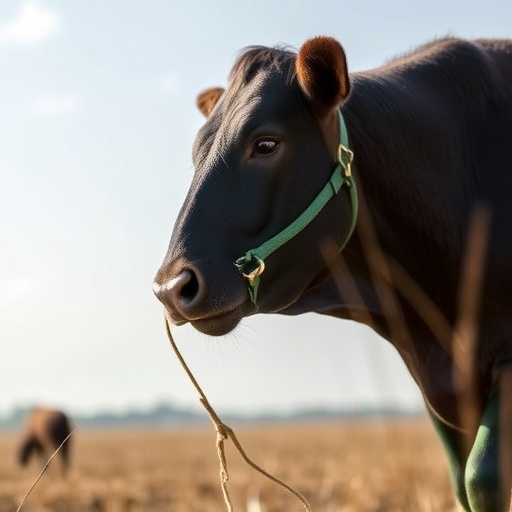
As the global climate rapidly shifts, agriculture stands at the crossroads of unprecedented challenges and transformative opportunities. Farmers around the world must navigate an increasingly unpredictable landscape marked by frequent droughts, excessive precipitation, and extreme weather events. These climatic uncertainties not only jeopardize crop yields but also complicate the decisions farmers must make regarding their management strategies and risk tolerance. A groundbreaking study emerging from the collaborative efforts of the University of Illinois Urbana-Champaign and Michigan State University delves into the nuanced risk preferences of farmers, revealing how context fundamentally shapes their decision-making processes under climate-induced uncertainty.
This research comes at a critical juncture when agricultural stakeholders and policymakers urgently seek insights to craft adaptive strategies that ensure food security and sustainable farming livelihoods. The principal investigators, led by Dr. Natalie Loduca, who serves as a clinical assistant professor in the Department of Agricultural and Consumer Economics at the University of Illinois, employed an innovative experimental economics approach to decode how farmers weigh risks in diverse contexts. By investigating both general financial risk attitudes and the distinct complexities inherent in agriculture-specific scenarios, the study offers a comprehensive perspective on farmer behavior.
At the heart of the study is a choice experiment methodology, a staple in economic analysis, which presents participants—primarily corn and soybean producers managing extensive acreage in Michigan—with paired scenarios involving varying degrees of risk and expected rewards. Initially, farmers engaged with hypothetical monetary lotteries juxtaposing high-risk/high-reward options against safer, lower-yield alternatives. This exercise establishes a baseline for general risk aversion traits divorced from agricultural specifics. Subsequently, the experiment introduced more realistic farming-related decisions, such as whether to invest in adaptive infrastructure such as drainage systems, irrigation technology, drought-resistant seed variants, or crop insurance.
These agricultural decision points were systematically crafted to reflect real-world trade-offs that corn producers encounter. For example, choosing to invest in irrigation infrastructure might mitigate the risk of crop failure during drought but requires upfront capital and confidence in the technology’s efficacy. Conversely, opting out of intervention exposes the farmer to greater yield volatility but preserves immediate liquidity. The scenarios meticulously quantified the potential impacts on a hypothetical 40-acre cornfield’s revenue, taking into account the probabilistic outcomes of weather-induced yield fluctuations.
One of the study’s most salient findings is the pronounced heterogeneity in risk preferences when farmers confront agricultural uncertainties compared to general financial gambles. While risk aversion characterized responses across the board, the agricultural contexts unveiled a broader spectrum of attitudes. Some farmers exhibited extreme caution, demonstrating a preference for guaranteed but modest returns, presumably reflecting past exposure to climate shocks and a focus on preserving capital. Others displayed greater tolerance for variability, potentially driven by optimism about technological solutions or the imperative to pursue higher rewards in a competitive marketplace.
This divergence in risk tolerance underscores the inadequacy of one-size-fits-all policy interventions. Dr. Loduca emphasizes that recognizing the spectrum of farmer attitudes is central to designing adaptive programs that resonate with diverse constituencies. Policies that incentivize investment in climate-resilient technologies will likely find a receptive audience among highly risk-averse producers, who prioritize minimizing exposure to adverse weather. Meanwhile, less risk-averse farmers might respond better to initiatives that emphasize innovation and flexibility, such as diversified cropping systems or dynamic insurance products.
Further amplifying the relevance of the findings is the involvement of Dr. Scott Swinton, professor emeritus at Michigan State University and a respected authority on agricultural economics and risk management. Together with the expertise provided by Michigan State University Extension services, the research team successfully engaged a representative sample of Michigan’s large-scale corn and soybean farmers. This strong partnership ensured that the findings not only bear strong empirical rigor but also reflect the lived realities of producers grappling with climatic challenges in the American Midwest.
Importantly, the research transcends theoretical inquiry by linking measured risk preferences to actual decision-making. The team is advancing a longitudinal investigation aimed at tracing how farmers’ expressed tolerance for risk correlates with tangible investments in adaptive strategies over time. This endeavor promises to unravel the complex interplay between attitudes and behaviors, offering predictive power essential for robust policy design and effective climate adaptation planning.
At a technical level, the experimental design incorporates robust econometric modeling to estimate individual risk aversion parameters from the recorded choice data. The dual-structure of choices—general financial lotteries juxtaposed with detailed, context-rich agricultural decisions—enables a sophisticated decomposition of risk attitudes into components associated with abstract financial uncertainty versus applied agricultural risks. The findings thereby contribute to a growing literature emphasizing the contextual specificity of economic preferences, particularly in sectors vulnerable to environmental variability.
The implications for climate-smart agriculture are profound. As climate change intensifies, resilience will depend not merely on technological innovation but equally on understanding the human dimensions of adaptation—the perceptions, preferences, and behaviors of those at the frontline. This study’s revelations open pathways for more finely tuned policy instruments, including tailored extension services, differentiated insurance products, and stratified funding mechanisms aimed at heterogeneous farmer populations.
The research received significant support through Hatch funding from USDA’s National Institute of Food and Agriculture, as well as from Michigan AgBioResearch, underscoring the institutional commitment to advancing knowledge at the nexus of climate risk and agricultural economics. Published in the Journal of the Agricultural and Applied Economics Association, the paper titled “Farmer risk preferences: Does context matter?” offers an invaluable resource for academics, policymakers, and practitioners vested in the future of sustainable farming under climate uncertainty.
Beyond its immediate agricultural focus, this study also resonates with broader themes in behavioral economics and decision sciences. It illustrates how risk preferences are fluid and deeply embedded within context, challenging the classical assumption of stable, context-independent risk attitudes. Insights derived here could inspire analogous research in other climate-sensitive sectors such as fisheries, forestry, and urban planning where uncertainty and risk management are equally pivotal.
Ultimately, as farmers confront a rapidly changing climate landscape, understanding the nuanced tapestry of their risk preferences is no longer academic but existential. This pioneering work provides a scientific foundation upon which adaptive strategies can be built—strategies that are not only technically sound but socially attuned, enhancing resilience and sustainability in the face of climatic adversity.
Subject of Research: Farmer risk preferences and decision-making under climate-induced uncertainty in agriculture.
Article Title: Farmer risk preferences: Does context matter?
News Publication Date: 30-Mar-2026
Web References:
https://onlinelibrary.wiley.com/doi/10.1002/jaa2.70038
References:
Loduca, N., & Swinton, S. (2026). Farmer risk preferences: Does context matter? Journal of the Agricultural and Applied Economics Association. DOI: 10.1002/jaa2.70038
Image Credits: Elizabeth Schultheis, Michigan State University.
Keywords: Agriculture, Risk management, Economics, Climate change adaptation, Farmer decision-making, Crop insurance, Irrigation, Drought-tolerant seeds, Agricultural economics.
Tags: adaptive farming strategies for climate changeagricultural risk management and policyclimate-driven agricultural riskscontext-dependent decision making in farmingdrought and excessive rainfall effects on agricultureexperimental economics in agriculturefarmer risk preferences under climate uncertaintyfood security and climate adaptationimpact of extreme weather on crop yieldsMichigan State University climate adaptation studysustainable farming under climate variabilityUniversity of Illinois agricultural research