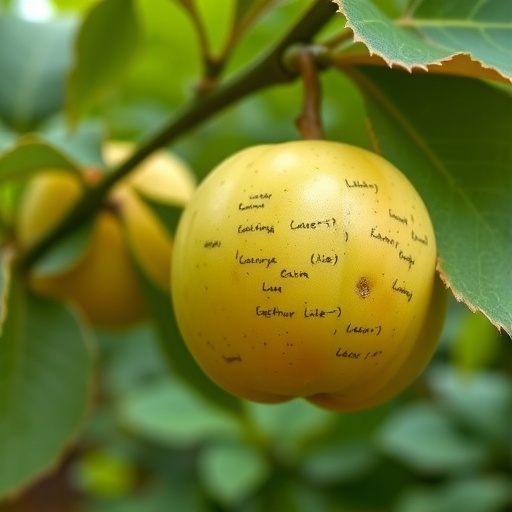
In a notable stride toward sustainable agriculture, researchers at Universitat Jaume I of Castelló, in collaboration with GEA Biotechnology, have pioneered an innovative antifungal aqueous suspension designed to combat fungal infections in crops and fruits throughout both pre-harvest and post-harvest phases. This advancement addresses a critical challenge in agriculture: mitigating fungal pathogens responsible for significant crop losses and deterioration in fruit quality. The new formulation emerges as an environmentally conscious alternative to conventional synthetic fungicides, presenting a technological leap with profound implications for agricultural biotechnology and crop management industries globally.
Central to this novel antifungal strategy is the utilization of biodegradable microcapsules made from chitosan, a natural biopolymer derived from chitin. These microcapsules encapsulate anethole, a naturally occurring compound renowned for its potent antifungal properties. The encapsulation is not mere packaging; it serves to enhance the stability and longevity of anethole, a compound that traditionally faces rapid degradation when applied directly. By protecting anethole within these microcapsules, the formulation ensures a controlled and sustained release of the active agent on the surfaces of crops and fruits, thereby maximizing its antifungal efficacy across various stages of crop development and post-harvest storage.
The research team, spearheaded by Carolina Clausell and coordinated by Aurelio Gómez Cadenas of the Ecophysiology and Biotechnology research group, emphasizes the ecological and functional superiority of this biotechnological advancement. Unlike conventional synthetic fungicides that often leave harmful residues and contribute to environmental toxicity, the chitosan-anethole suspension offers a biodegradable and non-toxic solution. This formulation not only curtails fungal infections effectively but also aligns with the increasing global demand for sustainable farming practices and the reduction of chemical inputs in food production.
From a formulation science perspective, the aqueous suspension demonstrates remarkable stability and ease of application. Its adaptable nature allows for seamless integration into existing agricultural treatment protocols, both in-field and during post-harvest storage. This dual applicability is a significant advantage, as it facilitates continuity in fungal protection through the entire lifecycle of the crop, thereby safeguarding yield and quality from the point of growth to the market shelf. Laboratory validations have underscored its broad-spectrum efficacy against numerous phytopathogenic fungi notorious for causing crop diseases and fruit spoilage, setting a promising precedent for future in-field application trials.
The encapsulation technology underlying this suspension deserves particular attention. Chitosan microcapsules act as both a protective barrier and a delivery vehicle. Encapsulation shields anethole from environmental factors such as sunlight, oxidation, and moisture, which commonly degrade natural volatile compounds rapidly. Furthermore, the controlled-release mechanism ensures the antifungal agent is dispensed progressively rather than in a single burst, maintaining effective concentrations at the target sites over extended periods. This sustained bioactivity translates into reduced frequency of application, lowering labor and chemical input costs for farmers.
In terms of intellectual property and commercial potential, the antifungal suspension has been secured under a European patent application that is jointly owned by Universitat Jaume I and GEA Biotechnology. This legal protection paves the way for further development, scaling, and market entry activities. Notably, the project has been financially supported by the European Regional Development Fund (ERDF) for the Valencian Community (2021–2027) as part of action INNEST/2023/122, underscoring the strategic importance and regional commitment to fostering innovative biotech solutions for agriculture.
Carolina Clausell elucidates that the encapsulation not only fortifies the natural compound’s antifungal action but also significantly enhances its practical use in agriculture and post-harvest contexts. The ability to prolong the efficacy of anethole while maintaining its natural, eco-friendly profile represents a meaningful advancement over existing chemical fungicides. This is crucial for stakeholders aiming to minimize chemical residues in food products and environmental contamination in farming ecosystems.
Beyond laboratory success, this biotechnological development exemplifies an emerging trend in plant protection: harnessing nature-derived compounds delivered through advanced formulation chemistry. This integrative approach optimizes both efficacy and environmental safety, addressing the pressing challenge of balancing agricultural productivity with sustainability. As regulatory frameworks worldwide increasingly favor green alternatives to synthetic pesticides, innovations like the chitosan-anethole suspension could define the future standard for crop disease management.
Moreover, the versatility of this aqueous suspension is poised to attract significant interest from the biotechnology and agricultural sectors. Its compatibility with various crops and treatment modalities indicates broad applicability, which can be further tailored to specific regional and crop-specific requirements. The researchers are actively seeking industry partnerships to accelerate the adaptation and commercialization phases, aiming to offer farmers—globally—the means to protect their harvests effectively while reducing ecological footprints.
With rising global food demands and escalating concerns about fungicide resistance and environmental harm, this innovation arrives at a critical juncture. By improving the antifungal performance of natural compounds and delivering them through biodegradable carriers, the developed suspension offers a dual benefit: enhancing crop protection and supporting sustainable agricultural practices. The convergence of biotechnology, material science, and agronomy embodied in this project reflects the interdisciplinary approach necessary for next-generation agricultural solutions.
In summary, the antifungal aqueous suspension developed by Universitat Jaume I and GEA Biotechnology represents a compelling advancement in crop protection technology. Through the strategic encapsulation of anethole within chitosan microcapsules, the formulation offers a stable, effective, and environmentally friendly alternative to synthetic fungicides. It promises to reduce crop losses, extend fruit shelf-life, and promote sustainable farming—contributing to resilient food systems. Supported by European patent protection and ERDF funding, this innovation stands ready for further development and commercial adaptation, holding transformative potential for the global agricultural sector.
Subject of Research: Development of a biodegradable antifungal aqueous suspension using chitosan microcapsules encapsulating anethole for crop and fruit protection.
Article Title: Innovative Biodegradable Antifungal Suspension Unlocks New Horizons in Sustainable Crop Protection
News Publication Date: Not specified
Web References:
– Universitat Jaume I Ecophysiology and Biotechnology Group: http://www.uji.es/serveis/ocit/base/grupsinvestigacio/detall?codi=122
– GEA Biotechnology: https://www.geabiotech.com/
Image Credits: Universitat Jaume I of Castellón
Keywords: antifungal technology, biodegradable microcapsules, chitosan, anethole, sustainable agriculture, crop protection, post-harvest preservation, natural fungicides, biotechnology, controlled release, phytopathogenic fungi, agricultural innovation
Tags: agricultural biotechnology innovationsanethole antifungal properties in agriculturebiodegradable chitosan microcapsules for cropscontrolled release antifungal agentscrop loss prevention techniquesenvironmentally friendly crop protection solutionsfungal pathogen control in fruit storageGEA Biotechnology and Universitat Jaume I collaborationmicroencapsulation technology in agriculturenatural biopolymer fungicide alternativespre-harvest and post-harvest fungal protectionsustainable agriculture antifungal aqueous suspension