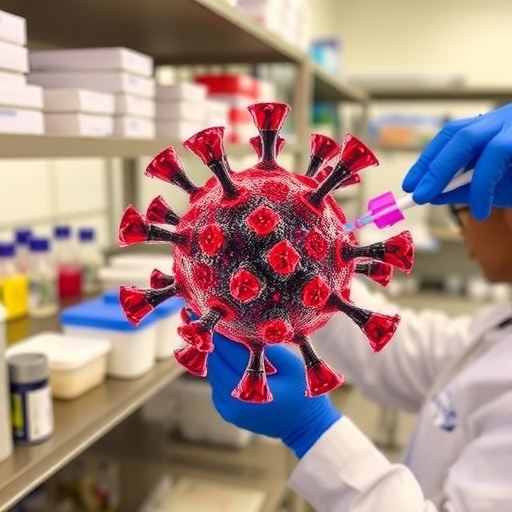
Recent advances in artificial intelligence have propelled Southwest Research Institute (SwRI) into the forefront of antiviral drug discovery with the identification of nearly two dozen promising compounds targeting the Bundibugyo species of the Ebola virus. This particular viral strain has resurfaced in the Democratic Republic of Congo, posing a significant public health concern with a mortality rate reaching up to 40%. The emerging outbreak demands urgent therapeutic solutions, and SwRI’s innovative use of AI-driven screening technologies is poised to accelerate the development of novel antivirals.
The Bundibugyo Ebola virus, first identified in Uganda in 2007, is part of the Filoviridae family, which encompasses other lethal viruses such as Zaire, Sudan, and Marburg. These viruses cause severe hemorrhagic fever characterized by systemic bleeding, septic shock, metabolic acidosis, and multi-organ failure. Given the high fatality and limited treatment options, the urgency of finding effective antiviral agents is paramount. Traditional antiviral discovery pipelines have been slow, but SwRI is leveraging breakthroughs in molecular docking and machine learning to transform this landscape.
SwRI’s proprietary Rhodium™ molecular docking software combines physics-based modeling with advanced computational algorithms to predict how candidate drug molecules interact with viral proteins. This software enables rapid virtual screening of vast chemical libraries by simulating molecular binding affinities and pharmacokinetic properties. The integration of Rhodium™ with large language model (LLM) artificial intelligence tools represents a groundbreaking convergence of computational chemistry and natural language processing, which substantially reduces the time from compound ideation to experimental validation.
This collaborative effort is part of a sustained partnership between SwRI and Texas Biomedical Research Institute, a leading institution specializing in high-containment virus research. Texas Biomed operates one of the world’s few Biosafety Level 4 (BSL-4) laboratories, where it conducts live-virus testing under stringent biocontainment protocols. SwRI’s rapid identification of candidate drugs is uniquely complemented by Texas Biomed’s capability to assess antiviral efficacy and safety against live Bundibugyo virus, given the enhanced biosafety and technical expertise available at their cutting-edge facilities.
The motivation behind this collaboration is clear: while existing antivirals have shown some efficacy against other Ebola strains, none are approved specifically for Bundibugyo Ebola virus to date. SwRI and Texas Biomed’s decade-spanning alliance commenced with work funded by the Defense Threat Reduction Agency (DTRA), focusing initially on combinatorial therapies targeting the Zaire Ebola virus. A small molecule known as “M7” emerged from this research, functioning as a host-directed antiviral that potentially interferes with pathways common across multiple Ebola species. However, despite M7’s potent antiviral activity, its pharmacological profile limited scalability toward approved drug manufacturing.
To overcome these limitations, SwRI initiated internally funded research to identify more chemically stable analogs of M7 using their GAMES (Generative Approaches for Molecular Encodings) language model. The GAMES system generates Simplified Molecular Input Line Entry System (SMILES) strings, a standardized notation representing chemical structures as text, enabling rapid virtual compound generation and prioritization. By leveraging this AI-driven platform, SwRI synthesized 18 novel analogs optimized not only for biological activity but also for synthetic accessibility and supply chain robustness, considering the urgency of outbreak response.
This artificial intelligence-aided approach marks a paradigm shift from traditional high-throughput screening to intelligent, targeted compound design. The model’s ability to generate molecular candidates that meet multiple criteria — including potency, stability, and manufacturability — allows researchers to bypass the conventional trial-and-error method, accelerating the preclinical pipeline significantly. More importantly, focusing on readily available chemical precursors ensures that promising candidates can move swiftly into laboratory synthesis and in vitro evaluation without delays associated with supply bottlenecks.
Texas Biomed’s upcoming screening of these AI-designed compounds in their BSL-4 laboratory represents a critical step toward validating their antiviral potential. Live-virus efficacy testing will determine whether these molecules inhibit viral replication effectively and if they demonstrate tolerance in a biological system. Positive results could swiftly lead to advance preclinical studies and eventual clinical trials, bridging the gap between computational predictions and real-world therapeutic applications.
Beyond immediate therapeutic development, this research underscores the strategic importance of continuous investment in infectious disease research infrastructure. As articulated by Texas Biomed’s leadership, sustained financial and scientific commitments are essential to not only manage current outbreaks but also to build resilience against future viral threats worldwide. The integration of AI and biosafety expertise exemplifies how interdisciplinary collaboration can drive innovation and public health preparedness at an unprecedented pace.
Ebola virus infections, though geographically limited to certain regions of equatorial Africa, pose a global threat due to their high mortality and pandemic potential. Natural reservoirs, such as fruit bats, maintain these viruses in the wild, making spillover events unpredictable. Advancing antiviral capabilities specifically tailored to various Ebola species, including the less-studied Bundibugyo virus, is thus a crucial component of global epidemic prevention and response strategies.
SwRI’s application of machine learning and large language models in drug discovery is a testament to how artificial intelligence is revolutionizing biomedical research. By harnessing computational power to explore chemical space more judiciously, researchers can identify candidates that are both innovative and pragmatically suited for rapid deployment. The success of this approach in targeting the Bundibugyo virus could establish a framework for combating other emerging infectious diseases with similarly urgent therapeutic needs.
The synergy between SwRI’s technological innovations and Texas Biomed’s virological expertise is a model for future partnerships aiming to accelerate antiviral development pipelines. As the Bundibugyo outbreak evolves, these joint efforts provide hope for effective interventions that can reduce mortality and mitigate the public health impact. Moreover, the research sets a precedent for employing AI tools not only as supportive technologies but as active drivers of discovery in high-risk pathogen contexts.
This project fortifies the biomedical innovation environment in San Antonio, Texas, positioning the region as a critical hub for infectious disease research. With SwRI’s broad technical capabilities spanning multiple industries and Texas Biomed’s specialized virology focus, the collaboration epitomizes the multidisciplinary approach required for timely and impactful global health solutions. The ongoing work heralds a new era in which computational and experimental research converge to fight some of the world’s deadliest viruses with unprecedented speed and precision.
For more detailed information about SwRI’s drug discovery initiatives, interested parties can visit their dedicated page on structure-based drug design, outlining the advanced methodologies and tools employed to accelerate pharmaceutical development.
Subject of Research: Bundibugyo Ebola virus; antiviral drug discovery using AI-driven molecular docking and machine learning techniques.
Article Title: AI-Driven Discovery of Novel Antiviral Compounds Targets Deadly Bundibugyo Ebola Virus
News Publication Date: May 26, 2026
Web References: https://www.swri.org/markets/biomedical-health/pharmaceutical-development/drug-discovery-research/structure-based-drug-design?&utm_medium=referral&utm_source=eurekalert!&utm_campaign=ebola-research-pr
Image Credits: Southwest Research Institute
Keywords: Ebola virus, Bundibugyo virus, antiviral drug discovery, machine learning, molecular docking, Biosafety Level 4, Filoviridae, artificial intelligence, GAMES language model, SMILES, SwRI, Texas Biomed
Tags: AI-driven antiviral screeningBundibugyo Ebola virus researchcomputational drug repurposing for EbolaEbola virus antiviral drug discoveryemerging viral outbreak responseFiloviridae family viruseshemorrhagic fever treatment researchmachine learning in virologymolecular docking in drug discoveryRhodium molecular docking softwareSouthwest Research Institute antiviral developmentTexas Biomed Ebola collaboration