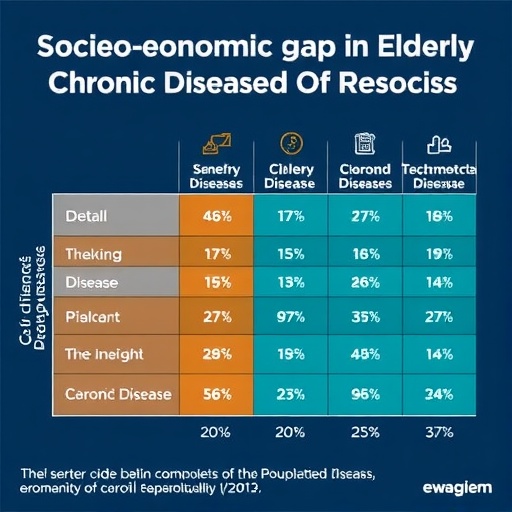
In an ambitious new study set amidst the rural landscapes of southwest China, researchers have illuminated a pressing health crisis that echoes across the developing world—multimorbidity among older adults, where multiple non-communicable chronic diseases (NCDs) coalesce, drastically impairing quality of life. This phenomenon, intertwined deeply with socioeconomic adversity, signals both a mounting public health challenge and a vivid portrait of the disparities that underlie chronic disease outcomes in aging populations.
Non-communicable chronic disease multimorbidity—the simultaneous presence of two or more long-term health conditions—has emerged as a pivotal factor influencing healthcare demand, patient outcomes, and social support systems globally. In resource-limited rural settings, where healthcare infrastructure and social protections are often scant, the burden of multimorbidity is profoundly exacerbated by socioeconomic variables such as income, education, and access to medical care. This cross-sectional study, published in BMC Geriatrics, delivers a comprehensive exploration of how these disparities shape the landscape of disease prevalence and affect daily functioning among older adults in rural southwest China.
The conceptual framework underpinning this research acknowledges that chronic diseases seldom exist in isolation. In fact, their confluence can catalyze a downward spiral in physical capacity, psychological well-being, and social engagement. Conditions such as hypertension, diabetes, chronic respiratory diseases, and arthritis interplay in complex ways to diminish an individual’s independence, particularly impacting Activities of Daily Living (ADLs)—the routine tasks essential for self-care. Understanding the distribution and determinants of multimorbidity hence becomes critical for designing targeted interventions that go beyond disease treatment to encompass holistic care and support.
Leveraging robust epidemiological methodologies, the researchers executed a large-scale survey encompassing diverse villages within rural southwest China. This region, characterized by unique sociocultural dynamics and economic challenges, offers a stark context for investigating how chronic disease patterns correlate with socioeconomic markers. Participants, all aged 60 and above, underwent comprehensive health assessments, including detailed medical histories and functional status evaluations. The researchers employed standardized instruments to rigorously define multimorbidity and gauge ADL impairments, ensuring methodological precision and replicability.
A central revelation of the study is the stark disparity in multimorbidity prevalence across different socioeconomic strata. Older adults with lower income levels and minimal formal education exhibited significantly higher rates of multiple chronic conditions. This association underscores the insidious role that poverty and limited health literacy play in fostering vulnerabilities to chronic diseases. In many cases, disadvantaged individuals encounter barriers to timely diagnosis, preventive care, and effective disease management, perpetuating cycles of ill health.
The research further dissects how these disparities translate into real-world functional impairments. Multimorbidity was found to detrimentally impact the ability of older individuals to perform ADLs, which encompass essentials like bathing, dressing, eating, and mobility. Given that the capacity to independently manage daily tasks is a cornerstone of aging with dignity, these findings highlight the confluence of clinical and social dimensions shaping elder health outcomes in rural China.
In examining the specific diseases contributing to multimorbidity, the study identified hypertension, diabetes, chronic respiratory conditions, and musculoskeletal disorders as predominant clusters. Their co-occurrence intensifies symptom burden and complicates therapeutic regimens, complicating efforts at disease control. The presence of such conditions in tandem not only accelerates physiological decline but compounds psychological stress, often precipitating a decrement in social participation and self-efficacy.
From a mechanistic standpoint, the study posits several pathways through which socioeconomic disparities exacerbate multimorbidity and ADL impairment. Chronic stress associated with poverty, exposure to environmental risk factors like pollution and poor nutrition, limited access to healthcare services, and reduced social capital all converge to impair health trajectories. Moreover, rural healthcare settings often lack the integrated care models needed to address the complexity of multimorbidity, further disadvantaging these populations.
This comprehensive assessment brings to light the critical necessity for policymakers and healthcare providers to prioritize equitable resource allocation and develop culturally tailored, multidisciplinary interventions. Strategies may include enhancing community-based health education, improving screening and diagnostic services, training healthcare workers in multimorbidity management, and fostering social support networks that empower older adults to maintain independence.
Importantly, the findings call for a paradigm shift in addressing chronic disease in rural settings—not merely treating individual diseases but recognizing the syndemic effect of multimorbidity within its socioeconomic context. Such an approach requires cohesive action among public health authorities, social services, and local communities to dismantle the structural barriers perpetuating health inequities.
Looking ahead, the study advocates for longitudinal research to unravel causal pathways and evaluate intervention efficacy over time. Incorporating advanced data analytics and precision medicine could further refine risk stratification, enabling targeted support for the most vulnerable older adults. Additionally, integrating traditional Chinese medicine perspectives with modern healthcare might offer novel avenues for holistic care tailored to rural cultural realities.
In summary, this pioneering investigation into socioeconomic disparities and multimorbidity among older adults in rural southwest China substantially advances understanding of how chronic disease burdens interlace with social determinants to impair function and quality of life. By articulating these complex relationships with scientific rigor and practical insight, it lays a foundational blueprint for addressing one of the fastest growing health concerns of our era. The multidimensional nature of multimorbidity necessitates equally multifaceted solutions that weave clinical, social, and policy threads into a resilient fabric of elder care.
The resonance of these findings extends well beyond rural China, offering critical lessons for global health stakeholders grappling with aging populations and burgeoning chronic disease prevalence. As the demographic tide shifts worldwide, decoding and mitigating the interplay of socioeconomic factors and multimorbidity will be imperative to fostering healthy, dignified aging for all.
Subject of Research: Socioeconomic disparities and prevalence of non-communicable chronic disease multimorbidity among older adults; impact on activities of daily living in rural southwest China.
Article Title: Socioeconomic disparities in the prevalence of non-communicable chronic disease multimorbidity and their impact on activities of daily living among older adults in rural southwest China: a cross-sectional study.
Article References:
Li, Gh., Bao, Qr., Shi, Rm. et al. Socioeconomic disparities in the prevalence of non-communicable chronic disease multimorbidity and their impact on activities of daily living among older adults in rural southwest China: a cross-sectional study. BMC Geriatr (2026). https://doi.org/10.1186/s12877-026-07697-z
Image Credits: AI Generated
Tags: aging population health challengeschronic disease burden in elderlychronic disease multimorbidity in rural Chinahealthcare access in resource-limited settingsimpact of non-communicable diseases on older adultsmultimorbidity and healthcare demandpublic health in developing countriesquality of life and multimorbidityrural health inequalities and chronic illnesssocial determinants of health in agingsocioeconomic disparities in elderly healthsocioeconomic factors affecting chronic diseases