Nestled in one of the most ecologically unique and biologically rich regions on the planet, the Galápagos Islands have long fascinated scientists and explorers alike. Known for their distinct array of endemic species such as marine iguanas and giant tortoises, this volcanic archipelago continues to yield unexpected biological discoveries. Recently, researchers unveiled the discovery of a new marine species—a minuscule yet captivating blue octopus—adding to the Galápagos’ trove of rare and remarkable creatures. This discovery, published in the esteemed journal Zootaxa, underscores the continuing mystery and diversity that the deep sea harbors beneath these iconic islands.
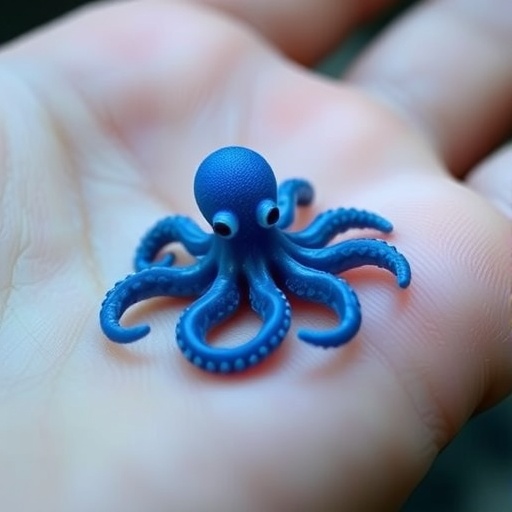
The detection of this new octopus species was facilitated during a 2015 deep-sea expedition aboard the exploration vessel E/V Nautilus. This mission was conducted through a collaborative effort with the Charles Darwin Foundation and the Galápagos National Park Directorate, emphasizing the ongoing commitment to marine research in this critically important region. The expedition deployed a remotely operated vehicle (ROV) to investigate the largely uncharted seafloor near Darwin Island, recognized for its significant evolutionary history linked to Charles Darwin’s pioneering work. The ROV’s camera, traversing the ocean floor at depths approaching 1,773 meters, captured something extraordinary: a tiny octopus with a striking blue coloration, an unusual sight in this deep ocean environment.
The initial reactions of the scientists monitoring the ROV’s live feed reveal the wonder such discoveries inspire. The octopus was not only diminutive, approximately the size of a golf ball, but its vibrant blue hue immediately set it apart from known species inhabiting deep waters. Over the course of the expedition, multiple specimens were filmed, and one was successfully retrieved for detailed analysis. This specimen was transported to the Charles Darwin Research Station, a hub for marine biology research and biodiversity management. Here, specialists meticulously examined the creature, but uncertainties regarding its taxonomic classification prompted a consultation with octopus authority Janet Voight, curator emerita of invertebrates at Chicago’s Field Museum.
Upon receiving photographic evidence, Voight recognized that this octopus was unlike any species previously documented. Her expertise in cephalopod evolution positioned her uniquely to lead the formal description of this novel organism. However, categorizing a new species in such detail involves examining anatomical features often hidden beneath the organism’s external morphology—structures such as the beak, mouthparts, and teeth, which are integral to understanding species distinctions within the Octopoda order. Yet, the rarity of the specimen posed a challenge: the destructive dissection typical for such studies was off the table, necessitating a non-invasive approach.
To circumvent this obstacle, Voight partnered with Stephanie Smith, manager of the Field Museum’s X-ray computed tomography (CT) laboratory. Utilizing advanced micro CT scanning technology, they could digitally “dissect” the specimen without causing physical harm. This approach involved capturing thousands of cross-sectional X-ray images which were computationally reconstructed into a detailed three-dimensional model. This cutting-edge imaging allowed researchers to examine internal organs, bone structures, and soft tissues in unprecedented detail, facilitating a comprehensive morphological analysis that preserved the specimen intact.
Micro CT imaging offers significant advantages when studying rare and delicate marine organisms like this newly found octopus. Traditional imaging of soft tissues often requires staining with heavy-metal contrast agents to enhance visibility, but these agents can damage or alter the tissues—an unacceptable compromise for unique type specimens. In this case, however, the micro CT scans produced sufficiently high-resolution images without such staining, enabling the team to observe intricate internal anatomical features that informed the classification process. This technology exemplifies how modern scientific tools are revolutionizing taxonomy and species discovery, especially in inaccessible habitats like the deep sea.
From the morphological data obtained, the researchers described the species as Microeledone galapagensis, a previously unknown member of the Megaleledonidae family. The name reflects the creature’s provenance in the Galápagos and its smallest known size among related octopods. This discovery marks a significant milestone in Voight’s long-standing career dedicated to cephalopod evolution; it represents the first octopus species she has formally described. The study offers fresh insights into the biodiversity of deep-sea octopods, a group that remains poorly understood due to the challenges of accessing their habitats.
The ramifications of this discovery extend beyond taxonomy. It highlights the vastness of the ocean’s unexplored territories and the potential for myriad undiscovered species lurking in its depths. The oceans cover more surface area than all terrestrial landmasses combined, yet human knowledge of marine biodiversity, especially in deep-sea environments, remains scant. Each new species cataloged enriches our understanding of marine ecosystems, their ecological interconnections, and evolutionary histories. This in turn informs conservation strategies critical to preserving these fragile habitats from mounting environmental threats.
Salome Buglass, a marine scientist formerly at the Charles Darwin Foundation and co-author of the study, underscores the importance of such research. The painstaking process of securing expert identification for this tiny blue octopus exemplifies the diligence necessary to unlock the secrets hidden in deep ocean specimens. She stresses that discoveries like Microeledone galapagensis are pivotal in appreciating unexplored ecosystems and reinforcing the urgency to protect them. In essence, every newly described species adds a piece to the puzzle that helps scientists advocate for marine conservation policies grounded in empirical biodiversity data.
This study is a testament to interdisciplinary collaboration, combining deep-sea exploration technology, museum curation expertise, and cutting-edge imaging to push the boundaries of marine biology. It also illustrates how the integration of novel scientific methodologies alongside classical taxonomy is essential for the precise characterization of lifeforms in extreme environments. By revealing previously unknown aspects of octopus diversity, this work enriches the broader scientific narrative about the adaptability and evolution of marine organisms.
As exploration advances, discoveries such as this tiny blue octopus are reminders that the natural world remains filled with wonders yet to be documented. The Galápagos Islands, long emblematic of evolutionary science, continue to serve as a compelling frontier for biological research. Through the synergy of technological innovation and dedicated scientific inquiry, our understanding of deep-sea life is poised to expand dramatically in coming years, highlighting both the marvels and the vulnerabilities of oceanic ecosystems.
Subject of Research: Discovery and Description of a New Deep-Sea Octopus Species, Microeledone galapagensis
Article Title: A new species of Microeledone from Galápagos Islands and an amended diagnosis of the Megaleledonidae (Octopoda: Incirrata)
News Publication Date: 24-May-2026
Image Credits: Courtesy of the Charles Darwin Foundation
Keywords: Deep-sea biology, marine biodiversity, octopus species, Galápagos Islands, Microeledone galapagensis, micro CT imaging, cephalopod taxonomy, evolutionary biology, ocean exploration, marine conservation, remotely operated vehicle, Charles Darwin Foundation
Tags: Charles Darwin Foundation marine studiesDarwin Island ocean floordeep-sea cephalopod speciesdeep-sea exploration GalápagosE/V Nautilus expedition 2015endemic species of Galápagosevolutionary marine biology researchGalápagos Islands marine biodiversitynew marine species Zootaxa publicationremotely operated vehicle ocean researchtiny blue octopus discoveryvolcanic archipelago marine life