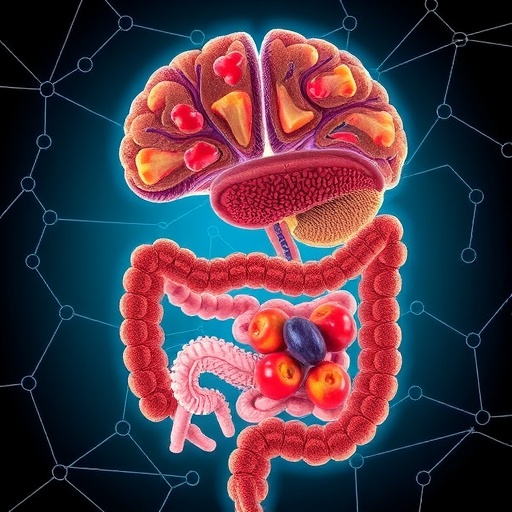
In the intricate dance of survival, animals navigate not merely through the quest for calories but by an evolved capacity to discern and seek specific nutrients essential for life. Protein, a cornerstone biomolecule comprising essential amino acids that organisms cannot synthesize endogenously, demands a sophisticated biological surveillance system to detect deficiency and prompt compensatory feeding behavior. Recent pioneering research led by Director Seong-Bae Suh at the Institute for Basic Science (IBS), in conjunction with collaborators from Seoul National University and Ewha Womans University, has unveiled a novel gut-brain axis mechanism delineating the exquisite interplay between neural and hormonal signals governing protein-seeking behaviors.
This groundbreaking study challenges the longstanding perception of the gut as a passive digestive conduit, positioning it instead as a dynamic sensory organ capable of monitoring internal nutrient states and communicating deficiencies directly to the central nervous system. Employing the genetically tractable model organism Drosophila melanogaster, the researchers have traced the molecular and neuronal circuitry that orchestrates dietary prioritization in response to essential amino acid deprivation. Utilizing sophisticated neural imaging techniques alongside behavioral assays and precision gene editing, the team dissected how gut epithelial cells respond to protein scarcity by secreting a peptide hormone designated CNMa.
CNMa operates at the nexus of gut-brain communication, effectuating a dual signaling mechanism that spans disparate time scales and modalities. Initially, CNMa triggers enteric neurons embedded within the gut lining, activating a rapid neural pathway that transmits real-time information regarding amino acid deficits to the brain’s feeding centers. This immediate response is complemented by a slower endocrine phase in which circulating CNMa acts systematically on distinct neuronal populations in the brain, reinforcing appetite for protein-rich foods and modulating feeding preferences over prolonged periods. The researchers observed that this mechanism selectively augments the motivation to ingest proteinaceous material while concurrently suppressing carbohydrate appetite, an effect manifested through the inhibition of DH44-expressing neurons known to mediate sugar sensing.
Intriguingly, this gut-derived signal is modulated by the microbiome — the consortium of commensal bacteria residing within the intestinal milieu. Flies devoid of these microbial populations exhibited heightened activation of amino acid-responsive neurons, implying that gut microbiota indirectly influence feeding behaviors through intricate biochemical crosstalk with host sensory systems. This revelation adds a new dimension to the understanding of how symbiotic relationships impact host metabolism and nutrient acquisition strategies.
Extrapolating these findings to mammalian models, the research team extended their inquiry to mice, establishing that the gut-brain communication axis mediated by CNMa is evolutionarily conserved across phyla. Protein-deficient mice demonstrated a pronounced inclination for essential amino acid consumption, independent of the previously characterized hormone FGF21, which was hitherto thought integral to protein appetite regulation. This discovery posits the existence of alternative, yet uncharacterized nutrient-sensing mechanisms that contribute to maintaining amino acid homeostasis.
The physiological implications of this bidirectional gut-brain dialogue are profound. Rather than eliciting a generalized increase in food intake, the system refines feeding behavior, tuning it to rectify specific nutritional imbalances. Such nutrient-specific appetitive adjustments underscore the evolutionary imperative of diet selectivity in optimizing fitness and survival. The brain’s recalibration of hedonic valuation for diverse macronutrients, under the influence of gut-derived signals, represents a paradigm shift in the understanding of appetite control.
At the cellular level, enterocytes within the intestinal epithelium detect diminished levels of dietary protein and respond by synthesizing CNMa, thus functioning as nutritional sentinels. The peptide’s ability to engage both enteric neurons and distant brain centers exemplifies a complex interplay between local fast-acting neural circuits and systemic slower hormonal effects. This layered regulatory architecture ensures both immediate and sustained correction of essential amino acid deficits.
Furthermore, the suppression of carbohydrate preference via inhibition of DH44 neurons highlights the nuanced neural mechanisms that recalibrate taste and reward pathways according to internal nutrient states. This neural inhibition mechanism reinstates a balanced macronutrient intake, favoring survival-critical proteins over carbohydrates, which although calorie-rich, may be suboptimal under conditions of protein scarcity.
From a therapeutic perspective, unraveling the multifaceted gut-brain axis controlling nutrient sensing holds enormous promise for addressing contemporary health challenges such as obesity, metabolic syndrome, and eating disorders. Current appetite-modulating pharmaceuticals predominantly harness gut hormone pathways; however, this study identifies new molecular targets and neural modules that could revolutionize treatment modalities by promoting nutrient-specific appetite adjustments rather than broad-spectrum appetite suppression or stimulation.
Director Suh emphasizes the novelty of these findings with respect to their contribution to fundamental physiological knowledge and future clinical applications: “Our data redefine the gut as an active participant in neural decision-making processes related to feeding, implicating a constellation of signals that precisely tailor dietary choices to meet biochemical necessities. This knowledge paves the way for next-generation interventions that align with the body’s intrinsic nutrient-sensing circuitry.”
The publication of this work in the esteemed journal Science on May 21, 2026, marks a seminal advancement in nutritional neuroscience, elucidating how molecular dialogues between gut and brain shape behavior at the intersection of physiology and survival strategy. As research progresses, the identification of analogous peptides and pathways in humans may unlock personalized nutritional therapies and bolster the fight against diet-related diseases.
In summary, this comprehensive investigation into the protein appetite underscores the gut’s pivotal role in nutritional homeostasis, mediated by a sophisticated interplay of peptide signaling, neural circuitry, and microbial modulation. Through CNMa-induced pathways, the gut dynamically informs the brain of essential amino acid deficits, steering feeding behavior away from carbohydrates and towards protein-rich sources — a finely tuned adaptive mechanism conserved across evolution. Such insights extend the frontier of knowledge regarding nutrient-driven behavior and provide fertile ground for translational innovations in metabolic health.
Subject of Research: Gut-brain axis signaling in response to essential amino acid deficiency
Article Title: Complex interplay of neuronal and hormonal gut-brain responses to essential amino acid deficit
News Publication Date: 21-May-2026
Web References: 10.1126/science.adv3355
Image Credits: Institute for Basic Science
Keywords: Neuroscience, Physiology, Metabolism, Endocrinology, Nutrition, Gut microbiota, Hormone signaling, Nutrient sensing, Feeding behavior, CNMa peptide, Gut-brain communication
Tags: compensatory feeding response to protein lackDrosophila melanogaster dietary behavioressential amino acid deficiency detectionevolutionary adaptation for nutrient prioritizationgene editing in nutrient sensing researchgut epithelial cell nutrient monitoringgut peptide hormone CNMagut-brain axis protein cravinghormonal regulation of feeding behaviormolecular mechanisms of protein seekingneural circuitry of nutrient sensingneural imaging of gut-brain communication