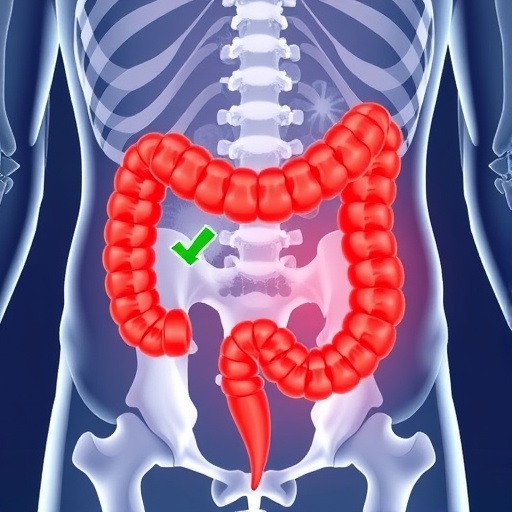
In a groundbreaking development in colorectal oncology, recent findings reveal that rectal cancer surgeries performed at hospitals accredited by the American College of Surgeons’ (ACS) National Accreditation Program for Rectal Cancer (NAPRC) significantly improve patient outcomes. This pivotal research, published in the Journal of the American College of Surgeons, elucidates how institutional accreditation not only augments the quality of surgical care but also reduces the likelihood of residual cancer at surgical margins—a key predictor of cancer recurrence.
Rectal cancer management demands precise coordination across diagnostics, preoperative planning, and surgical execution. The study undertook a comprehensive analysis using the National Cancer Database (NCDB), encompassing data from more than 1,500 facilities, to assess the impact of NAPRC accreditation status on oncologic outcomes following proctectomy. The focus was primarily on circumferential resection margin (CRM) positivity rates, reflecting the presence of malignant cells at the edges of resected tissue, which critically influence long-term patient prognosis.
A striking finding from the study was the absolute reduction of 1.1% in CRM positivity rates at NAPRC-accredited hospitals compared to their non-accredited counterparts, marking an 8.7% relative improvement. Although this may seem incremental, even modest decreases in positive margins translate into substantial clinical benefits, as residual cancer tissue significantly elevates recurrence risks and decreases overall survival. This reduction underscores the profound value of rigorous accreditation standards in elevating surgical precision and completeness.
Further differentiating NAPRC-accredited centers was the increased utilization of pretreatment carcinoembryonic antigen (CEA) testing. CEA is a tumor marker frequently elevated in colorectal malignancies, and its measurement prior to surgery serves multiple critical functions: it informs risk stratification, influences neoadjuvant treatment decisions, and establishes a baseline for postoperative surveillance. Accredited hospitals showed a 4.2% absolute increase in pretreatment CEA testing, emphasizing a systematic approach to comprehensive oncologic care.
This elevated standard in pretreatment assessment reflects the broader NAPRC mandate that enforces multidisciplinary collaboration, documentation, and adherence to evidence-based protocols. Accreditation requires hospitals to maintain specific infrastructure capabilities, ensure ongoing staff education, and accumulate surgical experience targeting rectal cancer, thereby institutionalizing a high level of care consistency and quality.
Interestingly, the study observed no significant disparity in the timeliness of treatment initiation between accredited and non-accredited institutions, indicating that enhanced quality practices do not compromise access to prompt care. This finding alleviates concerns that accreditation requirements could introduce treatment delays due to procedural or bureaucratic complexities.
The implications of these data resonate deeply in the broader cancer care landscape, where institutional experience and process quality often dictate outcomes more than individual clinician skill alone. Hospitals equipped with structured accreditation programs harness collective expertise and resources, fostering environments that facilitate meticulous surgical technique, thorough preoperative evaluation, and robust postoperative monitoring.
In a complementary analysis recently reported in JAMA Surgery, researchers corroborated that hospitals receiving NAPRC accreditation experienced increased patient volumes without fostering fragmentation of care. This suggests accreditation programs can be operationally and financially sustainable, allowing specialized centers to handle more complex cases while maintaining cohesive and coordinated treatment pathways.
From the patient perspective, these revelations reinforce a critical paradigm shift in oncologic care: where patients receive treatment substantially influences survival and recurrence risk. Selecting an accredited center for rectal cancer surgery entails access to multidisciplinary teams adhering to standardized protocols, comprehensive diagnostic workup, and surgical excellence, collectively enhancing long-term prognosis.
Experts involved in the study underscore the importance of patient empowerment through informed healthcare choices. Engaging in discussions with providers about institutional accreditation status and adherence to evidence-based care standards is paramount. This advocacy ensures patients receive not just any care, but care aligned with best practices validated by rigorous assessment and oversight.
The stringent standards imposed by the NAPRC accreditation encompass not only measurable outcomes like CRM positivity but extend to process metrics including staff training, tumor board involvement, and infrastructure adequacy. These dimensions collectively cultivate a culture of continuous quality improvement crucial for managing complex diseases such as rectal cancer.
As rectal cancer treatment evolves, integrating multimodal therapies necessitates precise coordination across specialties including surgery, medical oncology, and radiation oncology. Accredited centers institutionalize this collaboration, translating into protocols that facilitate optimal sequencing and timing of treatments tailored to individual patient profiles.
The publication of these findings heralds an important milestone demonstrating that systemic improvements in healthcare delivery frameworks can yield tangible benefits in cancer care outcomes. It invites stakeholders across the surgical, oncologic, and health policy arenas to prioritize accreditation and quality benchmarks as catalysts for improving patient survival and quality of life.
In conclusion, the study definitively establishes that NAPRC accreditation correlates with enhanced oncologic outcomes in rectal cancer surgery, validating the investments in accreditation programs as essential for high-quality cancer care. Patients and healthcare providers alike are encouraged to recognize the critical role of institutional standards and to advocate for access to accredited centers to optimize treatment success.
Subject of Research: Impact of National Accreditation Program for Rectal Cancer (NAPRC) on surgical and oncologic outcomes in rectal cancer patients.
Article Title: Evaluation of the National Accreditation Program for Rectal Cancer and Association with Oncologic Outcomes After Proctectomy.
News Publication Date: 19-May-2026
Web References:
Journal of the American College of Surgeons Article
American College of Surgeons
References:
Becerra AZ, Lizarraga IM, Weigel RJ, et al. Evaluation of the National Accreditation Program for Rectal Cancer and Association with Oncologic Outcomes Following Proctectomy. Journal of the American College of Surgeons, 2026. DOI: 10.1097/XCS.0000000000001915
Keywords: rectal cancer, surgical oncology, National Accreditation Program for Rectal Cancer, NAPRC, circumferential resection margin, CEA testing, cancer recurrence, cancer surgery outcomes, hospital accreditation, colorectal cancer, oncologic quality metrics, multidisciplinary cancer care