In the relentless quest to treat disorders of consciousness—a spectrum that includes vegetative state/unresponsive wakefulness syndrome and minimally conscious state—clinicians and researchers grapple with the challenge of optimizing neuromodulatory therapies. Among these, spinal cord stimulation (SCS) has emerged as a beacon of hope, offering a non-invasive avenue to potentially restore arousal and improve functional connectivity within the brain. Despite its promise, the scientific community remains fragmented over the optimal parameters for SCS, particularly the stimulation frequency, with prior studies deploying a broad range from 5 Hz to 100 Hz without definitive consensus.
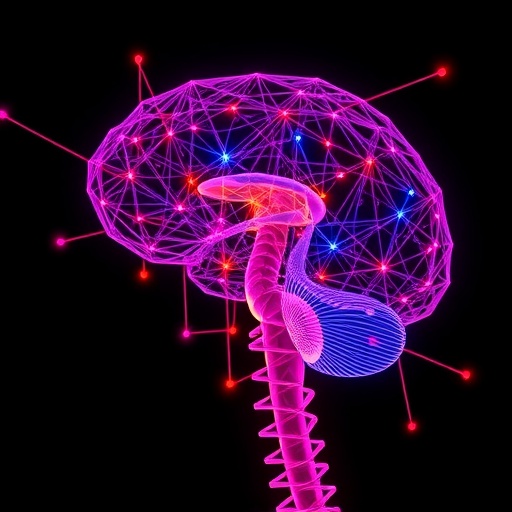
A pivotal recent investigation led by Nan Wang and colleagues at Beijing Tiantan Hospital endeavors to decode this enigma by delving into the frequency-specific neural dynamics underlying spinal cord stimulation in patients suffering from disorders of consciousness. This study stands apart by integrating two complementary neuroimaging modalities—electroencephalography (EEG) and functional near-infrared spectroscopy (fNIRS)—to simultaneously capture the electrophysiological and hemodynamic footprints of brain activity during stimulation. The dual-modal approach not only broadens the neurobiological insight but also allows reconstruction of brain signals within a shared three-dimensional cortical atlas, facilitating nuanced network-level analyses.
The investigation enlisted sixteen patients diagnosed with varying disorders of consciousness. Each patient underwent spinal cord stimulation across four discrete frequencies—5 Hz, 20 Hz, 70 Hz, and 100 Hz. Concurrent EEG–fNIRS recordings were collected throughout the stimulation sessions, enabling a comprehensive examination of brain responses from electrical and vascular perspectives. By reconstructing the source signals onto the cortical surface guided by an anatomical atlas, the researchers monitored fluctuations in both electrophysiological and hemodynamic activity across homologous brain regions.
To decode the complex reorganization of brain networks elicited by each frequency, the team employed functional connectivity analysis alongside graph-theoretical methodologies. These analytical frameworks quantified global and nodal network properties including global efficiency, characteristic path length, clustering coefficient, and nodal efficiency. These metrics illuminate how information flow and local clustering within neural circuits adapt dynamically before, during, and after stimulation. Importantly, these network changes were correlated with patients’ clinical evaluations—specifically their Coma Recovery Scale-Revised (CRS-R) scores—collected at baseline, initial stimulation, and at one month follow-up, tying functional connectivity alterations to tangible clinical outcomes.
The results revealed striking frequency-dependent dichotomies in brain network modulation. Stimulation at 5 Hz predominantly enhanced rapid electrophysiological integration. Theta-band oscillations exhibited increased global efficiency, while gamma-band activity demonstrated heightened nodal efficiency particularly in the right cingulate motor area—a region known for its involvement in frontolimbic circuits. This suggests that lower-frequency stimulation swiftly facilitates local information processing within networks associated with consciousness regulation.
Conversely, 70 Hz stimulation elicited more pronounced hemodynamic responses with a delayed onset, focused mainly in the occipital cortex and visual processing areas. The fNIRS data showed elevated local oxygenation alongside increased nodal clustering and efficiency in these regions, yet EEG measures remained comparatively unchanged. Such findings imply that high-frequency stimulation operates through mechanisms involving vascular and metabolic recruitment, possibly enhancing long-range connectivity and network reconfiguration beyond immediate electrical activity.
Interestingly, the intermediate frequencies—20 Hz and 100 Hz—did not produce significant improvements in brain network organization or clinical scores, underscoring the nuanced frequency dependency of spinal cord stimulation effects. The study’s findings collectively challenge the notion of a universal “optimal” frequency, advocating instead for a personalized neuromodulation strategy tailored to the preserved network profile and pathophysiological context of each patient.
Methodologically, this study leveraged sophisticated source reconstruction techniques for EEG and fNIRS signals to surmount longstanding spatial resolution limitations of surface recordings. For EEG, a boundary element method (BEM) model encompassing multiple tissue layers (scalp, skull, cerebrospinal fluid, and brain) augmented source localization accuracy via standardized low-resolution electromagnetic tomography (sLORETA). fNIRS source reconstruction employed weighted minimum norm estimation (wMNE) with spatially adaptive regularization to correct superficial signal bias, utilizing Monte Carlo light transport simulations within a five-layer Colin27 head model to obtain sulcal/gyral sensitivity maps. Together, these methods grounded the multimodal data in a convergent anatomical framework based on the widely utilized Desikan–Killiany atlas, enabling precise network mapping and intermodal comparisons.
Beyond scientific merit, this research redefines the clinical narrative surrounding spinal cord stimulation for disorders of consciousness. Rather than persisting in debates over whether stimulation works, it reframes the discourse toward mechanistic understanding of how different frequencies harness distinct neural and vascular pathways. The dual-signal signature identified—rapid electrophysiological integration at low frequency versus delayed hemodynamic recruitment at higher frequency—provides a compelling rationale for multi-parametric tailoring of neuromodulation.
Nonetheless, the authors caution that their findings are based on a relatively small cohort with heterogenous etiologies, emphasizing the need for larger, multicenter trials with extended follow-up to validate and refine these frequency-specific network biomarkers. Such efforts will be critical to transitioning spinal cord stimulation from empirical application toward precision therapy guided by mechanistically informed network markers.
Nan Wang and the research team, comprising experts across neuroscience, biomedical engineering, and clinical neurology, demonstrate how multimodal neuroimaging melded with graph theory can yield transformative insights into neuromodulation’s effects on the injured brain. Their work, published in the journal Cyborg and Bionic Systems, marks a significant stride in personalized medicine for severely impaired consciousness states. It heralds a future where treatments are not only tailored to clinical phenotypes but also optimized based on individual brain network dynamics, ultimately enhancing recovery potentials through informed nervous system modulation.
This groundbreaking investigation underscores the power of integrative neurotechnology and rigorous analytical frameworks to decode the brain’s complexity under therapeutic intervention. As spinal cord stimulation ventures from promising experiment to clinical mainstay, embracing its frequency-specific signatures offers new avenues to maximize benefits and unravel the intricate neuroscience of consciousness restoration.
Subject of Research: Frequency-specific brain network modulation by spinal cord stimulation in disorders of consciousness patients using simultaneous EEG and fNIRS
Article Title: Graph-Theoretical Signature from Neural and Vascular Signals Reveals Spinal Cord Stimulation Frequency-Specific Brain Network in Disorders of Consciousness Patients
News Publication Date: April 23, 2026
Web References: DOI: 10.34133/cbsystems.0539
Image Credits: Nan Wang, Beijing Tiantan Hospital
Keywords: disorders of consciousness, spinal cord stimulation, EEG, fNIRS, brain networks, functional connectivity, graph theory, neuromodulation, personalized medicine, electrophysiology, hemodynamics, frequency-specific stimulation
Tags: brain functional connectivity mappingdisorders of consciousness treatmentEEG and fNIRS integrationfrequency-specific brain networksgraph theory in neuroscienceminimally conscious state researchneural and vascular signal analysisneuroimaging multimodal approachesneuromodulation frequency optimizationspinal cord stimulation therapythree-dimensional cortical atlas reconstructionunresponsive wakefulness syndrome studies