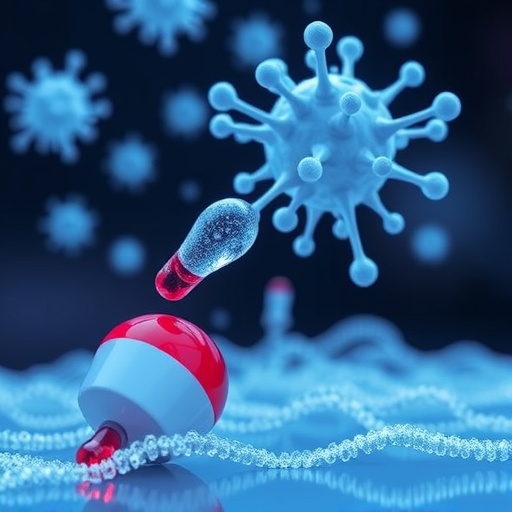
In the ongoing battle against antibiotic resistance, an alarming global health crisis, a new beacon of hope has emerged from the laboratories of Umeå University. Researchers have developed a novel class of compounds known as TriPcides that exhibit potent antibacterial activity against Staphylococcus aureus, including the notoriously resistant MRSA strains. This breakthrough offers a promising avenue toward addressing infections that have long challenged current antibiotic therapies, particularly due to the bacteria’s growing ability to evade conventional drugs.
TriPcides represent a unique approach by disrupting bacterial processes critical to infection rather than targeting growth alone. By interfering with the secretion of virulence factors, these compounds effectively disarm the bacteria, preventing them from establishing infection in host tissues. This mechanism differs significantly from traditional antibiotics that generally focus on inhibiting bacterial cell wall synthesis or protein production, offering a fresh strategy less likely to trigger rapid resistance.
One of the most striking features of TriPcides is their ability to combat persister cells—dormant variants of bacteria that remain metabolically inactive and thus evade eradication by existing antibiotics. Persisters are a significant clinical obstacle, as their survival leads to infection relapse once treatment ceases. The effectiveness of TriPcides against these dormant cells marks a critical advancement in the fight against chronic and recurrent bacterial infections.
Professor Fredrik Almqvist, leading the research, emphasizes that bacteria show minimal capacity to develop resistance against these synthetic compounds. Extensive testing against a broad range of clinical isolates has revealed no significant resistance, underscoring the potential durability of TriPcides’ antibacterial effects in real-world medical applications.
The global health implications of this discovery are profound. As antibiotic-resistant infections continue to rise worldwide, treatment options become increasingly limited, resulting in prolonged hospitalizations and higher mortality rates. TriPcides could revolutionize treatment protocols by offering a robust alternative that not only kills active bacterial populations but also eradicates the elusive persisters responsible for relapse.
Mechanistically, TriPcides exert their antibacterial properties by targeting bacterial cell membranes, causing disruption of essential physiological processes. These effects hinder bacterial communication and toxin secretion necessary for establishing infections. Laboratory experiments have confirmed the efficacy of these compounds against several Gram-positive pathogens, suggesting wide applicability.
Further research is needed before clinical translation can occur, but the implications for healthcare delivery are clear. TriPcides hold the potential to reduce the duration and complexity of treatment regimens for severe infections, thereby alleviating pressures on healthcare systems and optimizing resource allocation.
In addition to their promising clinical potential, the synthesis of TriPcides is tunable, allowing for chemical modifications that can optimize efficacy and reduce toxicity. This flexibility enhances their value as a platform for the development of next-generation antibiotics tailored to combat diverse bacterial pathogens.
The interdisciplinary collaboration behind this breakthrough combined the expertise of three research groups at Umeå University and was significantly facilitated by the Umeå Centre for Microbial Research (UCMR). This synergy of chemical synthesis, microbiology, and pharmacology was essential in translating molecular insights into viable therapeutic candidates.
TriPcides’ ability to suppress virulence factor secretion offers a dual-action mechanism, both neutralizing infection capabilities and reducing bacterial survival. This duality is especially crucial for treatment of multidrug-resistant infections, setting a new standard potentially transformative for infectious disease management.
As antibiotic resistance threatens to return medicine to a pre-antibiotic era, innovations like TriPcides provide a much-needed tactical advantage. Continued development and clinical testing will determine how these compounds can be integrated into current antimicrobial regimens, with optimistic prospects for curtailing the global spread of resistant bacterial infections.
This pioneering work not only advances scientific understanding of bacterial pathogenesis and persistence but also offers a tangible solution towards sustainable antibiotic stewardship. The advent of TriPcides could herald a new chapter in antimicrobial therapy, one where bacterial resistance is met with novel, effective defenses capable of safeguarding public health for decades to come.
Subject of Research: Cells
Article Title: Tunable TriPcides suppress virulence factor secretion during Staphylococcus aureus infection and kill dormant cells
News Publication Date: 6-May-2026
Web References: DOI: 10.1126/sciadv.aec9100
Image Credits: Simon Jönsson
Keywords: Antibiotic resistance, Staphylococcus aureus, MRSA, persister cells, bacterial membranes, virulence factors, synthetic antibiotics, drug resistance, infectious diseases
Tags: alternatives to traditional antibioticsantibiotic resistance solutionsbreakthrough in antibiotic developmentcombating MRSA infectionsinnovative infection control methodsnovel antibacterial compoundsovercoming antibiotic evasionpersister cell eradication strategiestargeting bacterial virulence factorstreating resistant Staphylococcus aureusTriPcides mechanism of actionUmeå University antibiotic research