In a groundbreaking study published in BMC Geriatrics, researchers have delivered the most comprehensive global assessment to date of how targeted nursing interventions influence the rehabilitation outcomes of elderly patients recovering from fractures. The work challenges longstanding clinical paradigms by demonstrating the nuances and efficacy of tailored nursing care strategies in optimizing recovery trajectories among this vulnerable population. Given the increasing global incidence of fractures among seniors, as demographic shifts tilt toward aging societies worldwide, this research carries enormous implications for healthcare policy and clinical practice.
Fractures, particularly those involving the hip, wrist, and spine, have long been recognized as significant impediments to health and independence in older adults. Compounded by comorbidities and physiological changes associated with aging, the rehabilitation process is complex and fraught with challenges. Conventional treatment pathways frequently emphasize surgical repair and pharmacologic management. However, the study by Xiong et al. shifts the focus to the often-underappreciated but crucial role of nursing interventions that extend well beyond traditional bedside care.
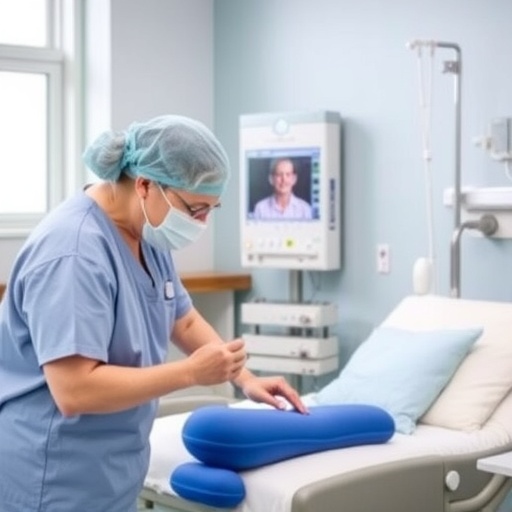
The research team employed a robust mixed-methods approach, aggregating data from an extensive network of international clinical settings that span diverse healthcare environments. By integrating quantitative outcomes with qualitative insights, the study elucidates how multifaceted nursing approaches—ranging from personalized pain management, mobility assistance, psychological support, to nutritional counseling—converge to markedly enhance functional recovery. These interventions collectively contribute to reducing hospital readmissions, accelerating return to baseline mobility, and improving overall quality of life.
Central to the findings is recognition of the intrinsic complexity of geriatric fracture rehabilitation, which demands adaptable, patient-centric nursing models. The researchers highlight how standardized intervention protocols risk neglecting individual patient needs shaped by cognitive status, social support networks, and pre-existing health conditions. Their data robustly support tailored nursing care plans calibrated to these variables, which have shown to amplify rehabilitation efficacy by fostering patient engagement and adherence.
One of the most novel contributions of this study lies in detailing the neurophysiological interplay influenced by nursing interventions. Pain management, for example, when adequately addressed by skilled nursing staff, mitigates neuroinflammatory cascades that otherwise hinder neuroplasticity essential for motor recovery. Such mechanistic insights underscore the importance of comprehensive care paradigms that acknowledge biobehavioral elements alongside biomechanical healing.
Equally transformative is the emphasis placed on the psychosocial dimensions addressed through nursing interventions. Elderly patients often grapple with anxiety, depression, and social isolation post-fracture, conditions that can derail rehabilitation progress. The study demonstrates how systematic psychological assessment and support protocols administered by nursing teams help maintain motivation and resilience, critical drivers of successful physical therapy outcomes.
The research further quantifies the impact of nutritional optimization, facilitated by nurses who monitor dietary intake and tailor supplementation to support musculoskeletal repair. Micronutrient deficiencies prevalent in older populations frequently impede fracture healing, and this study affirms the effectiveness of nursing-led nutritional interventions in expediting recovery timelines. Such findings suggest a vital integration point between dietetics and nursing care as part of multidisciplinary rehabilitation.
Importantly, the global scope of Xiong et al.’s work reveals marked disparities in rehabilitation access and outcomes linked to nursing workforce capabilities. Countries with specialized geriatric nursing training programs and higher staff-to-patient ratios observed superior functional recovery rates. This observation calls for urgent policy action to standardize geriatric nursing education and allocate resources equitably, particularly in low- and middle-income regions facing burgeoning elder care demands.
Technological innovations also featured in the study’s evaluation paradigm, notably how remote monitoring and telehealth initiatives, administered by nursing professionals, enable continuous patient engagement beyond hospitalization. Such advancements address persistent gaps in post-discharge care continuity, reducing complications and re-injury risks in frail elderly patients. The integration of digital health tools within nursing workflows emerges as a pragmatic strategy to extend rehabilitation benefits systematically.
While the research primarily celebrates positive outcomes associated with nursing interventions, it prudently acknowledges contextual challenges including workforce shortages, variability in care standardization, and institutional constraints that hamper intervention fidelity. The authors advocate for sustained investment in nursing capacity building and health system reforms that embed nursing interventions as foundational to fracture rehabilitation protocols.
Beyond clinical metrics, the study paints a vivid picture of enhanced patient dignity and autonomy fostered through sensitive nursing care. By empowering older patients to participate actively in their rehabilitation decisions, tailored nursing interventions contribute not only to physical recovery but also to restoring a sense of control and purpose in patients’ lives—a critical indicator of holistic health.
The implications of these insights ripple across all stakeholders—from clinicians and policymakers to caregivers and patients themselves. As populations age globally, the economic burden of fracture-related disability escalates steeply. This research positions nursing interventions as cost-effective leverage points to optimize outcomes, curtail chronic disability, and preserve healthcare system sustainability.
Future research avenues proposed by Xiong et al. include dissecting the relative contributions of specific nursing modalities, exploring scalability in diverse healthcare infrastructures, and leveraging artificial intelligence to further personalize nursing interventions. Such directions promise to deepen understanding and drive innovation in geriatric rehabilitation.
In an era where precision medicine dominates discourse, this study serves as a potent reminder that nursing care—informed by scientific rigor and compassionate practice—embodies a pivotal axis around which successful rehabilitation turns. Harnessing the full potential of nursing interventions will be essential to meet the complex needs of the burgeoning elderly fracture patient cohort worldwide.
In summation, the global evaluation conducted by Xiong and colleagues redefines the rehabilitation landscape for older patients post-fracture. It elevates nursing interventions from ancillary roles to central pillars of recovery, offering actionable insights to improve patient outcomes through personalized, multidisciplinary care. As healthcare systems brace for demographic shifts, these findings underscore an urgent mandate: to recognize, resource, and refine nursing’s critical contributions to geriatric fracture rehabilitation at scale.
Subject of Research: Impact of nursing interventions on rehabilitation outcomes of older patients following fractures
Article Title: Global evaluation of the impact of nursing interventions on rehabilitation in older patients following fracture
Article References:
Xiong, Q., Fu, Y., Yang, T. et al. Global evaluation of the impact of nursing interventions on rehabilitation in older patients following fracture. BMC Geriatr (2026). https://doi.org/10.1186/s12877-026-07644-y
Image Credits: AI Generated
Tags: challenges in geriatric fracture rehabilitationdemographic shifts and fracture incidence in seniorselderly patient recovery optimizationglobal assessment of nursing in fracture carehealthcare policy implications for elderly fracture treatmentimpact of nursing on hip fracture recoverymixed-methods research in nursingnursing interventions for elderly fracture rehabilitationnursing role beyond bedside carepersonalized nursing in fracture recoverytargeted nursing care strategies in geriatricswrist and spine fracture rehabilitation nursing