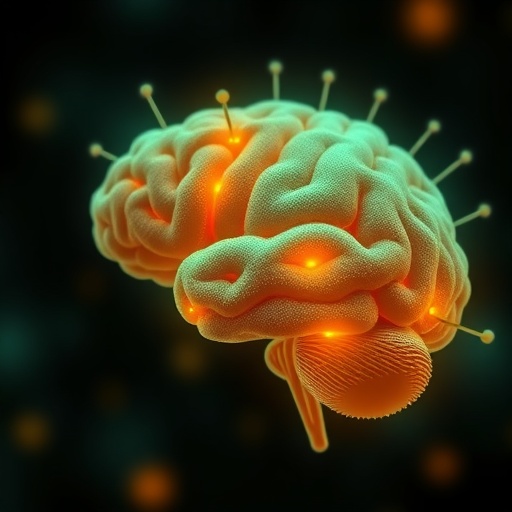
In a groundbreaking invited review published in Genomic Psychiatry on May 19, 2026, researchers led by Dr. Nora Perrone-Bizzozero from the University of New Mexico School of Medicine have unveiled compelling insights into the neuronal RNA-binding protein HuD, encoded by the ELAVL4 gene, and its essential roles in brain development and lifelong plasticity. This synthesis reconceptualizes how the adult brain navigates learning and memory, proposing that neural plasticity is not a concoction of novel mechanisms but rather an intricate reactivation of embryonic programs sustained since before birth. By examining nearly 4,000 Hud-targeted messenger RNAs (mRNAs) across developmental stages in mice, the study highlights the profound evolutionary conservation and functional continuity embedded in the neuronal RNA regulatory landscape.
HuD, a member of the ELAV-Hu protein family, is paramount not only in early neuronal differentiation but also in maintaining dynamic gene expression necessary for synaptic plasticity and neuronal regeneration throughout life. The family’s origin traces back to a fruit fly protein vital for nervous system development, underscoring its ancient and indispensable nature. In mammals, three out of four ELAV-Hu proteins are neuron-specific, emerging early in differentiation to mark irrevocable commitment to the neuronal fate. While this family’s presence is well-documented, this review elucidates its complex orchestration of target mRNAs and molecular pathways that sustain neuron viability and adaptability.
The centerpiece of the review involves a comparative analysis of two HuD-mRNA interactomes gathered from embryonic day 18 (E18) mouse brains and adult forebrains. Remarkably, nearly half of the identified mRNA targets (1,926) were shared between embryonic and adult datasets. Nonetheless, a significant subset of targets is unique to each developmental stage—620 solely embryonic and 1,583 exclusively adult—a distribution that powerfully informs our understanding of stage-specific neuronal function. The dual-interactome approach illuminates how HuD maintains a core translational vocabulary throughout the lifespan while modulating its interaction partners to fulfill developmentally distinct roles.
Bioinformatics processing through Ingenuity Pathways Analysis reveals that the shared mRNAs underpin canonical neural networks such as synapse formation and maintenance, neuronal proliferation, and regeneration. Crucially, these shared networks include genes encoding synaptic scaffolding proteins like Bassoon and gephyrin, autism-associated Cntnap2, and the TrkB receptor critical for neurotrophin signaling. This convergence suggests that the adult nervous system does not employ a novel set of molecules for plasticity but rather adapts embryonic pathways with nuanced substitutions. As Dr. Perrone-Bizzozero emphasizes, the adult neuron consults an enduring “phrasebook” acquired in utero, which it selectively revises rather than rewriting its fundamental molecular architecture.
The review highlights a captivating motif: although the fifteen canonical pathways such as axonal guidance, ephrin receptor signaling, and the RHO GTPase family appear preserved between embryonic and adult stages, the constituent mRNA players shift with age. For instance, ephrin B signaling involves distinct molecules at these different stages—Cdc42, Gnaq, and Kalrn in the embryo versus Efnb1, Efnb2, Mapk1, and Rhoa in adults. This elegant molecular choreography reveals that a common developmental script underlies dendritic remodeling in adult neurons following experience, effectively blurring the lines between neural development and plasticity. The researchers propose a unified molecular “playbook” that neurons draw upon across the lifespan, only swapping out performers to fit the context.
Beyond developmental biology, this body of work has critical implications for neurodegenerative and neuropsychiatric disorders. ELAVL4 is validated as a Parkinson’s disease risk gene and is implicated in Alzheimer’s disease, frontotemporal dementia, and amyotrophic lateral sclerosis through dysregulated HuD expression. Mouse models lacking HuD demonstrate ameliorated Alzheimer’s pathology, positioning HuD as a tantalizing therapeutic target. The protein’s involvement extends further to neuropathic pain and psychiatric disorders including schizophrenia, major depression, and bipolar disorder. These associations underscore HuD’s role as a nexus where neurobiology and disease intersect, inviting exploration of small-molecule inhibitors capable of modulating HuD activity without compromising its regenerative functions.
The molecular complexity surrounding HuD’s regulatory actions is profound, underscoring the challenges ahead. HuD’s interactions are not confined to linear mRNAs but encompass circular RNAs such as circHomer1a, long noncoding RNAs including BACE1 antisense, and small RNAs like Y3. Additionally, HuD competes with other RNA-binding proteins, notably KHSRP, which destabilizes transcripts that HuD stabilizes. These multifaceted interactions constitute an elaborate endogenous RNA network, whose stoichiometric balance, cellular context, and temporal dynamics shape the resultant neuronal responses. Resolving such intricate relationships represents the next frontier in understanding RNA-protein regulatory circuits in the brain.
Equally important are the unanswered questions posited by the authors. For instance, can embryonic versus adult-stage targets be selectively manipulated to augment regenerative capacity in injured adult tissue? How is the binding affinity for specific mRNAs regulated during cellular stress, and what molecular switches mediate the release or retention of HuD targets under pathological conditions? The review judiciously frames these themes as pivotal inquiries for the upcoming decade of neuroscience research rather than definitive conclusions, emphasizing the evolving nature of the field.
Notably, this synthesis is not derived from new experimentation but represents an integrative thesis weaving together pulldown assays, sequencing data, knockout phenotypes, and clinical genetic findings accumulated over years. By consolidating this knowledge, the authors provide a transformative framework through which the neuroscience community can interpret neuronal plasticity as a continuum extending from embryonic development into adult brain function and repair. This conceptual realignment carries significant weight for translational therapeutics, potentially reshaping strategies for addressing stroke, neurodegeneration, and psychiatric illnesses.
The comprehensive review titled “The neuronal RNA-binding protein HuD activates shared biological pathways to regulate distinct stages of neuronal development and maturation” is available Open Access in Genomic Psychiatry. Through elucidating how neurons leverage ancient molecular toolkits for continual adaptation, the study propels us toward a deeper mechanistic understanding of brain plasticity and the molecular vulnerabilities that underpin diverse neurological disorders. As scientists pursue HuD as both a biological linchpin and therapeutic node, this synthesis will doubtlessly fuel innovative avenues in molecular neurobiology.
As Dr. Michela Dell’Orco, the study’s first author, eloquently notes, HuD’s role “supporting rapid and precise neuronal dynamics has existed for more than half a billion years,” testifying to the evolutionary robustness of this RNA-binding protein. Meanwhile, Dr. Jeffery Twiss emphasizes HuD’s unique position at a crowded pathological intersection, marking it as a high-value target for intervention. Taken together, these perspectives serve to highlight the far-reaching significance of this single RNA-binding protein in governing the life cycle of neurons from birth to maturity and perhaps toward healing.
The full synthesis and associated data invite researchers and clinicians alike to redefine how we think about brain plasticity—not as a disjointed adult invention but as a continuous developmental story whose chapters were written before life’s first breath and are continually revised by experience and survival.
Subject of Research: Animals
Article Title: The neuronal RNA-binding protein HuD activates shared biological pathways to regulate distinct stages of neuronal development and maturation
News Publication Date: 19-May-2026
Web References: https://doi.org/10.61373/gp026i.0030
References: Dell’Orco M, Gardiner AS, Twiss JL, Bolognani F, Perrone-Bizzozero NI. The neuronal RNA-binding protein HuD activates shared biological pathways to regulate distinct stages of neuronal development and maturation. Genomic Psychiatry 2026. DOI: https://doi.org/10.61373/gp026i.0030. Epub 2026 May 19.
Image Credits: Nora I. Perrone-Bizzozero
Keywords: HuD, ELAVL4, neuronal RNA-binding protein, neuroplasticity, brain development, mRNA interactomes, synaptogenesis, neurodegenerative disease, molecular neuroscience, RNA regulation, neuronal maturation, neurogenetics
Tags: adult neuron synaptic plasticitybrain development and plasticityELAV-Hu protein family in mammalsELAVL4 gene functionembryonic brain gene programsevolutionary conservation of neural proteinsneural plasticity and memoryneuronal differentiation markersneuronal regeneration mechanismsneuronal RNA-binding protein HuDRNA regulatory networks in neuronsRNA-binding proteins in neurogenesis