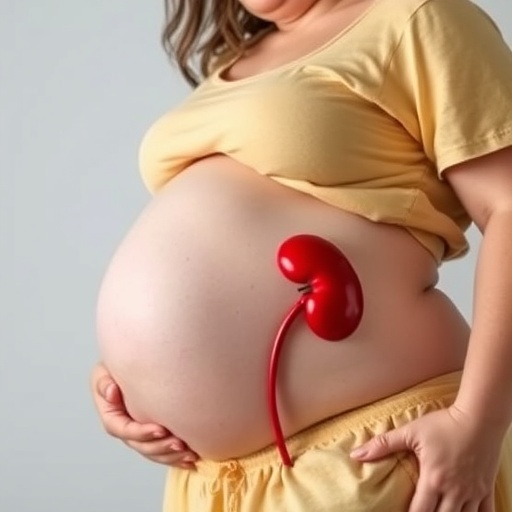
Emerging research is uncovering unprecedented links between maternal health and long-term kidney function in offspring, and a landmark study now sheds light on the cellular mechanisms driving this unsettling connection. Published in Nature Communications, this groundbreaking work reveals that maternal obesity triggers a pathological transformation of immune cells within the kidneys of male offspring, a process orchestrated by the bioactive lipid 20-hydroxyeicosatetraenoic acid (20-HETE). This discovery could revolutionize our understanding of inherited susceptibility to kidney disease and open new therapeutic avenues.
The study, conducted by Zhong, Huang, Sun, and colleagues, delves deep into how excess maternal weight before and during pregnancy predisposes male progeny to renal dysfunction. The researchers demonstrate that obesity in the maternal environment sets off a cascade of molecular events in the offspring’s kidneys, prompting macrophages—cells typically involved in immune defense—to transdifferentiate into myofibroblasts. Myofibroblasts are key players in fibrosis, known for depositing collagen and extracellular matrix components that scar kidney tissue and impair function.
At the heart of this shift is 20-HETE, a metabolite derived from arachidonic acid via cytochrome P450 enzymes, which is increasingly recognized for its vasoactive and pro-inflammatory roles. This lipid mediator, heightened in the context of maternal obesity, acts as a signaling molecule driving macrophage plasticity toward a fibrogenic phenotype. The molecular underpinnings involve complex signaling pathways regulating gene expression and cellular phenotype, effectively remodeling the renal microenvironment in a manner that predisposes male offspring to chronic kidney injury.
This discovery is particularly significant given the rising global prevalence of obesity among women of reproductive age and its known associations with adverse pregnancy outcomes. However, the mechanistic bridge between maternal metabolic status and long-term kidney health in children has remained poorly understood until now. By identifying a specific lipid signaling axis that reprograms immune cells in the kidney, this study provides a concrete biological mechanism linking maternal obesity to offspring renal fibrosis and dysfunction.
In experimental models, the researchers employed cutting-edge lineage tracing and molecular biology techniques to pinpoint the origin and fate of macrophages in the developing kidney. They observed that macrophages exposed in utero to an obesogenic environment exhibited altered gene expression profiles consistent with myofibroblast differentiation. This phenomenon was exclusive to male offspring, underscoring intriguing sex-specific vulnerabilities likely mediated by hormonal or epigenetic factors yet to be elucidated.
Beyond cellular identity transitions, the study also mapped downstream effects on kidney architecture and function. The transition from macrophage to myofibroblast precipitated excessive deposition of fibrotic extracellular matrix, disrupting normal tubular and glomerular structures. Functional assays revealed compromised filtration capacity and heightened susceptibility to renal injury. These findings portend increased risks for chronic kidney disease and hypertension in individuals born to obese mothers, highlighting the critical importance of maternal health for offspring lifelong wellness.
Crucially, the research team also explored the therapeutic potential of targeting the 20-HETE pathway. Pharmacological blockade of enzymes responsible for 20-HETE synthesis ameliorated macrophage-to-myofibroblast transition and mitigated fibrotic remodeling in the offspring kidneys. This therapeutic angle offers promising implications for preventing or reversing obesity-related developmental programming of renal disease, providing a novel interventional target for at-risk populations.
The identified 20-HETE-dependent pathway represents a paradigm shift in understanding the crosstalk between metabolic disturbances during pregnancy and immune cell fate determination in progeny organs. It integrates metabolic biochemistry, immunology, and developmental biology into a unified framework that explains how an adverse intrauterine milieu precipitates chronic organ dysfunction decades later. This multifaceted insight deepens the scientific community’s grasp on the origins of kidney disease and potentially other metabolic sequelae linked to maternal obesity.
The study’s methodological rigor and use of state-of-the-art technologies including single-cell RNA sequencing, advanced imaging, and lipidomic profiling reinforce confidence in the findings. This comprehensive approach allowed the scientists to dissect cellular identities and molecular signals at a granularity rarely achieved in developmental pathology studies. Consequently, the work stands as a model for integration across disciplines, setting a new standard for research into prenatal origins of disease.
From a public health perspective, these findings underscore the urgency of addressing maternal obesity as a modifiable risk factor not only for pregnancy complications but for the lifelong health trajectory of offspring. Interventions aimed at optimizing maternal metabolism and weight before conception could have profound downstream benefits in reducing the burden of chronic kidney disease, especially in men, who appear disproportionately impaired by this pathway.
Furthermore, this research prompts new questions about sex-specific regulation of immune and fibrotic processes in development. The male-biased effect invites further exploration into the interplay between sex hormones, epigenetics, and lipid signaling in programming organ resilience or vulnerability. Deciphering these layers will be crucial for personalized approaches to preventing and managing obesity-related renal disease in future generations.
In summary, the work of Zhong and colleagues signals a critical advance in developmental nephrology. By elucidating how maternal obesity manipulates macrophage plasticity via 20-HETE to drive pathological fibrosis in male offspring kidneys, this study reveals a hitherto hidden axis of intergenerational health risk. The implications are vast, spanning basic biology to clinical practice and public health policy, offering hope for innovative therapies and prevention strategies aimed at breaking a cycle of inherited kidney vulnerability.
As obesity rates continue to climb worldwide, uncovering the precise molecular dialogues between maternal metabolic states and fetal organ development becomes imperative. This study meticulously maps one such dialogue in the kidney, highlighting opportunities to intercept disease cascades at their earliest origins. Continued research inspired by these findings will be critical to forging a future in which maternal health serves as a foundation not only for immediate neonatal wellbeing but for sustaining kidney health across the lifespan.
The scientific community and healthcare providers alike must now grapple with these insights, integrating them into practice and education to safeguard succeeding generations from the insidious shadow cast by maternal obesity on kidney health. This research stands as a beacon, illuminating paths toward understanding and ultimately mitigating the layered consequences of metabolic disease transmitted across generations.
Subject of Research: Maternal obesity-induced macrophage-to-myofibroblast transition driving kidney fibrosis in male offspring mediated by 20-hydroxyeicosatetraenoic acid (20-HETE).
Article Title: Maternal obesity induces macrophage to myofibroblast transition in kidneys of male offspring through a pathway driven by 20-hydroxyeicosatetraenoic acid.
Article References:
Zhong, F., Huang, X., Sun, H. et al. Maternal obesity induces macrophage to myofibroblast transition in kidneys of male offspring through a pathway driven by 20-hydroxyeicosatetraenoic acid. Nat Commun (2026). https://doi.org/10.1038/s41467-026-73237-3
Image Credits: AI Generated
Tags: 20-HETE role in kidney pathologybioactive lipids in inflammation and fibrosiscytochrome P450 metabolites in renal healthepigenetic effects of maternal obesityimmune cell transdifferentiation in renal fibrosisinherited susceptibility to kidney dysfunctionkidney fibrosis mechanisms in offspringmacrophage to myofibroblast transformationmale offspring renal immune responsematernal health impact on fetal developmentmaternal obesity and offspring kidney diseasetherapeutic targets for obesity-induced kidney damage