Aerobic exercise has long been celebrated for its sweeping benefits on human health, enhancing cardiovascular fitness, metabolic regulation, and mental well-being. However, the molecular and cellular underpinnings that link aerobic physical activity to reduced cancer risk remain enigmatic despite decades of epidemiological evidence. A transformative perspective emerging in the field now posits adult stem cells (ASCs) as pivotal mediators of this connection, acting as a biological interface between systemic changes induced by exercise and the microenvironments where cancers often originate.
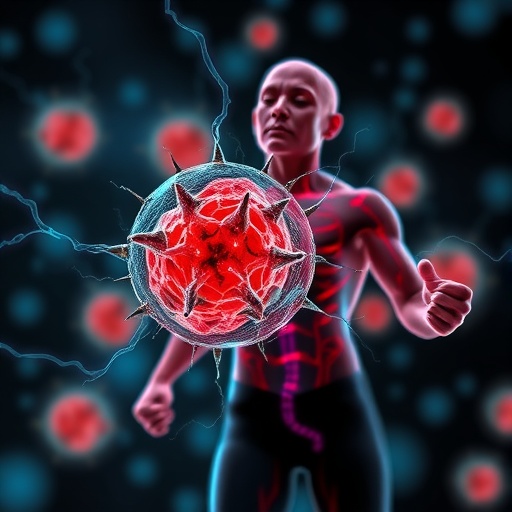
At the heart of this hypothesis lies the recognition that ASCs are not mere passive residents in their niche but dynamically respond to shifts in host physiology, adapting their function according to systemic cues. Since these cells are frequently the origin point for many cancers, understanding how exercise remodels the systemic milieu to influence ASC behavior may illuminate novel preventative mechanisms and therapeutic targets. The proposition that exercise sculpts distal tissue landscapes to simultaneously enhance regenerative capacity while suppressing pro-tumorigenic phenotypes represents a paradigm shift, bridging exercise biology with cancer stem cell research.
Exercise induces a complex cascade of physiological responses that stretch beyond the musculoskeletal system, deeply altering the systemic environment through modified cytokine profiles, hormone secretion, metabolic substrates, and oxygen availability. These changes create a milieu of enhanced tissue perfusion and altered inflammatory tone, which synergistically reconfigure the microenvironment inhabited by ASCs. This remodeling adjusts the balance between quiescence and activation in stem cells, potentially priming them for efficient tissue repair while curbing oncogenic transformation.
The intrinsic plasticity of ASCs allows them to interpret systemic signals through highly conserved pathways involving epigenetic modulators, growth factor receptors, and metabolic sensors. Exercise prompts shifts in these pathways resulting in upregulated mitochondrial function and enhanced DNA repair capacities, fortifying stem cells against the accumulation of mutagenic damage—a key precursor to tumorigenesis. Such cell-intrinsic refinements underscore how physical activity bolsters the genomic integrity of stem cells within challenging tissue landscapes.
Concurrently, the cell-extrinsic environment experienced by ASCs undergoes profound transformation. Exercise modulates tissue-resident immune populations, fostering an anti-inflammatory milieu that discourages chronic inflammation—a well-known driver of cancer progression. Moreover, vascular remodeling induced by exercise improves oxygen and nutrient delivery, optimizing stem cell niche conditions, which enhances stemness but reshapes the niche to be less permissive to malignant transformation.
This dual influence—both intrinsic and extrinsic—presents an intriguing paradox: aerobic exercise promotes enhanced stemness, a feature often associated with increased cancer risk, yet paradoxically it reduces tumorigenic potential. The resolution likely lies in the coordinated regulation of stem cell quiescence cycles and microenvironmental signals that reinforce differentiation commitment and apoptosis of abnormal cells. Exercise may therefore fine-tune the balance between self-renewal and lineage commitment to prevent aberrant stem cell expansions that seed cancers.
The implications for cancer prevention are profound. If ASCs serve as a mechanistic conduit between systemic exercise effects and tissue homeostasis, therapies designed to mimic these exercise-induced molecular signals could be developed. Targeting key nodes within exercise-responsive signaling pathways—such as AMPK activation, sirtuin modulation, or altered interleukin signaling—might replicate the anti-cancer benefits of physical activity in populations unable to engage in traditional exercise regimens.
Moreover, elucidating how exercise-induced systemic changes affect stem cell niches broadens our understanding of aging and tissue degeneration, where declining stem cell function contributes to frailty and disease susceptibility. Implementing exercise mimetics or niche-targeted interventions may restore regenerative capacity and reduce cancer incidence in elderly populations, shaping a new frontier of precision preventive medicine.
Further research dissecting the specific molecular mediators released into the circulation during exercise, such as myokines and exerkines, and their direct interactions with ASCs will be critical. High-resolution single-cell analyses and niche imaging techniques will unravel these complex cross-talk networks, providing mechanistic clarity on how exercise preserves stem cell reservoirs while maintaining rigorous tumor suppression.
Interestingly, certain cancer types show differential susceptibility to exercise-induced modulation, potentially reflecting variations in their cell of origin or microenvironmental dependencies. Understanding these context-specific responses may refine personalized physical activity prescriptions, optimizing regimens tailored to an individual’s cancer risk profile and tissue-specific stem cell dynamics.
From a translational perspective, integrating exercise parameters—intensity, duration, modality—with stem cell biology enhances existing paradigms in oncology and regenerative medicine. Interdisciplinary efforts spanning molecular biology, bioengineering, and clinical sciences are poised to leverage this knowledge, fostering innovative strategies that harness lifestyle interventions as adjuncts or even alternatives to conventional cancer therapies.
In conclusion, the emerging model positioning adult stem cells as critical mediators in the exercise–tumorigenesis link represents a seismic conceptual shift. It refines our understanding of how macroscopic behaviors like aerobic exercise can incite profound molecular remodeling across tissues, promoting healthspan extension alongside cancer risk mitigation. As the biological dialogue between host physiology and stem cell function becomes clearer, the prospect of harnessing exercise-induced pathways for therapeutic gain becomes an enticing horizon in biomedicine.
Bridging the gap between epidemiological observations and molecular mechanisms, this framework challenges researchers to revisit long-standing assumptions about stem cell biology and cancer prevention through the lens of physical activity. Ultimately, by decoding how exercise sculpts the systemic and local microenvironments of ASCs, science moves closer to unlocking transformative approaches that integrate lifestyle, molecular medicine, and stem cell biology for better human health outcomes.
Subject of Research: The role of adult stem cells as mediators linking aerobic exercise-induced changes in host physiology to cancer risk modulation.
Article Title: Stem cells as an essential mediator of the exercise–tumorigenesis link.
Article References:
Zhuang, X., Wong, E.S., Tammela, T. et al. Stem cells as an essential mediator of the exercise–tumorigenesis link. Nat Rev Cancer (2026). https://doi.org/10.1038/s41568-026-00933-z
Image Credits: AI Generated
Tags: adult stem cells in tumor suppressionaerobic exercise and cancer preventioncytokine changes from aerobic exerciseexercise and cancer stem cell biologyexercise as a therapeutic target in oncologyexercise impact on tumor microenvironmentexercise-induced stem cell modulationmetabolic regulation by physical activitymolecular mechanisms linking exercise and tumorsregenerative capacity enhancement through exercisestem cell niche and exercisesystemic effects of physical activity on cancer