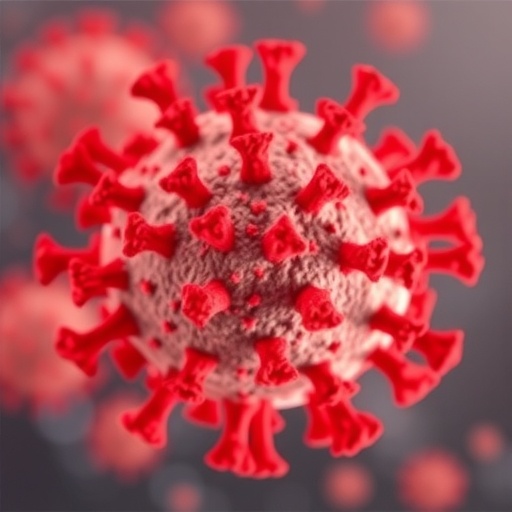
In a groundbreaking advancement in public health surveillance, researchers have unveiled a transformative approach to monitoring SARS-CoV-2 in wastewater that surpasses traditional methods by tracking the virus’s genetic diversity rather than solely its abundance. This innovative technique promises to dramatically enhance our capability to anticipate and manage COVID-19 outbreaks with unprecedented foresight and precision. The study underscores the power of genomic surveillance in wastewater as a potent early warning system, capable of identifying emerging waves of infection before they manifest in clinical settings.
Wastewater monitoring emerged as a vital tool during the COVID-19 pandemic, offering a rapid, cost-effective, and less biased means of assessing infectious disease spread in large populations. By collecting and analyzing biological material shed by entire communities, a single wastewater sample can reveal comprehensive infection dynamics at a population level. However, current surveillance methodologies rely heavily on quantifying the concentration of viral genetic material in wastewater, a strategy that often suffers from inherent constraints. Variation in sample collection environments, dilution effects from rainfall, and differences in pathogen biology impair the comparability and reliability of viral abundance metrics.
To address these limitations, Dustin Hill and colleagues pioneered an approach centered on analyzing the genetic variability within SARS-CoV-2 populations present in wastewater. By leveraging whole-genome sequencing, their work reveals that shifts in viral genetic diversity yield valuable insights into the epidemiological landscape of COVID-19. Rather than merely counting viral copies, this method captures the evolutionary dynamics shaping viral populations and reflects changes in disease transmission patterns with finer granularity and robustness.
The team conducted an extensive retrospective analysis, applying their genetic diversity-based surveillance framework to 12,290 wastewater samples collected from across New York state between 2023 and 2025. They meticulously examined variations within the spike protein’s S1 N-terminal domain (NTD)—a region critical for viral entry and immune recognition—discovering that diversity in this genomic segment tightly paralleled real-world infection trends. Strikingly, fluctuations in genetic diversity often aligned more closely with epidemiological data than traditional measures of viral load, suggesting that genetic variation serves as a more sensitive marker of community transmission dynamics.
Statistical assessments further demonstrated that changes in viral genetic diversity consistently preceded spikes in COVID-19-related hospital admissions by one to two weeks. This temporal lead underscores the approach’s potential as an early warning system, capable of signaling surges in disease spread well before clinical burdens escalate. Such predictive capability could empower public health officials to implement targeted interventions proactively, mitigating the impact of impending outbreaks and alleviating pressure on healthcare infrastructure.
This novel surveillance paradigm also addresses the challenge of environmental confounders that traditionally distort viral quantification. Unlike absolute abundance metrics susceptible to dilution by rainwater or fluctuations in wastewater flow, genetic diversity measurements reflect intrinsic viral evolutionary processes, rendering them inherently more stable and comparable across diverse settings. Consequently, this approach may provide a standardized framework for cross-pathogen and cross-geography comparisons, enhancing the scalability and generalizability of wastewater-based epidemiology.
Moreover, the high-throughput sequencing methodologies employed enable simultaneous monitoring of multiple viral variants circulating within a population. This multiplex advantage is especially critical as SARS-CoV-2 continues to evolve, giving rise to new variants with varying transmissibility, virulence, and vaccine escape potential. Tracking variant-specific genetic signatures in wastewater can thus inform real-time assessments of variant emergence and dominance, facilitating timely public health responses tailored to the prevailing viral landscape.
The implications of this research extend beyond SARS-CoV-2. The demonstrated utility of genetic diversity analysis in wastewater surveillance suggests a versatile platform applicable to a broad range of pathogens, including influenza viruses, enteric bacteria, and antimicrobial resistance genes. By integrating genomics-driven perspectives, public health surveillance systems can attain a multidimensional view of infectious disease ecology that transcends simple pathogen quantification.
Notably, the authors highlight that wastewater surveillance as a primary population health tool is an evolving discipline with vast untapped potential. The study by Hill et al. represents a pioneering milestone that sets the stage for the convergence of advanced molecular biology, bioinformatics, and epidemiology in routine public health monitoring. As genomic sequencing technologies continue to advance in speed, accuracy, and affordability, embedding genetic diversity metrics into standardized surveillance workflows could revolutionize infectious disease prediction and control.
Experts commenting on the study emphasize the transformative nature of this approach. Justin Lessle and Ariel Christensen, in an accompanying Perspective, underscore how viral sequencing-based strategies such as those introduced by Hill et al. herald a new era in infectious disease research and public health practice. Harnessing the latent information embedded in viral genetic diversity will be instrumental to realizing the full promise of wastewater surveillance as a sentinel system for emerging and re-emerging pathogens.
This research, published in Science on May 14, 2026, marks a pivotal expansion of wastewater epidemiology’s scope, taking a step beyond conventional quantification to decipher the evolutionary dynamics hiding in plain sight. By charting the genetic complexity of SARS-CoV-2 in community wastewater, the study provides a robust, reproducible, and predictive metric capable of guiding public health decision-making in an ever-changing pathogen landscape. The integration of such genomic insights stands poised to reshape how societies anticipate and respond to infectious threats on a global scale.
With growing interest in pathogen surveillance driven by pandemic preparedness, antimicrobial resistance, and global health security concerns, the demonstrated utility of genetic variability analysis in wastewater samples signals a promising avenue for future monitoring infrastructure. Policymakers and health agencies could leverage this genomic lens to identify hotspots, inform vaccine campaign strategies, and optimize resource allocation — all while maintaining privacy and minimizing disruption to individuals.
As the epidemiological community grapples with the challenges of emerging infectious diseases, this study reveals a compelling roadmap for combining environmental sampling with cutting-edge genomics to achieve earlier, more nuanced detection of disease trends. The ability to forecast hospital burden weeks in advance through wastewater genetic diversity profiling sets a new benchmark for proactive health system management, ultimately saving lives and preserving societal function in the face of microbial upheaval.
In conclusion, the pioneering work of Hill and colleagues illuminates the untapped potential of wastewater pathogen surveillance through genomic diversity metrics. This paradigm shift from abundance to genetic variability measurement not only enhances our understanding of viral transmission dynamics but also provides actionable intelligence critical for early intervention. As public health infrastructures worldwide seek resilient and adaptive strategies to mitigate infectious disease threats, integrating these genomic insights will be paramount to building a healthier, more prepared future.
Subject of Research: Genetic variability of SARS-CoV-2 in wastewater and its associations with community transmission dynamics.
Article Title: Genetic variability of SARS-CoV-2 in wastewater and associations with community transmission
News Publication Date: 14-May-2026
Web References: 10.1126/science.aed6094
Keywords: SARS-CoV-2, wastewater surveillance, genetic diversity, whole-genome sequencing, COVID-19 outbreaks, viral evolution, public health monitoring, early warning systems, spike protein, viral variants, epidemiology, pathogen surveillance
Tags: cost-effective disease monitoring methodsearly warning systems for infectious diseasesenvironmental factors in wastewater surveillancegenetic diversity analysis of SARS-CoV-2genomic surveillance for COVID-19limitations of viral abundance metricsmonitoring COVID-19 outbreakspopulation-level infection dynamicspublic health surveillance innovationsSARS-CoV-2 wastewater surveillanceviral genetic variability trackingwastewater-based epidemiology techniques