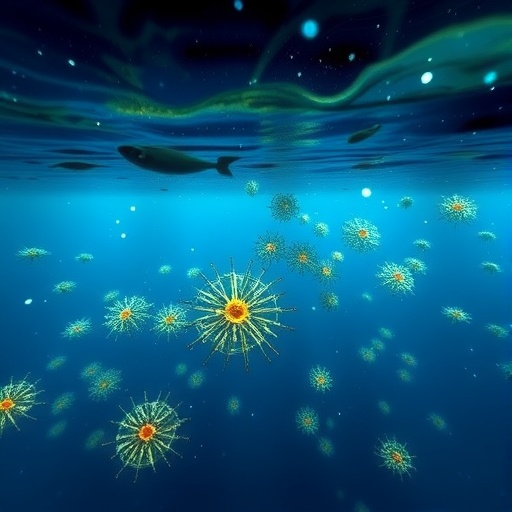
In the vast and dynamic waters of the North East Atlantic, tiny yet potent players are reshaping our understanding of marine ecosystems and the risks they pose to human industries and wildlife alike. Recent research spearheaded by UK scientists has unveiled striking shifts in the distributions of the phytoplankton genera Pseudo-nitzschia and Dinophysis over the past six decades. These microscopic algae, though often overlooked by the public eye, wield significant influence as producers of natural biotoxins that impact shellfish safety and marine biodiversity.
Phytoplankton form the microscopic foundation of oceanic food webs, harnessing solar energy to produce organic matter essential for countless marine species. Among this diverse community, Pseudo-nitzschia and Dinophysis have garnered intense scientific scrutiny because certain species within these groups synthesize toxins implicated in two distinct and severe types of shellfish poisoning: Amnesic Shellfish Poisoning (ASP) and Diarrhetic Shellfish Poisoning (DSP). The toxins they produce bioaccumulate in shellfish, posing hazards to human health and legal constraints on fisheries.
In a groundbreaking study published in the journal Harmful Algae, researchers have integrated long-term datasets from coastal observatories and the Continuous Plankton Recorder (CPR) Survey, the world’s most comprehensive marine biodiversity assessment. This fusion of data, spanning six decades and encompassing both coastal and open ocean zones, provides a high-resolution chronicle of how these algae have shifted their spatial and temporal footprints in response to environmental change. Such monitoring is crucial not only for safeguarding public health but also for anticipating ecological ripple effects.
The CPR and coastal station data reveal divergent seasonal bloom patterns and abundance trends for Pseudo-nitzschia and Dinophysis. Pseudo-nitzschia populations in the North Sea showed a rise from the 1970s, peaking around the first decade of the millennium before declining in recent years. This pattern depended on region and season, with spring blooms dominating southern and eastern areas, while northeast Scottish waters experienced heightened summer activity. Coastal stations showed contrasting phenologies, with varying dominance between spring and summer peaks, highlighting localized oceanographic factors and biological responses.
Dinophysis, on the other hand, exhibited more constrained seasonal windows, largely restricted to summer months. Data indicated a decline in the eastern North Sea after the year 2000, with coastal observations sometimes noting an earlier bloom peak than offshore waters. This genus displays a unique kleptoplastic life strategy, wherein it acquires functional chloroplasts from ingested prey to conduct photosynthesis, adding complexity to its ecology and toxin production cycles. The synthesis of okadaic acid and dinophysistoxins by certain species represents a persistent challenge, accounting for the majority of shellfish harvesting closures in UK waters.
Compelling evidence suggests that these distributional and temporal shifts align closely with physical changes in the marine environment driven predominantly by climate change. Alterations in sea temperature, stratification, and circulation patterns appear to influence phytoplankton dynamics more than anthropogenic activities such as fishing. Such findings emphasize the interconnectedness of global climate forces and marine trophic architectures.
The implications for marine ecosystems extend beyond human shellfish consumers. Chronic exposure to these biotoxins imposes environmental stress on marine mammals and seabirds, potentially modifying behavior, health, and survival rates. Recent events on the west coast of the United States underscore the gravity of these impacts, where domoic acid has been correlated with neurological symptoms and mortality in wildlife. Understanding the trends of harm-producing phytoplankton is therefore pivotal in marine conservation and ecosystem resilience planning.
The researchers stress that tracking Pseudo-nitzschia and Dinophysis alone does not capture the full complexity of planktonic shifts. These genera follow distinct seasonal and distributional trajectories that do not necessarily mirror broader phytoplankton community trends. This nuance highlights the indispensable value of comprehensive, long-term plankton monitoring programs that encompass the entire ecological spectrum. Such initiatives face ongoing challenges amid funding cuts, resource limitations, and a shrinking skilled workforce, risking gaps in critical environmental surveillance.
The study’s focus on two specific offshore monitoring stations—the L4 station in the Western English Channel managed by Plymouth Marine Laboratory and the Stonehaven station near Aberdeen managed by the Marine Directorate of the Scottish Government—demonstrates how localized data can complement widespread surveys like the CPR. This multi-scale approach enables researchers to discern how coastal and offshore populations respond divergently or in concert to environmental drivers across seasons and decades.
Historically, these phytoplankton genera have posed episodic yet severe threats. The 1988 ASP outbreak in Prince Edward Island, Canada, resulted in human fatalities and widespread illness due to domoic acid contamination of mussels. The persistent presence of these toxins necessitates rigorous monitoring and management frameworks to protect public health and support sustainable aquaculture industries. In the UK, shellfish harvesting areas are regularly closed when toxin thresholds are exceeded, illustrating proactive responses underpinned by scientific vigilance.
Dinophysis species’ ability to alter their physiology through kleptoplasty, alongside their production of DSP toxins, makes them ecologically fascinating and economically significant. The fine-scale temporal shifts observed highlight the importance of resolving life-history traits and environmental triggers that control toxin production cycles, which remain areas of active research. This knowledge can inform predictive models and early warning systems crucial for aquaculture operations and regulatory agencies.
As ocean conditions evolve under accelerating climate change, understanding how harmful algal bloom species redistribute and vary in toxicity is essential for forecasting future risks. This study’s integration of robust historical data with contemporary monitoring offers a template for discerning long-term ecological transformations. Moreover, it underscores the critical need to sustain and expand multidisciplinary collaborations that join the efforts of research institutions, governmental bodies, and monitoring programs.
In summary, the shifting distributions and abundance of Pseudo-nitzschia and Dinophysis species in the North East Atlantic exemplify broader ecological responses to a changing ocean. These changes carry profound ramifications for marine food webs, human industry, and environmental health. Through comprehensive, long-term monitoring and sophisticated data integration, researchers are enhancing our capacity to anticipate and mitigate the impacts of these microscopic yet mighty organisms in an uncertain future.
Subject of Research: Not applicable
Article Title: Changing Pseudo-nitzschia and Dinophysis distributions in the North Sea and Western Approaches (NE Atlantic) and their potential use in biodiversity assessments
News Publication Date: 30-Apr-2026
Web References: http://dx.doi.org/10.1016/j.hal.2026.103113
Image Credits: Plymouth Marine Laboratory
Keywords: Pseudo-nitzschia, Dinophysis, phytoplankton, harmful algal blooms, amnesic shellfish poisoning, diarrhetic shellfish poisoning, North East Atlantic, marine toxins, climate change, plankton monitoring, Continuous Plankton Recorder, marine biodiversity
Tags: Amnesic Shellfish Poisoning riskContinuous Plankton Recorder data analysisDiarrhetic Shellfish Poisoning impactDinophysis population shiftslong-term marine biodiversity monitoringmarine food web toxinsNorth East Atlantic marine ecosystemsphytoplankton and shellfish safetyPseudo-nitzschia distribution changesshellfish biotoxin contaminationtoxin-producing phytoplankton populationsUK marine toxin research