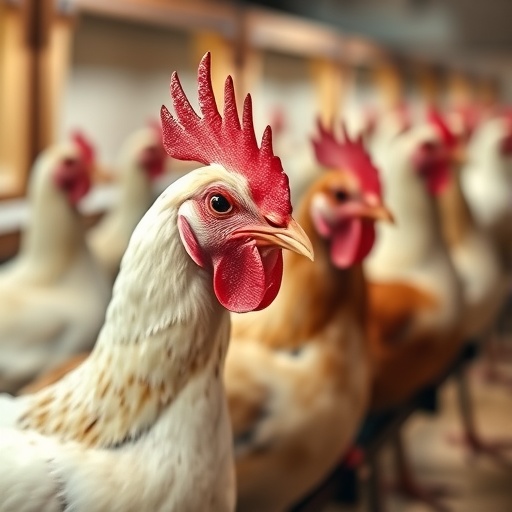
In a groundbreaking development that could redefine poultry farming and antibiotic use, researchers at Cornell University have unveiled a promising alternative to traditional antibiotic growth promoters in broiler chicken diets. This innovation harnesses an abundant but underutilized byproduct of the winemaking process—grape pomace. Annually, the global wine industry generates millions of gallons of grape pomace—residue comprising grape skins, seeds, stems, and peels—posing environmental disposal challenges for wineries. However, this waste product may soon find new life as a powerful feed additive that addresses both growth performance and gut health in poultry, potentially transforming the poultry industry’s approach to combating antibiotic resistance.
The research, published in the prestigious journal npj Biofilms and Microbiomes, details a rigorous comparative study between grape pomace and zinc bacitracin, an antibiotic growth promoter commonly used in chicken feed. The study’s findings, presented by Elad Tako, associate professor of food science at Cornell, reveal that a mere 0.5% inclusion of grape pomace in broiler diets yields enhancements nearly equivalent to those achieved with zinc bacitracin. This small dietary adjustment notably improved weight gain, increased feed conversion efficiency, and bolstered intestinal health, even when birds were raised on a diet known to induce chronic low-grade inflammation.
Elad Tako emphasizes the significance of this study as a pivotal achievement in the search for viable alternatives to antibiotics in animal agriculture. Chronic inflammation in the avian gut is a silent but pervasive issue that undermines growth and feed efficiency, conditions exacerbated by the longstanding reduction in antibiotic use due to global regulatory restrictions. The presence of chronic low-grade intestinal inflammation acts as a metabolic sink, diverting energy away from growth processes and immune function. By addressing this inflammation, grape pomace supplementation offers a dual mechanism of action: supporting beneficial gut microbiota while simultaneously reducing inflammatory stress.
The crux of this study stemmed from the urgent need to find replacements for antibiotic growth promoters, whose withdrawal has been accompanied by slower growth rates, increased disease susceptibility, and rising feed costs for poultry producers. Regulatory frameworks in the European Union, China, and Brazil have already instituted bans on antibiotic growth promoter use, while the United States faces mounting pressure to follow suit amidst the global threat of antimicrobial resistance. Tackling this crisis requires innovative strategies that maintain or improve flock health and productivity without contributing to resistance gene proliferation—a challenge that grape pomace supplementation appears to surmount.
To simulate realistic commercial conditions, researchers designed a diet incorporating 30% rice bran, a high-fiber component notorious for triggering persistent, mild intestinal inflammation in poultry. The birds subjected to this diet alone exhibited significant reductions in weight gain and marked increases in key inflammatory biomarkers. However, the inclusion of grape pomace at half a percent reversed these negative trends, restoring body weight gains by at least 79% compared to the inflamed controls. Furthermore, the feed conversion ratio—an essential metric describing the efficiency with which chickens convert feed into body mass—was restored to levels indistinguishable from those seen in birds receiving zinc bacitracin.
It is worth noting that previous investigations into grape pomace as a feed additive yielded disappointing results, largely due to excessive dosing which introduced adverse effects. Cornell’s team revisited this approach with a refined perspective, dramatically lowering the grape pomace inclusion rate to optimize benefits while minimizing potential drawbacks. This strategic dosage adjustment underscores the nuanced nature of feed additive research, in which the balance between bioactive compound concentration and animal tolerance is crucial.
The implications of these findings extend beyond animal health and agricultural economics; they represent a significant advance in sustainable, circular bioeconomy practices. Redirecting grape pomace from waste disposal to high-value animal feed addresses environmental concerns related to winemaking residues, reduces feed additive costs, and mitigates the reliance on synthetic antibiotics. This aligns with broader environmental goals by reducing agricultural waste streams and curbing the spread of antimicrobial resistance genes through the food production system.
From an industry perspective, adopting grape pomace as a natural growth promoter could lead to considerable cost savings. Antibiotic growth promoters represent an ongoing expense and regulatory risk for poultry farmers. A plant-based alternative sourced from a byproduct that is widely available and underexploited offers an economically attractive solution. Additionally, the improved gut health profile afforded by this additive may reduce incidences of disease-related losses and improve overall flock welfare and productivity.
This breakthrough also opens new avenues in the emerging field of functional feed ingredients—substances that imbue animal diets with targeted health benefits beyond basic nutrition. By modulating gut microbiota composition and dampening inflammatory signaling pathways, grape pomace exemplifies how phytochemicals and dietary fibers can exert profound systemic effects on animal physiology. This integrative approach contrasts with the traditional reliance on antibiotics, which primarily suppress bacterial growth but risk perturbing the complex microbial ecosystem and fostering resistance.
Given the critical role of gut health in poultry growth and immune competence, the demonstration of grape pomace’s anti-inflammatory potential has wide-reaching implications. Chronic low-grade inflammation is a stealthy contributor to suboptimal growth and heightened susceptibility to enteric pathogens in commercial poultry operations. Interventions that can blunt this inflammatory milieu without collateral disruption open the door for healthier, more resilient birds that perform well under diverse environmental challenges.
In conclusion, the Cornell study represents a landmark in sustainable animal agriculture by validating grape pomace—a previously discarded winemaking byproduct—as a potent natural alternative to antibiotic growth promoters. The dual benefits of improved growth efficiency and reduced intestinal inflammation, achieved with a minimal dietary inclusion rate, highlight its potential for widespread adoption. As markets and regulations increasingly discourage antibiotic use, innovations that align agricultural production with environmental stewardship and animal health are critical. This research not only signifies progress in combating antimicrobial resistance but also exemplifies how circular economy principles can be embedded in food systems to create healthier animals, lower costs, and reduce waste simultaneously.
As this work garners attention across the scientific community and industry stakeholders, further studies will be essential to validate long-term safety, optimize dosage strategies, and explore broader applications across other livestock species. Nonetheless, grape pomace emerges as a leading candidate in the global effort to curtail antibiotic reliance in food production—offering a vision where agricultural byproducts transform challenges into opportunities for sustainable growth and health.
Subject of Research: Alternative growth promoters in poultry diets; use of grape pomace as antibiotic replacement
Article Title: Wine Industry’s Grape Pomace as a Natural Alternative to Antibiotics in Broiler Chickens
News Publication Date: May 2026
Web References:
https://www.nature.com/articles/s41522-026-00996-8
https://news.cornell.edu/stories/2026/05/wines-leftovers-could-help-wean-chicken-farms-antibiotics
References:
Tako, E., et al. (2026). npj Biofilms and Microbiomes. DOI: 10.1038/s41522-026-00996-8
Keywords: Poultry nutrition, antibiotic alternatives, grape pomace, broiler chickens, antimicrobial resistance, gut inflammation, functional feed ingredients, circular economy, animal health, feed efficiency, sustainable agriculture, phytochemicals
Tags: alternative antibiotic growth promoters in poultrycombating antibiotic resistance in poultryCornell University poultry researcheffects of grape pomace on poultry inflammationenvironmental impact of winery wastefeed conversion efficiency in broilersgrape pomace feed additive benefitsnatural growth promoters in chicken feedpoultry gut health improvementreducing antibiotic use in broiler chickenssustainable poultry farming practiceswine industry grape pomace utilization