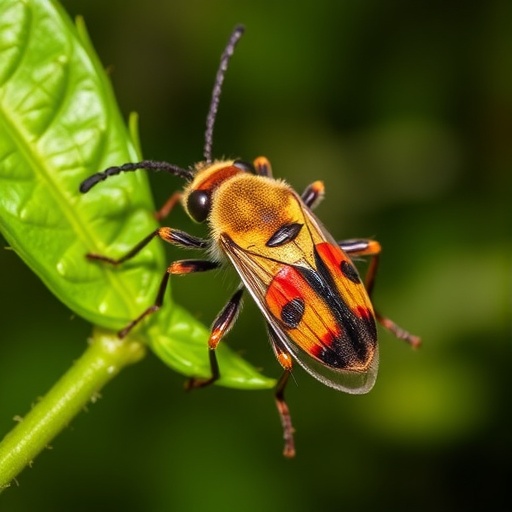
Contrary to widely held assumptions, emerging research led by University of California, Davis entomologist Mia Lippey reveals that the relationship between climate warming and agricultural pest outbreaks is far more complex and nuanced than previously believed. Long-standing models predict that rising temperatures will rampantly increase pest populations, jeopardizing global food security. However, extensive field data from two key temperate farming regions—California’s San Joaquin Valley and Andalusia in Spain—tell a more intricate story, underscoring the heterogeneity of species responses to ongoing climate shifts.
Published in the prestigious Proceedings of the National Academy of Sciences, this investigation presents an empirical challenge to the simplistic hypothesis of universal pest proliferation under warming scenarios. Drawing upon an unprecedented compilation of 141,562 field-year observations across 43 arthropod populations spanning 28 pest and 11 natural enemy species, the researchers reveal a mosaic of outcomes that vary with species identity, geographic context, crop type, and temperature differentials.
The study highlights that while approximately half of the pest and natural enemy populations witnessed growth under elevated temperatures, the other half experienced declines, effectively defying the notion of a uniform pest surge accompanying global warming. This contrasted response underscores the ecological intricacies dictating arthropod dynamics in agroecosystems and cautions against relying solely on laboratory-based temperature extrapolations for agricultural forecasting.
Natural enemies of crop pests—organisms vital for biological control—exhibited somewhat heightened vulnerability to warming compared to the pests themselves, a finding that resonates with concerns about diminishing natural pest suppression under climate stress. Yet, as Lippey emphasizes, these differences necessitate deeper exploration to elucidate mechanistic drivers and their potential magnitudes in reshaping pest-enemy interactions on agricultural landscapes.
The research team stresses the critical importance of species-specific monitoring protocols in managing climate adaptation strategies for agriculture moving forward. Generalized pest models and trait-based predictions fail to capture the complex and sometimes counterintuitive responses of insect populations to warming. These findings advocate for enhanced investment in field surveillance infrastructure to track evolving arthropod community dynamics with high temporal and spatial resolution.
Climate change exerts multifaceted influences on ecosystems worldwide, with agriculture especially vulnerable to disruptions by pest pressures. Prior theoretical work and laboratory experiments projected alarming increases in pest abundances alongside declines in natural enemies due to thermal sensitivities. However, field realities demonstrated through this data set suggest that individual insect responses are highly individualistic, contingent on a matrix of ecological, physiological, and environmental factors beyond temperature alone.
This study leverages data sets rarely matched in scope and longevity. The California data, spearheaded by co-principal investigator Jay Rosenheim—Professor Emeritus at UC Davis—represents collaborative efforts with local farmers and pest professionals, ensuring relevance and applicability to real-world agronomics. Meanwhile, Andalusia’s data, gathered through governmental monitoring networks and accessed via regional collaborator Daniel Paredes, augmented the breadth of the analysis with European agricultural systems.
The decentralized and geographically expansive nature of these datasets enables unprecedented insight into long-term agro-arthropod dynamics under climate variability, bridging critical knowledge gaps observed in laboratory versus field inference disparities. This comprehensive empirical foundation allows for robust, ecologically grounded conclusions about the future trajectories agricultural ecosystems may encounter as global temperatures continue to rise.
Co-authors hail from a multidisciplinary consortium, uniting expertise from ecology, entomology, environmental science, and conservation biology across institutions such as UC Davis, the University of Extremadura, World Wildlife Fund, Cornell AgriTech, and the University of Minnesota. Their collective contribution embodies the transdisciplinary approach needed to decode the interplay between climate phenomena and agricultural pest regulation.
The research presented disrupts prevailing narratives about climate change impacts on agriculture, advocating for caution against overgeneralized predictions of pest explosions. Instead, it illuminates a dynamic, species-dependent landscape requiring refined scientific inquiry and enhanced field surveillance to safeguard crop production in warming climates. Amidst escalating climate concerns, these findings represent a pivotal step towards more resilient, scientifically informed agricultural pest management strategies worldwide.
Subject of Research: Animals
Article Title: Field data challenge predictions of universal crop pest proliferation under warming
Web References: http://dx.doi.org/10.1073/pnas.2606726123
References: Lippey, M., Meineke, E., Rosenheim, J., et al. (2024). Field data challenge predictions of universal crop pest proliferation under warming. Proceedings of the National Academy of Sciences. https://doi.org/10.1073/pnas.2606726123
Image Credits: Kathy Keatley Garvey
Keywords: Pest control, Agriculture, Climate change, Climatology, Ecology
Tags: agricultural pest dynamics under climate changeAndalusia Spain agriculture researchbiodiversity in agroecosystemschallenges to pest population modelsclimate change impact on agricultural pestscomplex species responses to warmingempirical climate change entomology researchlong-term arthropod population datapest and natural enemy interactionsregional variation in pest outbreaksSan Joaquin Valley pest studiestemperature effects on pest populations