As global temperatures relentlessly climb, ecologists and evolutionary biologists have long anticipated a predictable response from plant species: a gradual shift of their geographic distributions towards cooler, northern habitats. This prevailing paradigm suggests that populations residing on the warmer fringes—or “rear-edge” populations—of a species’ range would be the first to falter and vanish under intensified thermal stress. However, groundbreaking research emerging from the University of Virginia, recently published in Evolution Letters, is challenging this conventional wisdom, revealing a nuanced and unexpectedly optimistic narrative about how plants might endure future climate change.
Laura Galloway, Commonwealth Professor of Biology at the University of Virginia, alongside postdoctoral research associate Antoine Perrier, has invigorated the scientific dialogue by focusing attention on these rear-edge populations. These groups, positioned at the southernmost and warmest edges of species’ ranges, are not mere remnants but living archives that have persisted through profound climatic upheavals, including the transition out of the last glacial period. This historical resilience positions them as invaluable models to elucidate the evolutionary trajectories that shape adaptation to warming environments.
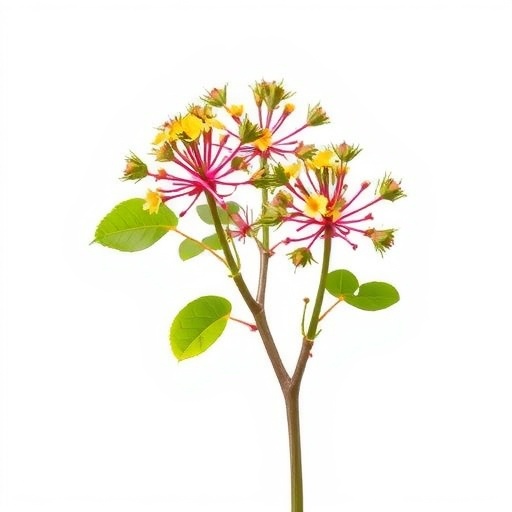
The investigation pivots on a native wildflower species, which serves as a biological canvas for exploring the complex interplay between genetic diversity, local adaptation, and reproductive strategies. Employing a multifaceted methodology that intertwines genomic analysis, controlled greenhouse experiments, and rigorous fieldwork, the research team dissected the genetic and phenotypic underpinnings enabling these populations to survive—and thrive—in warmer climates.
Contrary to the dire forecasts predicted by traditional ecological models, the findings illuminate a sophisticated pattern of local adaptation throughout the species’ range. Southern populations have undergone evolutionary modifications that fine-tune their physiology and life history traits to better suit elevated temperatures. Intriguingly, these populations demonstrate the capacity to grow and reproduce effectively in their native warm environments, a stark contrast to northern populations experimentally transplanted to identical conditions, which failed to flower—a critical reproductive stage.
This revelation carries profound implications for our broader understanding of species resilience. The warm-edge populations do not merely persist; they exhibit adaptive properties implying an evolutionary buffer against ongoing climatic warming. This contradicts the assumption that southern populations are inherently fragile and signals the potential for these genetic reservoirs to act as bastions of adaptive capacity.
Compounding this, the study highlights the critical role of phenological cues—particularly cold temperature signals that many plants use to trigger reproduction. As global winters become milder, mid-latitude populations that rely on these chilling cues face potential reproductive failure. In stark contrast, southern rear-edge populations appear to have evolved independence from such cues, allowing them to maintain reproductive functions amidst warming trends. This adaptive decoupling likely confers a significant survival advantage under future climate scenarios.
The research challenges ecologists to rethink vulnerability and resilience in plant populations. Populations located centrally in a species’ range may encounter unprecedented challenges, while those at both extremities—the far north and far south—could prove more ecologically robust due to their evolved responses to historical climatic fluctuations. This pivot in understanding mandates a recalibration of conservation strategies and predictive models.
Moreover, the practical applications of this research extend into the realm of assisted gene flow and restoration ecology. By identifying and harnessing the genetic traits that enable southern populations to cope with heat stress, conservationists can strategically introduce these adaptive alleles into more vulnerable populations, potentially bolstering overall species resilience as global temperatures escalate.
At its essence, this study underscores the importance of evolutionary history as a lens through which to view current ecological crises. Rear-edge populations function as ‘natural laboratories,’ offering living evidence of evolutionary processes that have buffered species against environmental extremes for millennia. Their persistence is a testament to adaptive potential forged through time, providing an invaluable template for forecasting biological responses to anthropogenic climate change.
Antoine Perrier emphasizes the paradigm shift that this research heralds: the populations once presumed weakest may, in fact, harbor the strongest resilience machineries. “These rear-edge populations,” he notes, “could transform our understanding of species responses, highlighting that the capacity to withstand climate warming may reside precisely where we expected vulnerability.”
In conclusion, the University of Virginia’s research delivers a message both sobering and hopeful. While climate change poses undeniable risks, the evolutionary narrative embedded in rear-edge plant populations reveals strategies of survival that defy simplistic predictions. Embracing this complexity enriches not just scientific insight but also hones practical conservation tactics, fostering a future where biodiversity endures despite a warming world.
Subject of Research: Evolutionary adaptation of rear-edge plant populations to climate warming
Article Title: The legacy of past climate warming: strong local adaptation in rear-edge populations
News Publication Date: 7-May-2026
Web References: 10.1093/evlett/qrag020
Keywords: Evolutionary biology, Ecology, Evolutionary genetics
Tags: adaptation to warming environments in plantsclimate resilience in ancient plant populationsecological studies on plant climate responseevolutionary biology of plant speciesevolutionary trajectories in plant adaptationgenetic diversity in wildflower speciesgeographic distribution shifts due to climate changeplant reproductive strategies under climate changerear-edge plant populations and climate adaptationrole of southern edge populations in species survivalthermal stress impact on plant populationsUniversity of Virginia climate resilience research