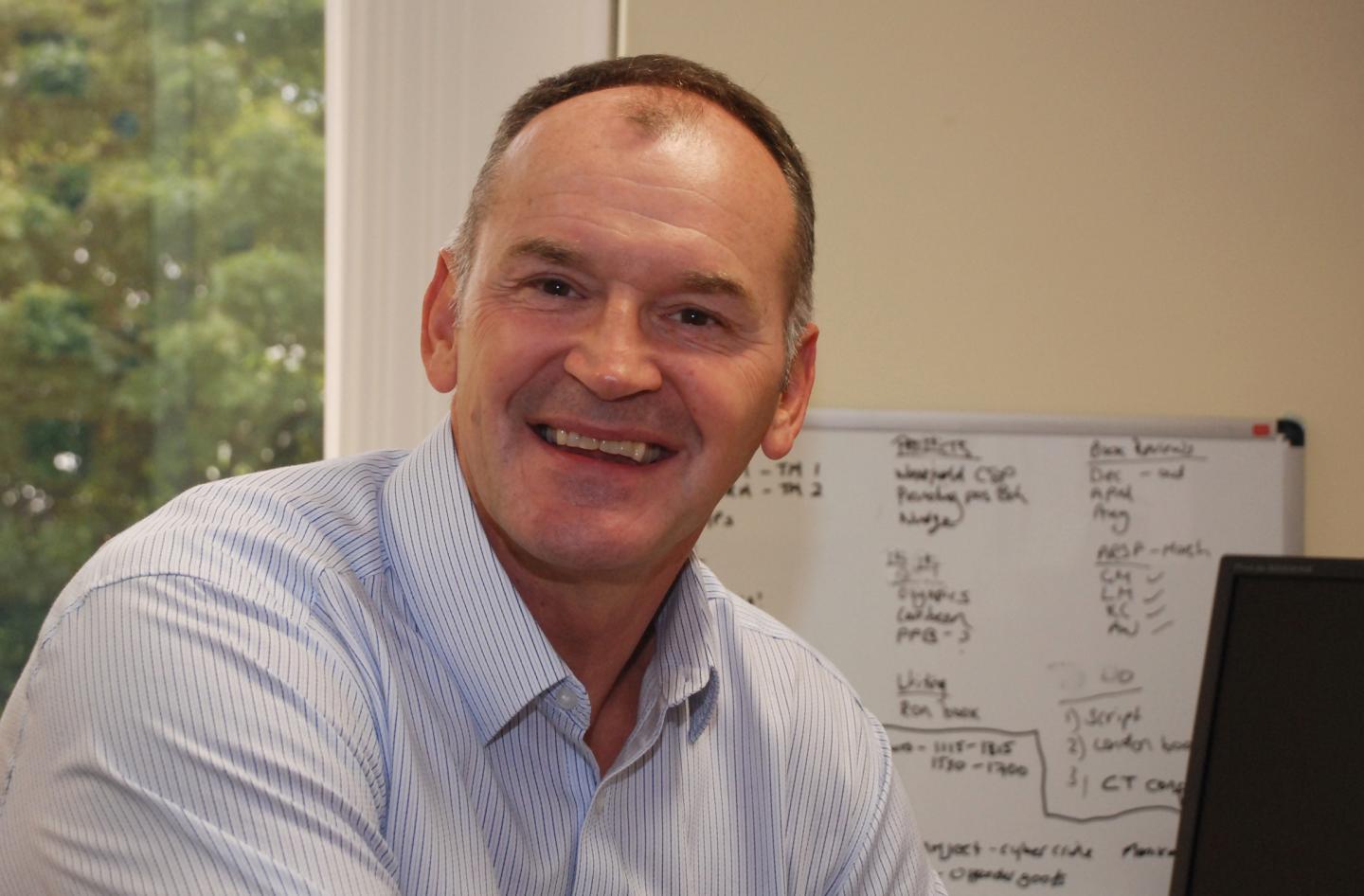
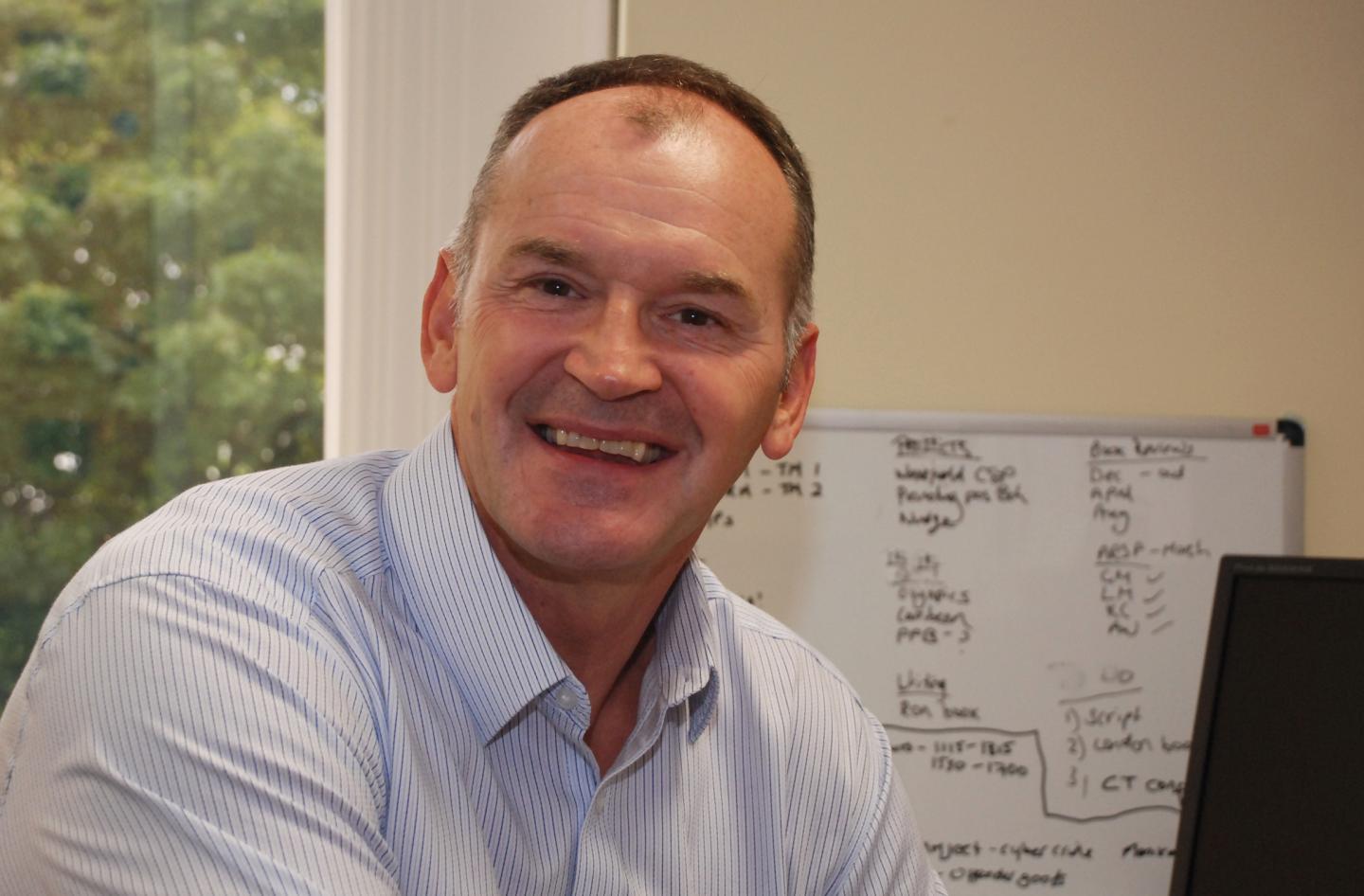
Credit: University of Huddersfield
A FORMER top detective turned University of Huddersfield researcher has published his findings that coroners in England and Wales are seemingly unable to agree on what caused a person's death or whether it merits an inquest, even when faced with identical case information.
There is therefore an urgent need for a new consensus, which could save lives, argues Dr Maxwell Mclean. Now an Affiliate of the University's Secure Societies Institute, he is a former Detective Chief Superintendent and Head of West Yorkshire's CID and Homicide Team. After his years investigating death and serious crime, he decided to conduct PhD research into inconsistency among coroners, a topic in which he developed an interest during his police career.
He was awarded his PhD in 2015 and his latest publication is the article titled Contradictory coroners? Decision-making in death investigations, in the Journal of Clinical Pathology.
Dr Mclean argues that the wide variability in decision-making and practice has important implications for bereaved families and for the prevention of avoidable deaths. He calls for a national coroner consensus as a matter of urgency.
Around 507,000 people die in England and Wales every year. Nearly half (45%) of these deaths are reported to coroners, who investigate those believed to be violent, unnatural, or of unknown cause, to find out the identity of the deceased and the circumstances of his or her death.
But national data show differences in the rates at which coroners choose to investigate deaths and how often they record certain conclusions. And it is unclear why there are so many inconsistencies in coroners' decision-making and practice.
So Maxwell Mclean invited all 96 senior coroners in England and Wales to take part in an online task and reach a verdict on three fictitious scenarios that were typical of reported deaths coming to inquest.
The scenarios included a complication arising after surgery (scenario 1): a combination of trauma and natural disease (scenario 2); and an infectious disease (scenario 3).
Every participant was given the same information, but it was randomly displayed so that it appeared differently for each of them. This was to find out if there were any differences in the way in which the coroners accessed the case information, as assessed by sequence, frequency, and how difficulty in reaching a decision.
There was little consensus on the conclusions reached among the 35 coroners who completed the task, despite the fact that they had been given identical information for all three scenarios.
Scenarios 1 and 2 generated four different conclusions, ranging from death from natural causes, to death by misadventure/accident. And some said there was not enough information to make a decision.
Eight different conclusions were reached for scenario 3, including death from natural causes, death by accident/misadventure, death by drug misuse and an open verdict.
Coroners would sometimes adopt polar opposites in their interpretation of the facts.
For example, comments for scenario 2 included: "The osteoporosis was the underlying natural disease which resulted in the fracture and set in motion the train of events that led to the death" (natural causes); "even though there is osteoporosis, there is still the trauma which caused the fracture" (accidental death).
Analysis of the software data on access showed that the coroners approached the case information in a similar way, tended to agree on what was important, did not differ by gender or experience, and found little difficulty in reaching a decision.
But they still arrived at widely different outcomes, a disparity that seems to arise from coroners' personal interpretation of facts, suggests Dr Mclean.
"If coroners cannot agree on what caused a person's death, or whether the death was even reportable or not, then the desired prevention of future deaths becomes a difficult task. This is how we keep people alive," he asserts. "A national coroner consensus to achieve a shared inference from available evidence is urgently needed."
###
Media Contact
Nicola Werritt
[email protected]
01-484-473-315
@HudUniPR
http://www.hud.ac.uk/
############
Story Source: Materials provided by Scienmag