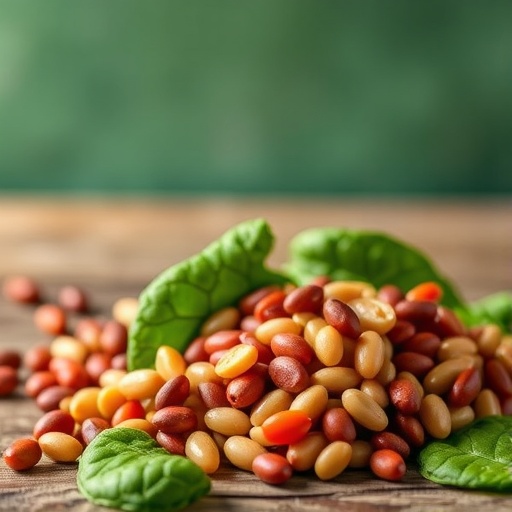
Emerging evidence from a comprehensive meta-analysis highlights the potent cardiovascular benefits of dietary legumes and soy foods, revealing a significant association with reduced risk of hypertension—a paramount global health concern. This systematic review and dose-response analysis, published in BMJ Nutrition Prevention & Health, synthesizes data across diverse populations and regions to elucidate the extent to which legume and soy intake modulate blood pressure regulation.
Hypertension, a leading contributor to morbidity and mortality worldwide, continues to escalate in prevalence despite advances in pharmacological interventions. Hence, identifying accessible and practical dietary strategies remains critical for public health policy and clinical recommendations. Legumes and soy foods, long considered staples of plant-based diets, contain bioactive compounds such as potassium, magnesium, dietary fiber, and isoflavones that are hypothesized to exert vasoprotective effects, but prior research presented inconsistent conclusions. This newly aggregated evidence addresses these gaps with a rigorous quantitative approach.
The investigators meticulously reviewed literature up to June 2025, incorporating 10 publications that report findings from 12 prospective cohort studies. These studies collectively encompass data from over 150,000 participants spanning multiple continents—including North America, Asia, and Europe—providing a robust demographic and geographic representation. Study participants varied in age, gender, and baseline health status, aligning well with real-world dietary patterns and risk profiles.
Analysis revealed a compelling inverse relationship between legumes and soy food consumption and the incidence of hypertension. Specifically, individuals with high legume intake demonstrated a 16% lower risk of developing elevated blood pressure relative to those consuming minimal amounts. Meanwhile, a high consumption of soy foods correlated with a 19% reduction in hypertension risk, underscoring an independent and additive influence of both food groups on cardiovascular health.
Dose-response modeling further refined these associations by identifying consumption thresholds linked to maximal risk reduction. For legumes, a linear risk decrement of approximately 30% was observed up to an intake level of 170 grams per day. Beyond this quantity, additional consumption did not yield further statistically significant blood pressure improvements, suggesting a saturation point. In contrast, soy foods exhibited a plateau in benefit between 60 and 80 grams daily, with a similar approximate 28-29% risk reduction, indicating a potentially different physiological ceiling or dose-dependent effect.
To contextualize these serving sizes, 100 grams of legumes or soy is roughly equivalent to a cup or about 5-6 tablespoons of cooked beans, chickpeas, lentils, peas, or a palm-sized tofu portion. These practical dietary recommendations provide actionable targets for clinicians and the public, facilitating integration of these foods into daily nutritional plans aimed at cardiovascular risk mitigation.
The biological plausibility of these findings is supported by mechanistic insights into nutrient-mediated pathways. Legumes and soy are nutrient-dense sources of potassium and magnesium, electrolytes integral to vascular tone modulation and nitric oxide bioavailability. Dietary fiber, prevalent in these foods, undergoes fermentation in the gut to generate short-chain fatty acids, such as butyrate, which have demonstrated capacity to enhance endothelial function and promote vasodilation. Additionally, soy isoflavones—phytoestrogens structurally similar to endogenous estrogens—may interact with estrogen receptors to improve vascular compliance and attenuate hypertensive responses.
Despite the strengths of this meta-analysis, including its diverse cohorts and dose-response evaluation, the authors acknowledge several limitations. Heterogeneity in study designs, legume and soy product types, preparation methods, and inconsistent hypertension definitions introduces variability that may influence the generalizability of results. Residual confounding by lifestyle factors and dietary contexts cannot be entirely excluded, necessitating cautious interpretation of causality.
Importantly, these findings carry substantial public health implications. Current legume consumption in Western Europe and the UK remains significantly below optimal levels—averaging just 8-15 grams per day against recommendations of 65 to 100 grams for cardiovascular benefits. This dietary gap represents a missed opportunity in combating the rising tide of hypertension prevalence through scalable nutritional interventions.
The investigators advocate for the inclusion of legumes and soy products as primary protein sources in dietary guidelines. Their emphasis on plant-based dietary strategies aligns with broader evidence supporting cardiometabolic health promotion through nutrient-rich, minimally processed foods. Meanwhile, the plateau effect observed with soy intake around 60-80 grams per day merits further research to decipher whether this reflects intrinsic physiological limits or methodological constraints due to fewer available studies in this intake range.
Reflecting on the wider scientific and clinical context, these results reinforce the imperative to prioritize nutrition in hypertension prevention frameworks. They substantiate the position of legumes and soy both as functional foods with direct blood pressure-lowering properties and as cornerstones of sustainable, plant-forward diets. As cardiovascular diseases remain the leading cause of death globally, such evidence underpins evolving preventive cardiology paradigms centered on modifiable lifestyle factors.
This research has been commended for its rigorous methodological approach and potential applicability, offering practical consumption benchmarks that can be readily translated into policy and practice. Continued large-scale prospective studies and randomized controlled trials will be vital to refine these associations, explore underlying molecular mechanisms, and inform the development of targeted nutritional interventions for blood pressure control.
The convergence of epidemiologic insights and mechanistic understanding underscores legumes and soy foods not merely as nutritive essentials but as bioactive agents capable of modulating vascular health. Their incorporation into everyday diets represents a promising, low-cost strategy to reduce the global hypertension burden, contributing meaningfully to chronic disease prevention and health promotion worldwide.
Subject of Research: People
Article Title: Legume and soy consumption and the risk of hypertension: a systematic review and dose–response meta-analysis of prospective studies
News Publication Date: 7-May-2026
Web References: http://dx.doi.org/10.1136/bmjnph-2025-001449
Keywords: Dietetics, Soybeans, Legumes, Blood pressure
Tags: bioactive compounds in legumesdietary legumes and cardiovascular healthdose-response relationship of soy foodsglobal impact of legumes on hypertensionisoflavones and blood pressure regulationlegume intake in diverse populationsmeta-analysis of soy intake and hypertensionplant-based diets and blood pressurepotassium and magnesium in hypertension preventionpublic health strategies for hypertensionsoy consumption and hypertension risksoy foods and vasoprotective effects