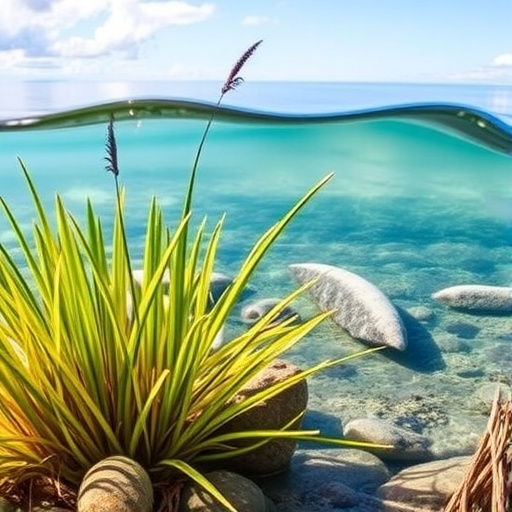
Rising ocean temperatures driven by climate change are transforming the intricate and previously symbiotic relationships between seagrasses and the microbial communities inhabiting their root zones. Recent research conducted by scientists from the University of Sydney and UNSW reveals that marine heatwaves provoke a subtle but deleterious shift within the bacterial ecosystems found in seagrass sediments, tipping the balance from mutualism toward toxicity. This phenomenon represents a critical, yet overlooked, factor exacerbating seagrass decline amidst increasing thermal stress in coastal ecosystems.
Seagrasses, a unique category of marine flowering plants, play pivotal ecological roles, including serving as nurseries for many fish species, filtering and purifying coastal waters, and acting as substantial carbon sinks. Their extensive meadows sustain a diverse array of marine life and contribute meaningfully to climate regulation. However, the decline of seagrass habitats often goes unnoticed until substantial ecosystem damage has occurred, largely due to the invisibility of below-ground processes and microbial dynamics that maintain seagrass health.
While terrestrial plant health and resilience to climatic stressors have long been known to depend heavily on their associated soil microbial communities, equivalent knowledge concerning marine plants like seagrasses has lagged behind. The newly published study in New Phytologist addresses this research gap by delving into how marine bacterial communities intimately associated with seagrass roots respond to elevated water temperatures characteristic of marine heatwave events.
Employing a novel underwater gardening experiment in estuarine environments, researchers uncovered a diverse and finely balanced bacterial ecosystem within the sediment surrounding seagrass rhizospheres. This microbial consortium plays an essential role in regulating sediment chemistry and nutrient availability, collectively supporting seagrass vitality. Yet, this microbial equilibrium exhibits marked sensitivity to temperature fluctuations, leading to pronounced shifts in bacterial composition under increasing thermal stress.
Specifically, heat stress favors the proliferation of bacterial taxa capable of producing hydrogen sulfide — a potent phytotoxin known to impair plant physiology and root function. Elevated hydrogen sulfide levels within sediments stunt seagrass growth and significantly diminish their ability to recover from heat-induced physiological damage. Moreover, seagrasses previously acclimatized to warmer conditions demonstrate heightened vulnerability to these microbial shifts, suggesting a compounding effect of chronic thermal exposure and microbial imbalance.
Quantitative analyses from this study reveal that seagrasses growing in sediments sourced from warmer locales produce on average 34% less biomass when the native sediment microbial community remains intact. This stark reduction highlights the critical influence of sediment microbiota on plant productivity and resilience, underscoring the hidden but profound impact microbial dynamics exert beneath the water’s surface.
These findings underscore the necessity of integrating microbial ecology into seagrass conservation and restoration strategies. The parallels drawn to coral reef ecosystems—where microalgal symbionts underpin reef health—serve as a compelling analogy, emphasizing that the microbial inhabitants of seagrass rhizospheres are equally consequential in determining the fate of these vulnerable marine habitats.
Lead researcher Dr. Renske Jongen from the University of Sydney stresses the urgent importance of understanding these below-ground microbial processes as marine heatwaves increase in frequency and severity. “Seagrasses might appear superficially healthy, yet beneath the sediment, microbial community shifts triggered by warming tell a far more concerning story,” she cautions. This insight elevates the significance of microbial monitoring in marine plant ecology to anticipate and mitigate seagrass decline.
A fortuitous natural laboratory exists at Myuna Bay in Lake Macquarie, where for nearly four decades industrial activity at the Eraring Power Station has released warm water plumes into the estuarine system. This anthropogenically warmed environment provides conditions analogous to projected ocean temperatures for eastern Australia by the year 2090, effectively simulating long-term marine heatwave exposure and enabling robust experimental investigation into thermal impacts on seagrass-microbe interactions.
Capitalizing on this unique setting, researchers transplanted Zostera muelleri, a native seagrass species, into sediment conditions varying in temperature exposure. Through DNA sequencing and microbial community profiling, they detected marked compositional changes in bacterial populations correlating with elevated sediment temperatures. Particularly, taxa known to negatively affect seagrass physiology increased in abundance, reinforcing the causal link between warming, microbial community shifts, and seagrass health decline.
Senior author Associate Professor Ziggy Marzinelli highlights the dynamic nature of microbiome-plant interactions in the marine environment. “Heat stress doesn’t merely challenge the seagrass directly but restructures the microbial ecosystem around its roots in ways that exacerbate stress and potentially hasten habitat degradation,” he explains. Understanding this complex interplay is essential for predicting ecosystem trajectories under climate change.
These insights bear significant implications for restoration ecology. As Professor Paul Gribben from UNSW states, current seagrass restoration efforts focusing primarily on species selection for heat tolerance may fall short unless they also account for and manage the associated microbial communities. Targeting root-zone microbiota could become a critical intervention for enhancing restoration success and resilience in warming seas.
In sum, this groundbreaking research pulls back the curtain on the concealed microbial dimension of seagrass ecosystems under climate stress. The findings advocate for a paradigm shift in marine plant science and conservation, urging multidisciplinary approaches that fuse microbiology, ecology, and climate science to safeguard these vital coastal habitats amid a rapidly changing ocean environment.
Subject of Research:
Seagrass-microbe interactions under marine heat stress
Article Title:
Marine Heatwaves Unveil Hidden Microbial Drivers of Seagrass Decline
News Publication Date:
Not specified
Web References:
http://dx.doi.org/10.1111/nph.71195
References:
Jongen, R., Marzinelli, E., Gribben, P., et al. (Year). Title. New Phytologist. DOI:10.1111/nph.71195
Image Credits:
Not specified
Keywords:
Marine biology, marine plants, climate change, microbiology, microbial ecology, microbial genetics, microorganisms, plant sciences, plant-microbe interactions, plant communities, plant ecology
Tags: climate change effects on marine plantsclimate-driven marine ecosystem transformationscoastal ecosystem carbon sinksecological role of seagrasses in coastal watersmarine flowering plants and microbial healthmarine heatwaves impact on seagrass ecosystemsmicrobial community shifts in seagrass rootsseagrass habitat degradation under climate changeseagrass sediment bacterial ecosystem changesseagrass-microbe symbiosis disruptionthermal stress and seagrass declinetoxic microbial interactions in seagrass sediments