• HOME
  • NEWS
  • EXPLORE
    • CAREER
      • Companies
      • Jobs
    • EVENTS
    • iGEM
      • News
      • Team
    • PHOTOS
    • VIDEO
    • WIKI
  • BLOG
  • COMMUNITY
    • FACEBOOK
    • INSTAGRAM
    • TWITTER
Wednesday, April 1, 2026
BIOENGINEER.ORG
No Result
View All Result
  • Login
  • HOME
  • NEWS
  • EXPLORE
    • CAREER
      • Companies
      • Jobs
        • Lecturer
        • PhD Studentship
        • Postdoc
        • Research Assistant
    • EVENTS
    • iGEM
      • News
      • Team
    • PHOTOS
    • VIDEO
    • WIKI
  • BLOG
  • COMMUNITY
    • FACEBOOK
    • INSTAGRAM
    • TWITTER
  • HOME
  • NEWS
  • EXPLORE
    • CAREER
      • Companies
      • Jobs
        • Lecturer
        • PhD Studentship
        • Postdoc
        • Research Assistant
    • EVENTS
    • iGEM
      • News
      • Team
    • PHOTOS
    • VIDEO
    • WIKI
  • BLOG
  • COMMUNITY
    • FACEBOOK
    • INSTAGRAM
    • TWITTER
No Result
View All Result
Bioengineer.org
No Result
View All Result
Home NEWS Science News Health

Tree-climbing goats disperse seeds by spitting

Bioengineer by Bioengineer
May 24, 2017
in Health
Reading Time: 2 mins read
0
Share on FacebookShare on TwitterShare on LinkedinShare on RedditShare on Telegram
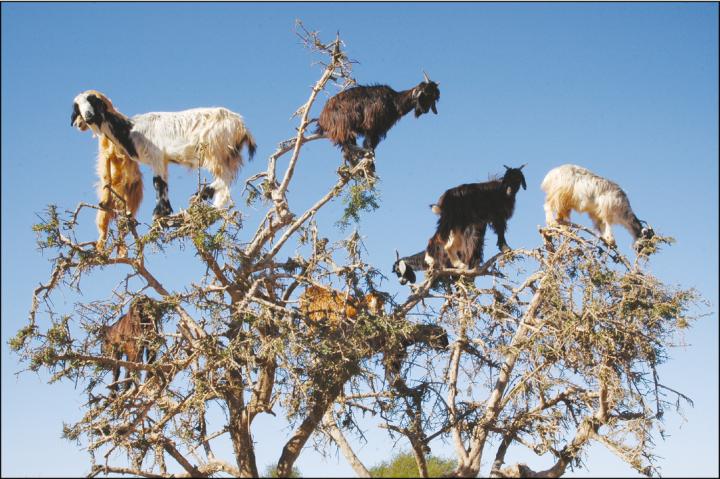
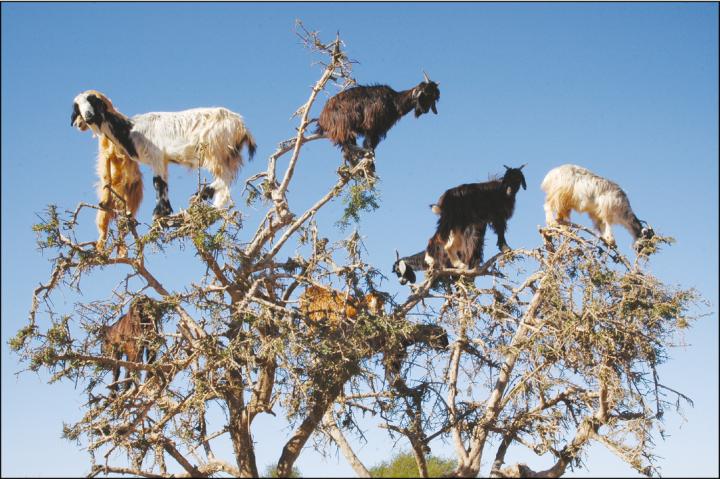
IMAGE

Credit: H Garrido/EBD-CSIC

In dry southern Morocco, domesticated goats climb to the precarious tippy tops of native argan trees to find fresh forage. Local herders occasionally prune the bushy, thorny trees for easier climbing and even help goat kids learn to climb. During the bare autumn season, goats spend three quarters of their foraging time "treetop grazing."

Spanish ecologists have observed an unusual way in which the goats may be benefiting the trees: the goats spit the trees' seeds. Miguel Delibes, Irene Castañeda, and José M Fedriani reported their discovery in the latest Natural History Note in the May issue of the Ecological Society of America's journal Frontiers in Ecology and the Environment. The paper is open access.

Argan may be familiar from popular beauty products that feature argan oil, made from the tree's nuts. The nut is surrounded by a pulpy fruit that looks a bit like a giant green olive. For goats, the fruits are a tasty treat worth climbing up to 30 feet into the branches to obtain.

But the goats don't like the large seeds. Like cows, sheep, and deer, goats re-chew their food after fermenting it for a while in a specialized stomach. While ruminating over their cud, the goats spit out the argan nuts, delivering clean seeds to new ground, wherever the goat has wandered. Gaining some distance from the parent tree gives the seedling a better chance of survival.

This novel seed dispersal effect is a variation on the mechanism ecologists call endozoochory, in which seeds more commonly pass all the way through the animal's digestive system and out the other end (or sometimes through two digestive systems). The authors suspected that reports of goats dispersing argan seeds by this more common mechanism were mistaken, because goats do not usually poop large seeds.

The researchers have witnessed sheep, captive red deer, and fallow deer spitting seeds while chewing their cud, and suspect this spitting variation on endozoochory may actually be common – and perhaps an essential route of seed spread for some plant species.

###

Miguel Delibes, Irene Castañeda, José M Fedriani. (2017) Tree-climbing goats disperse seeds during rumination. Front Ecol Environ 15(4): 222-223, doi:10.1002/fee.1488

###

The Ecological Society of America, founded in 1915, is the world's largest community of professional ecologists and a trusted source of ecological knowledge, committed to advancing the understanding of life on Earth. The 10,000 member Society publishes five journals and a membership bulletin and broadly shares ecological information through policy, media outreach, and education initiatives. The Society's Annual Meeting attracts 4,000 attendees and features the most recent advances in ecological science. Visit the ESA website at http://www.esa.org.

Media Contact

Liza Lester
[email protected]
202-833-8773 x211
@ESA_org

http://www.esa.org

############

Story Source: Materials provided by Scienmag

Share12Tweet8Share2ShareShareShare2

Related Posts

Brain Metastases Show Unique Macrophage Spatial Patterns

April 1, 2026

PRSS56 Drives and Treats Human High Myopia

April 1, 2026

Wastewater Study Maps US Antibiotic Resistance Patterns

April 1, 2026

Linking Health Quality and Life Meaning in Elders

April 1, 2026
Please login to join discussion

POPULAR NEWS

  • blank

    Revolutionary AI Model Enhances Precision in Detecting Food Contamination

    96 shares
    Share 38 Tweet 24
  • Imagine a Social Media Feed That Challenges Your Views Instead of Reinforcing Them

    1006 shares
    Share 398 Tweet 249
  • Promising Outcomes from First Clinical Trials of Gene Regulation in Epilepsy

    51 shares
    Share 20 Tweet 13
  • Popular Anti-Aging Compound Linked to Damage in Corpus Callosum, Study Finds

    43 shares
    Share 17 Tweet 11

About

We bring you the latest biotechnology news from best research centers and universities around the world. Check our website.

Follow us

Recent News

KIST-IAE Collaborative Team Surpasses Performance Limits in Lithium-Air Batteries with Innovative Two-Dimensional Catalyst

Brain Metastases Show Unique Macrophage Spatial Patterns

PRSS56 Drives and Treats Human High Myopia

Subscribe to Blog via Email

Enter your email address to subscribe to this blog and receive notifications of new posts by email.

Join 78 other subscribers
  • Contact Us

Bioengineer.org © Copyright 2023 All Rights Reserved.

Welcome Back!

Login to your account below

Forgotten Password?

Retrieve your password

Please enter your username or email address to reset your password.

Log In
No Result
View All Result
  • Homepages
    • Home Page 1
    • Home Page 2
  • News
  • National
  • Business
  • Health
  • Lifestyle
  • Science

Bioengineer.org © Copyright 2023 All Rights Reserved.