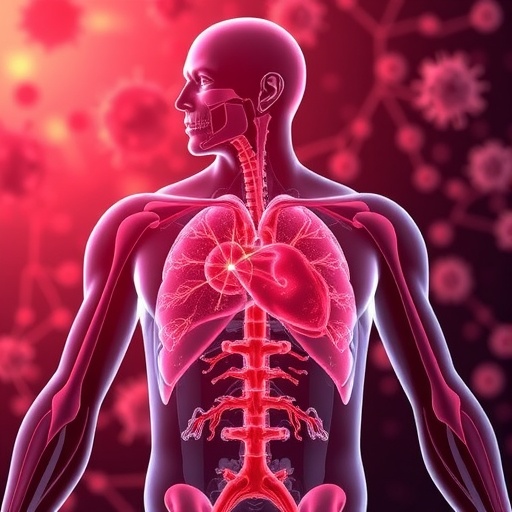
A groundbreaking study conducted by researchers at Baylor College of Medicine, published in the prestigious Proceedings of the National Academy of Sciences, uncovers a novel mechanism by which blood vessels defend themselves against damage and slow the progression of atherosclerosis. This discovery holds promising implications for vascular precision medicine and raises cautionary notes regarding the safety profile of certain new cancer treatments that interfere with cellular metabolism.
Atherosclerosis, a chronic condition characterized by the gradual accumulation of fatty plaques inside arterial walls, poses a severe threat to cardiovascular health globally. These plaques contribute to narrowing and hardening of arteries, significantly impeding blood flow. The resultant vascular compromise can precipitate life-threatening events, including heart attacks, strokes, and peripheral tissue ischemia. Despite advances in lipid-lowering therapies targeting cholesterol, atherosclerosis remains a leading cause of mortality, indicating the involvement of additional, less understood pathways of vascular injury.
Central to the study’s investigation are endothelial cells, the tightly coupled monolayer of cells lining the interior surface of blood vessels. These cells act as a crucial interface between circulating blood and the vessel wall, regulating vascular tone, permeability, and inflammatory responses. The research zeroes in on how disturbed blood flow—a hemodynamic condition characterized by irregular, non-laminar flow patterns commonly found at arterial branch points and curvatures—induces DNA damage in endothelial cells. This damage triggers genomic stress and impairs endothelial barrier function, factors known to accelerate atherogenesis.
The research team, led by Dr. Yuqing Huo and Dr. Qian Ma, explored the metabolic adaptations of endothelial cells exposed to disturbed flow. They identified that disturbed flow induces upregulation of genes integral to purine biosynthesis. Purines, fundamental nitrogenous bases, are essential building blocks for nucleotides that constitute DNA and RNA molecules. Effective DNA repair mechanisms rely heavily on the availability of purines to synthesize new DNA strands accurately.
Using sophisticated experimental models, including carotid artery tissue from genetically engineered mice and live animal studies, the investigators demonstrated that the increased purine synthesis observed is tightly coupled with enhanced DNA repair activity in endothelial cells. Notably, suppression of Atic—a critical enzyme facilitating purine biosynthesis—resulted in heightened endothelial cell apoptosis, compromised integrity of the endothelial barrier, and accelerated development of atherosclerotic lesions. Strikingly, external supplementation with purines was sufficient to reverse these deleterious effects, underscoring the therapeutic potential of targeting purine metabolic pathways.
This study fundamentally shifts our understanding of endothelial cell biology within atherosclerosis pathology. It reveals that endothelial cells are not passive victims of mechanical and oxidative stress but actively engage adaptive metabolic responses to counteract DNA damage. These repair mechanisms play a pivotal role in maintaining endothelial barrier function and mitigating the progression of vascular disease.
The implications of these findings extend beyond cardiovascular disease management. They highlight potential complications in the use of emerging cancer therapeutics that inhibit purine synthesis to thwart tumor proliferation. Such treatments might inadvertently impair endothelial cells’ DNA repair capacity, increasing vascular vulnerability and the risk of atherosclerotic pathology. Dr. Huo emphasizes the need for meticulous evaluation of the vascular side effects of these anticancer agents, recommending vigilance in clinical application.
This research represents a significant step forward in the pursuit of precision medicine strategies tailored to the vascular endothelium. By reinforcing DNA repair pathways metabolically, future therapies could complement existing cholesterol-lowering regimens, offering a multifaceted approach to reducing the burden of atherosclerosis and subsequent cardiovascular events.
The study’s robust design and utilization of state-of-the-art genomic and metabolic analyses provide a comprehensive view of how flow dynamics intricately regulate endothelial cell health. Such insights pave the way for novel biomarker development to identify individuals at heightened risk of endothelial dysfunction and cardiovascular incidents.
Beyond therapeutic implications, these findings open new avenues for understanding fundamental vascular biology and its interplay with systemic metabolic processes. They suggest that metabolic reprogramming within endothelial cells is a vital determinant of vascular resilience under pathological stress.
The multidisciplinary collaboration involved researchers from numerous esteemed institutions, including Anhui Medical University, Guangzhou Medical University, and Emory University, reflecting the study’s wide-reaching scientific impact. Funded by notable grants from the American Heart Association and National Institutes of Health, the research embodies a concerted effort to decode the complex mechanisms underlying chronic vascular diseases.
In summary, the discovery of purine metabolic adaptation in endothelial cells under disturbed flow conditions unveils a critical endogenous protective pathway against vascular DNA damage and atherosclerosis. This breakthrough not only enhances comprehension of arterial biology but also warns of the possible vascular compromises posed by purine synthesis-inhibiting cancer drugs, underscoring the interconnectedness of metabolic pathways in human health and disease.
Subject of Research: Animal tissue samples
Article Title: Purine metabolic adaptation protects the endothelium from disturbed flow–induced DNA damage and atherosclerosis
News Publication Date: 1-May-2026
Web References: http://dx.doi.org/10.1073/pnas.2526299123
References: Proceedings of the National Academy of Sciences
Keywords: Atherosclerosis, endothelial cells, DNA damage, disturbed flow, purine synthesis, Atic enzyme, vascular biology, cardiovascular disease, metabolic adaptation, DNA repair, cancer therapeutics, endothelial barrier function
Tags: atherosclerosis natural defense mechanismsblood vessel inflammation regulationcancer treatment impact on vascular healthcardiovascular disease prevention strategiescellular metabolism in vascular diseaseendothelial cell function in atherosclerosisendothelial response to disturbed blood flowhemodynamic forces in blood vesselslipid plaque accumulation in arteriesnovel therapeutic targets for atherosclerosisvascular injury and repairvascular precision medicine advances