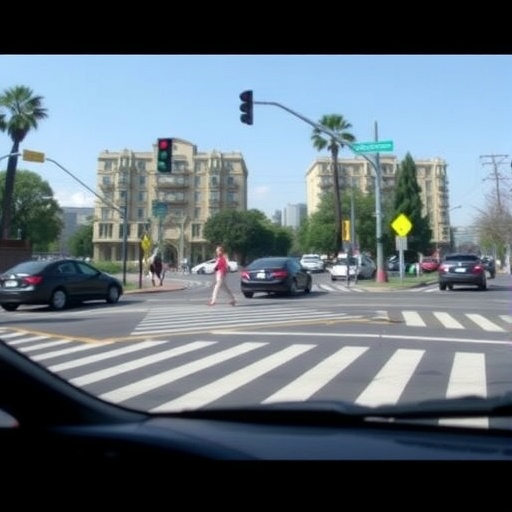
In the pursuit of Vision Zero—an ambitious public safety initiative aiming for zero fatalities on transportation networks—the United States faces a perplexing challenge. Despite extensive efforts to curtail traffic-related deaths, overall figures have stagnated since 2000, hovering around 40,000 annual fatalities. More concerning is the drastic shift within these statistics: pedestrian and bicyclist deaths have surged by 68% over the past two decades. This alarming trend highlights a vulnerability in the nation’s transportation system that has eluded meaningful mitigation, placing non-motorized road users at disproportionate risk.
Pedestrians and cyclists now account for roughly one-fifth of all traffic fatalities in the U.S., and per mile traveled, they face mortality rates approximately 30 times higher than those traveling in motor vehicles. This stark disparity underscores a systemic issue in road safety that demands closer scrutiny. While crashes have historically been treated as isolated incidents addressed through traffic engineering or enforcement tactics, emerging research suggests that underlying urban planning and land use decisions are significant contributors to this persistent problem.
Researchers at Florida Atlantic University have undertaken a comprehensive analysis that challenges prevailing conceptions about the root causes of vulnerable user deaths. By focusing on 222 miles of arterial highways across Florida—specifically in urban corridors within Miami, Orlando, and Tampa—they explored the spatial dynamics of pedestrian and bicyclist injury crashes. Employing datasets from the Florida Department of Transportation and leveraging satellite imagery, the team compiled a detailed inventory of 334 roadway segments and 489 signalized intersections, enabling granular examination of crash patterns at multiple scales.
Published in the Journal of the American Planning Association, the study reveals a critical insight: the placement of everyday retail and service destinations, such as grocery stores, pharmacies, gas stations, and fast-food outlets, alongside busy, high-speed arterial roads significantly exacerbates the risk for pedestrian and cyclist injuries and fatalities. Contrary to the common assumption that unsafe road design alone accounts for these hazards, it is the spatial relationship between land use and road typology that multiplies exposure to danger.
This coupling of land use and transportation infrastructure creates environments inherently hostile to safe walking and cycling. The current American suburban model often situates essential amenities on wide, fast roads characterized by multiple lanes and elevated speed limits, designed primarily for automobile throughput rather than pedestrian accessibility. This design paradigm not only imperils vulnerable users but also normalizes high-speed vehicular travel through areas where pedestrian activity is unavoidable. In stark contrast, European nations such as Sweden, Germany, and the United Kingdom employ strict land use regulations to limit such development along arterial corridors, contributing to markedly lower pedestrian and cyclist fatality rates.
The research reframes traffic safety from a purely engineering challenge into a multifaceted planning issue. As Dr. Eric Dumbaugh, senior author and professor at Florida Atlantic University, articulates, treating traffic fatalities as disconnected engineering problems overlooks the profound influence of community development patterns. Particularly in a rapidly growing state like Florida, where urban expansion is both dynamic and sprawling, integrating land use and safety considerations is not just prudent but essential.
From a policy perspective, two primary avenues emerge for improving pedestrian and bicyclist safety: the redesign of arterial roads themselves, or the reconfiguration of land use patterns that dictate travel behavior and exposure. While retrofitting roadways with traffic calming measures, lane reductions, or speed limit adjustments represents a traditional strategy, the sheer expanse of the U.S. arterial street network presents formidable logistical and financial hurdles. With over 178,000 miles of urban arterials—more than three times the length of the Interstate Highway System—comprehensive road redesign would entail massive capital investment and political commitment, both of which are challenging to marshal.
Consequently, land use interventions offer an alternative and arguably more scalable solution. By rethinking the allowable uses along arterial corridors, municipalities can reduce pedestrian and cyclist exposure to high-speed vehicle traffic. This might involve relocating high-risk commercial activities to safer, more walkable environments or redesigning zoning and site plan guidelines to favor community-oriented, pedestrian-friendly configurations. Such strategies leverage existing planning tools, including zoning codes, overlay districts, and traffic impact assessments, to discourage hazardous development patterns before they become entrenched in the urban fabric.
An opportune moment to apply these insights is now, as many retail corridors situated along arterial roads are experiencing economic shifts—characterized by aging infrastructure and declining demand. This decline facilitates redevelopment or repurposing of land parcels, creating an opening for planners and policymakers to enforce safety-enhancing land use regulations. Ensuring new or revitalized developments promote walkability while distancing critical pedestrian attractors from high-speed arterials can dramatically alter risk profiles for vulnerable road users.
The implications of this research underscore the necessity for interdisciplinary collaboration. Achieving Vision Zero demands that planners, traffic engineers, policymakers, and developers work cohesively to embed safety considerations at the earliest stages of community design. Rather than reactive measures post-incident, a proactive integration of land use and transportation planning can create urban environments where collision risks are minimized intrinsically.
Ultimately, the study advocates for a paradigm shift: safety is not solely a function of how roads are engineered but is equally determined by the broader context of how communities grow and are structured. Recognizing that traffic fatalities among pedestrians and cyclists are symptoms of larger planning and developmental choices invites a more holistic approach to transportation safety. As Dr. Dumbaugh poignantly states, if the U.S. is earnest about realizing zero deaths on its roadways, then land use planning must be a central component of the solution—not merely an afterthought.
Co-author Jonathan Stiles, Ph.D., contributes to this critical body of knowledge as a post-doctoral researcher within FAU’s Department of Urban and Regional Planning. Supported by grants from the Florida Department of Transportation and the Collaborative Sciences Center for Road Safety, their research represents a significant advancement in understanding the persistent challenges facing vulnerable road users and the systemic changes necessary to protect them.
This evidence-based investigation offers a fresh lens through which to view the intersection of transportation safety and urban development. As cities grow and evolve, the lessons from Florida’s arterial corridors could shape national strategies aimed at fostering safer, healthier, and more equitable urban mobility ecosystems. The time is ripe for policymakers and planners to embrace this integrative approach, transforming high-risk corridors into vibrant, inclusive spaces where no loss of life is ever acceptable.
Subject of Research: People
Article Title: Land Use and Road Safety: Understanding the Persistence of Vulnerable Road User Deaths and Injuries in the United States
News Publication Date: 2-Apr-2026
Web References:
https://www.tandfonline.com/doi/full/10.1080/01944363.2026.2635948
References:
The Journal of the American Planning Association, DOI: 10.1080/01944363.2026.2635948
Image Credits:
Alex Dolce, Florida Atlantic University
Keywords
Traffic flow, Vehicles, Bicycles, Urban studies, Land use, Land management, Urban planning, Urbanization, Transportation, Transportation engineering, Risk management, Risk reduction, Risk assessment, Traumatic injury, Roads, Architectural design, Landscape architecture
Tags: Florida arterial highways crash analysisland use decisions and traffic fatalitiesnon-motorized road user riskspedestrian and cyclist traffic safetypedestrian mortality rates per milerise in bicyclist deaths USsystemic road safety issues UStraffic fatality trends 2000-2020urban planning impact on road safetyUS pedestrian fatalities increaseVision Zero traffic safety initiativevulnerable road user protection strategies