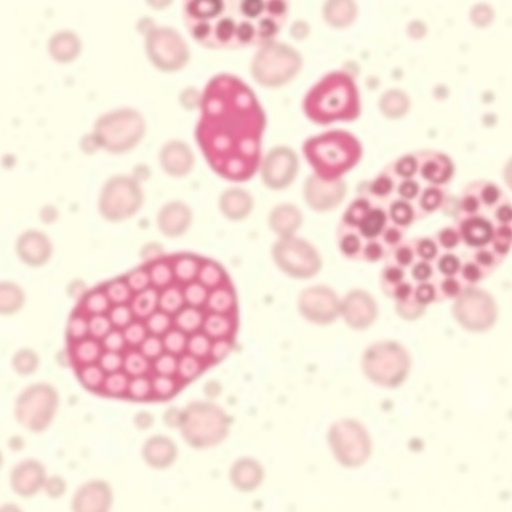
In a groundbreaking breakthrough that promises to redefine therapeutic strategies for cancer and aging-related diseases, researchers from the MRC Laboratory of Medical Sciences (LMS) in conjunction with Imperial College London have uncovered a hitherto hidden vulnerability within senescent cells—often dubbed ‘zombie-like’ cells due to their persistent but non-proliferative state. These cells, which play a paradoxical dual role in health and disease, have now been demonstrated to harbor a critical biochemical Achilles’ heel centered on their dependence on a protective enzyme known as GPX4 to stave off ferroptosis, a specialized iron-dependent form of cell death.
Cancer, at its most fundamental level, is characterized by relentless cellular division fueling tumor growth. Paradoxically, embedded within most tumors exists a subset of senescent cells that arrest proliferation, traditionally perceived as tumor suppressive. However, chemotherapy, a mainstay of cancer treatment, frequently elevates the number of these senescent cells within tumors. While these cells do not contribute to tumor expansion directly, they secrete a cocktail of bioactive molecules collectively termed the senescence-associated secretory phenotype (SASP), which can promote inflammation, enhance neighboring cancer cell proliferation, and facilitate metastasis. Consequently, the pro-tumorigenic role of senescent cells has garnered intense research attention, driving pharmacological endeavors aimed at selectively eradicating them to improve clinical outcomes.
The seminal study led by Mariantonietta D’Ambrosio employed a comprehensive high-throughput screen encompassing over 10,000 electrophilic covalent compounds, a class of molecules capable of irreversibly binding target proteins previously deemed ‘undruggable.’ This broad-spectrum screening focused on distinguishing compounds exhibiting selective cytotoxicity against senescent cells while sparing normal counterparts, an essential criterion for senolytic agents. The methodology leveraged the unique biochemical milieu of senescent cells to identify pharmacological agents capable of disrupting their survival pathways.
Among the hits, four compelling compounds emerged, three of which intriguingly targeted glutathione peroxidase 4 (GPX4). GPX4 serves as a pivotal regulator by mitigating lipid peroxidation and reactive oxygen species-induced damage, thereby inhibiting ferroptosis. Ferroptosis, unlike apoptosis or necrosis, is an iron-dependent regulated cell death modality characterized by overwhelming lipid peroxidation leading to catastrophic membrane damage. Recent revelations have positioned ferroptosis as a novel vulnerability of senescent cells, owing to their intracellular iron accumulation and oxidative stress landscape, which positions them perilously close to ferroptotic threshold, reliant heavily on GPX4 for survival.
The protective overexpression of GPX4 in senescent cells can be likened to an analgesic mask that conceals underlying damage. Inhibiting GPX4 effectively strips away this protective barrier, precipitating an irreversible cascade culminating in cell death through ferroptosis. This concept introduces a paradigm wherein senolytic therapies harness endogenous cellular susceptibilities rather than broad cytotoxicity, offering precision in targeting deleterious senescent populations.
To validate these insights in vivo, the research team deployed these GPX4-inhibiting compounds across three distinct murine models of cancer. The outcomes were striking: senescent cell populations within tumors diminished markedly, tumor sizes contracted, and survival rates improved significantly. These preclinical results underscore the therapeutic potential of ferroptosis induction as a viable strategy to complement existing modalities, including chemotherapy and immunotherapy.
The implications of this discovery extend far beyond tumor biology. Senescent cells accumulate with advancing age and contribute to a spectrum of pathologies such as tissue fibrosis, where their pro-inflammatory secretions exacerbate organ dysfunction. Therefore, selective senolytics disrupting GPX4-mediated defenses could herald a new frontier in treating age-associated diseases, ameliorating symptoms by clearing detrimental cell populations.
However, critical questions remain to be addressed before translation into clinical practice. The interplay between senescent cell clearance and the host immune system is a fertile area of investigation. There is speculation that inducing ferroptosis in senescent cells may simultaneously reawaken immunosurveillance mechanisms, facilitating the recruitment and activation of cytotoxic T lymphocytes and natural killer cells. Such a synergy could potentiate anti-tumor immunity, presenting a dual-pronged therapeutic advantage.
Further research will also focus on identifying biomarkers predictive of patient responsiveness, particularly GPX4 expression levels within tumors. Tailoring treatment regimens to leverage GPX4 dependency could personalize interventions, maximizing efficacy while minimizing adverse effects. In this context, coupling GPX4-targeting agents with conventional chemotherapeutics may not only halve tumor burden but also mitigate relapse rates spurred by SASP-mediated tumorigenic signaling.
In summary, the identification of GPX4-dependent ferroptosis as a vulnerability of senescent cells unveils a biologically elegant and clinically promising avenue for therapy. By exploiting this Achilles’ heel, new senolytic compounds may offer transformative benefits in oncology and age-related disease management. This work epitomizes the evolving landscape of precision medicine, where understanding cellular biochemistry bridges the gap to innovative treatments with profound patient impact.
Subject of Research: Cellular senescence and targeted senolytic therapy in cancer and age-associated diseases.
Article Title: Electrophilic compound screening identifies GPX4-dependent ferroptosis as a senescence vulnerability
News Publication Date: 24-Apr-2026
Web References: http://dx.doi.org/10.1038/s41556-026-01921-z
Image Credits: Mariantonietta D’Ambrosio, MRC Laboratory of Medical Sciences
Keywords: Cellular senescence, ferroptosis, GPX4, senolytic drugs, cancer therapy, chemotherapy, oxidative stress, iron metabolism, reactive oxygen species, tumor microenvironment, immunotherapy, senescence-associated secretory phenotype (SASP).
Tags: anticancer strategies for aging-related diseasesbioactive molecules in cancer progressionchemotherapy-induced senescenceferroptosis in cancer therapyGPX4 enzyme role in cancerinnovative cancer treatment targetsselective elimination of senescent cellssenescence-associated secretory phenotypesenescent cells vulnerabilitysenolytic drug developmenttargeting tumor microenvironmenttumor suppression and promotion