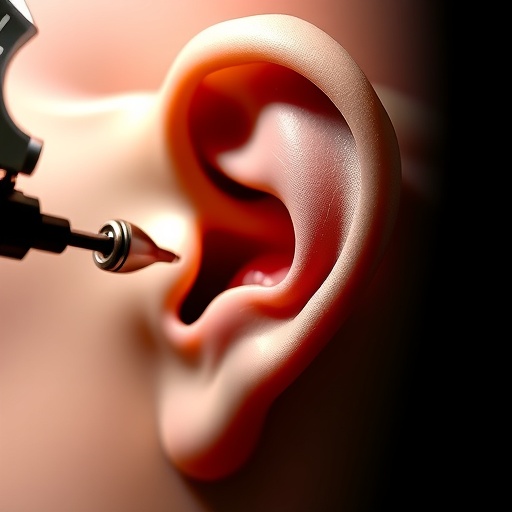
In a groundbreaking advancement set to revolutionize the field of otologic surgery, researchers have developed a highly sophisticated, interaction-aware robotic system designed specifically for minimally invasive transcanal inner ear interventions. This state-of-the-art dexterous robot, meticulously engineered to navigate the intricate and delicate anatomy of the human ear, promises to significantly enhance surgical precision, reduce operative risks, and improve patient outcomes. The innovation represents a pivotal leap forward in the integration of robotics and microsurgery, opening new horizons for treatment approaches that were previously constrained by the limitations of human manual dexterity and visualization.
The newly introduced robotic system is distinguished by its interaction-aware capabilities, which allow it to adapt dynamically to the variable anatomical and physiological conditions encountered during inner ear surgery. Unlike conventional robotic platforms that primarily execute pre-programmed tasks, this advanced robot perceives and responds to tactile and force feedback in real time. Such responsiveness is crucial when manipulating structures as minute and sensitive as the ossicles and cochlear membranes, where even submillimeter deviations can result in catastrophic functional losses.
Engineered to operate through the transcanal route—a minimally invasive pathway via the external auditory canal—the robotic device eliminates the need for larger surgical openings traditionally required in otologic procedures. This approach not only minimizes patient trauma and accelerates recovery times but also mitigates the risk of postoperative complications such as infections and scarring. The robot’s compact form factor and high degree of articulation facilitate navigation through the ear canal’s narrow confines, addressing one of the most formidable challenges in inner ear surgery.
Central to the robot’s functionality is its dexterous manipulatory system, which mimics the nuanced movements of a skilled surgeon’s hand but with enhanced steadiness and accuracy. The robot is equipped with a multi-jointed arm mechanism capable of executing delicate maneuvers, including precise incisions, targeted tissue manipulations, and microscale implantations. This capability is augmented by high-resolution imaging and sensor arrays that provide the surgical team with continuous, detailed feedback on the robot’s interactions with the biological tissues.
The integration of real-time three-dimensional imaging, such as optical coherence tomography and intraoperative computed tomography, allows the surgical team to visualize the intervention site with unprecedented clarity. This imaging synergy enhances the robot’s ability to precisely localize anatomical landmarks, plan trajectories, and avoid critical structures like the facial nerve and labyrinthine window. Through this symbiotic relationship between imaging and robotic control, the system ensures maximal preservation of the delicate inner ear architecture.
Another remarkable feature of the interaction-aware robotic system is its utilization of advanced machine learning algorithms that interpret sensor data to predict tissue responses and adjust the robot’s actions accordingly. This predictive modeling reduces the likelihood of inadvertent tissue damage by preemptively compensating for movement due to patient respiration or cardiac pulsations. Additionally, the system’s learning protocols continuously refine operational parameters based on cumulative surgical experience, thus evolving autonomously to optimize procedural safety and efficacy.
The research team conducted extensive preclinical trials using anatomically accurate cadaveric specimens and synthetic models to validate the robot’s performance. These rigorous evaluations confirmed the system’s capacity to execute complex interventions with consistency and precision that surpass the benchmarks of manual surgery. Importantly, the interaction-aware algorithm effectively adjusted to variations in tissue stiffness and anatomical anomalies, demonstrating robustness across a spectrum of clinical scenarios.
The implications of this technology extend beyond traditional otologic surgery into therapeutic areas such as cochlear implantation, vestibular schwannoma resection, and drug delivery to the inner ear. Minimally invasive access facilitated by the robot enables targeted treatments that minimize systemic exposure and side effects. Such precision is particularly valuable in addressing sensorineural hearing loss and balance disorders, conditions that affect millions globally and currently have limited curative options.
Furthermore, the robotic system offers a platform for real-time intraoperative monitoring and recording, enabling longitudinal studies on surgical techniques and outcomes. This wealth of data supports continuous improvement in clinical practice and provides a rich resource for training the next generation of surgeons. By bridging the gap between robotic automation and human expertise, the system exemplifies a paradigm shift toward more personalized and adaptive surgical interventions.
The development of this interaction-aware dexterous robot also underscores the importance of interdisciplinary collaboration, drawing upon advances in robotics, biomechanics, computer vision, and clinical otology. The convergence of these fields has produced a tool that not only enhances technical capabilities but also fundamentally reshapes how surgeons interact with complex biological environments. This innovation challenges pre-existing paradigms and sets new standards for precision, safety, and minimally invasive care.
Looking to the future, ongoing research aims to refine the robot’s ergonomics and control interfaces to facilitate broader clinical adoption. User-friendly software platforms and haptic feedback systems are being integrated to provide surgeons with intuitive control over robotic actions. Additionally, efforts to reduce manufacturing costs and streamline regulatory approvals will be pivotal in making this transformative technology accessible to healthcare institutions worldwide.
As the medical community anticipates the first human trials scheduled in the near term, the enthusiasm surrounding this robotic platform reflects a broader movement towards the integration of intelligent automation in surgery. The potential to reduce human error, extend the reach of surgical expertise, and enhance patient-centered care is immense. If the technology fulfills its promise, it could herald a new era in otolaryngology and microsurgical interventions, delivering unprecedented precision and safety.
In conclusion, the interaction-aware dexterous robot embodies a synthesis of technological innovation and clinical insight, offering a novel solution to some of the most persistent challenges in minimally invasive inner ear surgery. Its successful implementation could revolutionize therapeutic strategies, improve patient outcomes, and inspire further innovations at the intersection of robotics and medicine. As such, this development stands as a landmark achievement with profound implications for the future of surgical care.
Subject of Research: Development of an interaction-aware dexterous robot designed for minimally invasive transcanal inner ear surgical procedures.
Article Title: Interaction-aware dexterous robot for minimally invasive transcanal inner ear interventions.
Article References:
Li, H., Gao, P., Tan, H. et al. Interaction-aware dexterous robot for minimally invasive transcanal inner ear interventions. Nat Commun (2026). https://doi.org/10.1038/s41467-026-72398-5
Image Credits: AI Generated
Tags: advanced robotics in minimally invasive surgerydexterous robotic system for ear surgeryimproving patient outcomes in ear surgeryinteraction-aware surgical robotsminimally invasive inner ear surgeryotologic surgical innovationprecision robotics in ear surgeryreal-time tactile feedback in surgeryreducing surgical risks in ear proceduresrobotic manipulation of cochlear membranesrobotic microsurgery in otologytranscanal robotic surgery