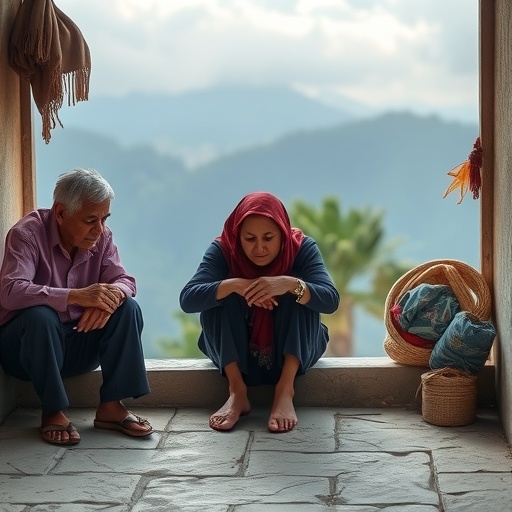
In a groundbreaking new study published in BMC Geriatrics, researchers have shed light on the intricate relationship between depression and quality of life among older adults in Nepal’s Sudurpashchim Province. With the global elderly population expanding rapidly, understanding the nuances that affect mental health and overall well-being in distinct cultural and geographic contexts has never been more urgent. This study dives into the intersection of depression and quality of life (QoL) using data gathered through an extensive cross-sectional community survey, providing valuable insights that could help shape future public health policies and intervention strategies.
The research is situated in Sudurpashchim Province, one of the more remote and underdeveloped regions in Nepal, which is home to a significant elderly population often overlooked in health and socio-economic studies. Despite the world’s growing focus on geriatric mental health, data from such marginalized regions remain scarce. This study fills a critical void by illuminating how depression manifests among older adults in a socio-cultural environment that faces numerous economic, infrastructural, and healthcare delivery challenges.
Using a cross-sectional design, the researchers examined a representative sample of older adults, employing internationally recognized diagnostic criteria for depression alongside standardized measures of quality of life. Their methodology allowed for the collection of both quantitative and qualitative data, ensuring robust and nuanced insights into the lived experiences of this population. Unlike longitudinal studies, cross-sectional approaches provide a snapshot in time, illuminating prevalence and correlational dynamics which are essential for initial explorations in such underserved areas.
One of the pivotal findings of the study was the high prevalence of depression among older adults in Sudurpashchim, significantly higher than global averages reported for similar age groups. This elevated incidence can be attributed to a confluence of factors such as social isolation, economic hardship, chronic physical illnesses, and inadequate access to mental healthcare services. The multi-dimensional nature of depression was considered, encompassing emotional, cognitive, and somatic symptoms, painting a comprehensive picture of the mental health burden.
Concurrently, the research highlighted how depression profoundly diminishes quality of life. Quality of life, a complex construct reflecting physical health, psychological state, social relationships, and interaction with the environment, was shown to deteriorate sharply as depression severity increased. The study underscores that QoL assessments are critical because they translate abstract clinical symptoms into tangible day-to-day experiences, which resonate more directly with patient well-being.
This investigation additionally explores cultural attitudes toward mental health in Nepal’s Sudurpashchim Province. Traditional stigma attached to mental disorders often results in underdiagnosis and undertreatment. The authors note that older adults may attribute depressive symptoms to normal aging or spiritual causes, thereby delaying or altogether avoiding seeking professional help. This cultural dimension complicates efforts to tackle depression in elderly populations and highlights the need for culturally sensitive interventions that incorporate community education.
In terms of public health implications, the findings call for urgent mental health service integration within primary care, especially in rural and hard-to-reach areas. The study proposes that training frontline health workers to recognize depressive symptoms, coupled with community awareness campaigns, could bridge existing gaps in detection and treatment. The promotion of mental well-being is framed not merely as a clinical priority but as a matter of social justice and equity.
The researchers also emphasize the importance of strengthening social support systems for older adults. Loneliness and social disconnectedness emerged as critical triggers for depression in this population. Initiatives that foster social engagement, whether through community centers, peer support groups, or family involvement, could mitigate the psychological stressors faced by elderly individuals. Targeted programs aimed at enhancing social capital may serve as effective adjuncts to clinical treatment.
Furthermore, the study discusses how chronic physical illnesses prevalent in aging populations, such as arthritis, hypertension, and diabetes, interrelate with depression, creating a bidirectional cycle that exacerbates both mental and physical health outcomes. Integrative approaches that holistically address comorbid conditions are deemed necessary. This holistic perspective advocates shifting from siloed healthcare paradigms to collaborative, person-centered models.
Technologically, this research underlines the potential for telehealth and mobile health (mHealth) interventions to surmount geographic and infrastructural barriers characteristic of the Himalayan region. Pilot programs utilizing remote screening tools and telepsychiatry could expand access to mental health care in Sudurpashchim, representing an evolution in how elder care can be delivered effectively despite logistical constraints.
The study’s cross-sectional nature imposes some limitations, notably the inability to establish causality or temporal relationships between depression and quality of life. The authors call for longitudinal research to unravel how depressive symptoms evolve over time and influence the trajectory of aging in the Nepali context. Such follow-up studies would also enable evaluation of the effectiveness of tailored intervention strategies introduced after this foundational work.
Ethical considerations were rigorously addressed, with informed consent obtained from all participants. Data confidentiality and sensitive handling of mental health disclosures further reflect the ethical rigor underpinning this work. Respecting the dignity and autonomy of older adults in vulnerable communities remains paramount in both research and service provision.
The study’s use of validated, culturally adapted instruments for assessing depression and quality of life not only strengthens the credibility of the findings but also provides a replicable model for future research across similar low-resource settings globally. This methodological rigor enhances the generalizability of the data and presents a blueprint for international scholars aiming to investigate aging and mental health in comparable environments.
In conclusion, this comprehensive investigation into depression and quality of life among older adults in Nepal’s Sudurpashchim Province spotlights a critical yet underexplored dimension of global aging. It invites stakeholders—from local policymakers to international health organizations—to prioritize elder mental health within broader health and development agendas. By contextualizing depression within socio-cultural and environmental realities, the study promotes nuanced understanding crucial for developing effective, impactful preventive and therapeutic measures.
As the aging demographic burgeons worldwide, especially in low- and middle-income countries, the insights gleaned from this study resonate far beyond Nepal’s borders. They call for a global reimagining of elder care, one that weaves together clinical, social, cultural, and technological threads to enhance the dignity, health, and happiness of older adults in every corner of the world.
Subject of Research: Depression and quality of life among older adults in Sudurpashchim Province, Nepal
Article Title: Depression and quality of life (QoL) among older adults in Sudurpashchim Province, Nepal: findings from a cross-sectional community survey
Article References:
Kunwar, D., Kunwar, R. & Risal, A. Depression and quality of life (QoL) among older adults in Sudurpashchim Province, Nepal: findings from a cross-sectional community survey. BMC Geriatr (2026). https://doi.org/10.1186/s12877-026-07478-8
Image Credits: AI Generated
DOI: 10.1186/s12877-026-07478-8
Keywords: Depression, Quality of Life, Older Adults, Mental Health, Nepal, Geriatrics, Cross-sectional Survey, Rural Health
Tags: aging population mental health researchcross-sectional survey elderly depressioncultural factors in elderly depressiondepression diagnosis in aging populationsdepression in elderly Nepalgeriatric mental health Nepalhealthcare access in remote Nepalmental health challenges in marginalized regionspublic health policies for elderly Nepalquality of life in older adultssocio-economic impact on elderly wellbeingSudurpashchim Province health study