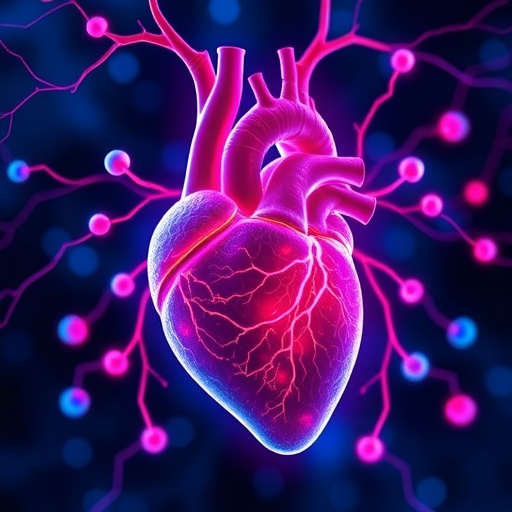
In a groundbreaking stride toward addressing the dire scarcity of therapeutic options for pediatric patients suffering from severe cardiac dysfunction, researchers at the University of Bonn have unveiled a novel understanding of how early surgical interventions may ignite the heart’s intrinsic regenerative prowess. This revelation stems from meticulous investigations into pulmonary artery constriction—a surgical technique that strategically imposes pressure overload on the neonatal heart, thereby “conditioning” it to enhance its performance. While initially promising clinical interventions inspired this approach, the biological underpinnings remained enigmatic until now.
The human heart is an extraordinary organ, primarily responsible for supplying oxygenated blood throughout the body. Its efficiency and resilience are critical for sustaining life. However, cardiovascular diseases, particularly heart failure, persist as the paramount cause of mortality worldwide. The challenges are amplified in pediatric cardiology, especially for children diagnosed with dilated cardiomyopathy (DCM), a condition marked by an enlarged and weakened heart muscle resulting in compromised pumping capacity. Until recent years, treatment modalities for these young patients were lamentably limited, underscoring an urgent need for innovative solutions.
Pulmonary artery banding, a pioneering surgical technique, has entered clinical practice as a calculated method to induce adaptive stress or “training” within the heart muscle. This procedure involves constricting the pulmonary artery to elevate ventricular pressure, thereby stimulating cardiac remodeling. Yet, clinical application has been restricted to a handful of specialized centers, largely due to an incomplete understanding of the mechanistic biology governing its efficacy. Addressing this knowledge gap, the interdisciplinary team from the Institute of Physiology I and the Department of Neonatology and Pediatric Intensive Care Medicine embarked on rigorous experimental inquiries.
Utilizing a neonatal mouse model, the researchers ingeniously simulated pressure overload either in the right or left ventricle shortly after birth—a critical developmental window characterized by cellular plasticity. Their observations revealed a remarkable phenomenon: the induced pressure not only augmented cellular proliferation in the directly affected ventricle but also elicited synchronized regenerative activity in the contralateral ventricle. This bilateral response encompassed an increase in cardiomyocyte number driven by augmented mitotic activity, as well as enhanced angiogenesis, resulting in the formation of new microvascular networks.
This discovery of “ventricular crosstalk” – a hitherto unidentified inter-ventricular communication mechanism – revolutionizes our understanding of cardiac physiology. The ventricles, though functionally distinct, appear to engage in a dynamic dialog, enabling a coordinated growth response to biomechanical stimuli. First author Dr. Fabian Ebach emphasized that the contralateral ventricle’s response was robust regardless of which ventricle underwent the pressure challenge, illuminating a systemic mode of cardiac adaptation rather than isolated remodeling.
Temporal specificity emerged as another crucial factor in the effectiveness of this regenerative mechanism. When the pressure overload was imposed beyond the neonatal period, specifically at seven days post-birth, the heart’s response shifted from cellular proliferation to hypertrophic growth—where existing cardiac muscle cells expand in size without dividing. This form of growth, common in many cardiac pathologies, often leads to maladaptive remodeling and progressive pump failure, highlighting a narrow window for therapeutic intervention. Hence, early postnatal timing is critical for leveraging the heart’s regenerative capacity.
Delving into the molecular and cellular landscape, the team’s histological and gene expression analyses indicated that pressure-induced stress activates a cascade of signaling pathways associated with cell cycle re-entry and angiogenic factor secretion. These pathways potentially involve mechano-sensitive molecules and growth factors that facilitate both myocardial regeneration and vascular remodeling, though precise molecular mediators are subjects of ongoing research. Understanding these signals could unlock new therapeutic avenues that mimic or amplify this natural cardiac conditioning.
The implications of these findings extend beyond pediatric cardiology. They beckon a paradigm shift in how myocardial regeneration is conceptualized, especially regarding the adult heart’s limited capacity for repair. By harnessing insights from neonatal heart plasticity, future strategies may endeavor to recreate similar regenerative environments in damaged adult hearts, offering hope for broader cardiac restorative therapies.
Moreover, this research reaffirms the vital role of experimental animal models in deciphering complex physiological phenomena that are challenging to study directly in humans. Neonatal mice, with their well-characterized developmental stages and genetic tractability, serve as invaluable proxies to uncover regenerative mechanisms potentially translatable to human medicine. Consequently, the study paves the way for subsequent investigations, including preclinical assessments and eventual clinical trials.
The surgical practice of pulmonary artery constriction itself, though mechanically simplistic, now assumes a multi-dimensional role—not merely imposing hemodynamic load but orchestrating an intricate biological response that accelerates cardiac regeneration. This insight provides critical rationalization for early surgical interventions in infants with dilated cardiomyopathy and possibly other congenital heart defects involving ventricular dysfunction.
In conclusion, the research conducted by Drs. Mona Malek Mohammadi, Fabian Ebach, and Julia Nicke illuminates a transformative approach to pediatric heart failure. By demonstrating that early-life cardiac stress can stimulate natural regenerative programs through inter-ventricular crosstalk, these scientists have opened a promising path toward improving survival and quality of life for afflicted children. Future exploration of the underlying molecular mechanisms and optimization of clinical protocols will be essential in translating these findings into standardized interventions.
This study was generously supported by the BONFOR program of the Medical Faculty of the University of Bonn and the German Heart Research Foundation, underscoring the importance of sustained funding in pioneering cardiology research. As cardiovascular morbidity continues to burden healthcare systems globally, such innovative insights herald a new era of regenerative medicine, where early targeted treatments harness the heart’s latent potential for self-repair and functional restoration.
Subject of Research: Animals
Article Title: Pressure Overload-Induced Ventricular Crosstalk Activates Regenerative Mechanisms in the Contralateral Ventricle in Neonatal Mice
News Publication Date: 22 April 2026
Web References:
https://www.ahajournals.org/journal/circ
http://dx.doi.org/10.1161/CIRCULATIONAHA.125.077779
References:
Fabian Ebach, Julia Nicke, Tianyuan Hu, Hemmen Sabir, Andreas Müller, Bernd K. Fleischmann, Mona Malek Mohammadi: Pressure Overload-Induced Ventricular Crosstalk Activates Regenerative Mechanisms in the Contralateral Ventricle in Neonatal Mice; Circulation, DOI: 10.1161/CIRCULATIONAHA.125.077779
Image Credits: University Bonn / R. Müller
Keywords: Cardiac regeneration, pulmonary artery constriction, neonatal heart, ventricular crosstalk, cardiomyocyte proliferation, angiogenesis, pediatric cardiology, dilated cardiomyopathy, heart failure, myocardial plasticity, heart muscle training, neonatal mice model
Tags: adaptive cardiac stress trainingcardiac muscle conditioning techniquesheart failure in childrenheart regeneration breakthroughsinnovative pediatric cardiology solutionsintrinsic cardiac regenerative mechanismsneonatal heart surgical interventionspediatric cardiac dysfunction treatmentspediatric dilated cardiomyopathy therapiespulmonary artery banding clinical applicationspulmonary artery constriction effectsUniversity of Bonn heart research