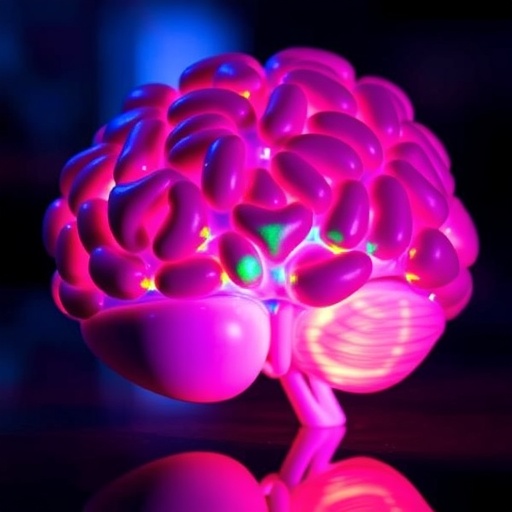
Scientists at Johns Hopkins Medicine have unveiled pioneering research demonstrating the potential of patient-derived brain organoids in advancing Alzheimer’s disease treatment and diagnosis. These intricate, lab-grown clusters of brain tissue, developed from the induced pluripotent stem cells (iPSCs) of Alzheimer’s patients, represent a groundbreaking platform to explore the disease’s pathology at an unprecedented molecular level. By mimicking the architecture and cellular composition of the human hindbrain—a critical brain region governing vital functions such as breathing, heart rate, and sleep—these organoids provide a highly relevant model to investigate drug responses tailored to individual patient profiles. This study highlights the emerging promise of organoid technology in customizing therapeutic approaches and unveiling novel biomarkers that may revolutionize Alzheimer’s care.
The research capitalizes on the ability to reprogram blood-derived cells from Alzheimer’s patients into iPSCs, effectively resetting their developmental state to generate multiple cell types found in the brain. The scientists cultivated self-organizing organoids that resemble the human hindbrain, concentrating on neurons responsible for serotonin secretion. Serotonin plays an integral role in regulating mood and cognition, both crucial factors impaired in Alzheimer’s neuropsychiatric symptoms. The organoids were meticulously validated to ensure that they recapitulate key hallmarks of Alzheimer’s at the molecular level, including altered protein expression related to neuronal communication, neuroinflammation, and pathways implicated in disease progression. These findings affirm the organoids as a physiologically relevant model capable of reflecting patient-specific disease states.
Next, the team examined how these patient-specific organoids respond to escitalopram oxalate, a selective serotonin reuptake inhibitor (SSRI) commonly prescribed to alleviate neuropsychiatric symptoms such as depression, anxiety, and agitation in dementia patients. The study revealed differential drug responses across the organoid cohort: some exhibited enhanced serotonin signaling and synaptic communication upon drug exposure, whereas others showed negligible changes. This interindividual variability in molecular response underscores the potential of organoid platforms to stratify patients based on their likelihood to benefit from SSRIs, paving the way for precision medicine in Alzheimer’s therapy where treatments are customized according to molecular signatures rather than a one-size-fits-all approach.
The research team also delved into the extracellular vesicles (EVs) secreted by these brain organoids, which emerged as a promising non-invasive source of biomarkers. These nanoscale vesicles transport proteins and genetic material reflecting the functional and pathological state of their parent cells. Analysis of EV protein cargo from Alzheimer’s organoids revealed dysregulated expression of proteins like RAB3A, NSF, and ATCAY, essential for synaptic vesicle trafficking and normal brain function. Significantly, treatment with escitalopram induced modulation of several proteins involved in serotonin signaling and synaptic pathways in subsets of organoids. This evidence suggests that EVs could function as “liquid biopsies,” allowing clinicians to monitor disease progression and treatment efficacy, an innovation that could transform diagnostic paradigms in neurodegenerative disorders.
The scale of this study is notable, with the generation and analysis of hundreds of hindbrain organoids derived from individual patients, possibly positioning it among the largest brain organoid Alzheimer’s studies to date. The breadth of this dataset provides robust statistical power to discern molecular phenotypes associated with drug responsiveness and disease state heterogeneity. It also enriches understanding of fundamental disease mechanisms, potentially identifying new therapeutic targets and pathways previously obscured in traditional two-dimensional cell culture or animal models. This work highlights how human organoids can overcome species differences and model complex brain circuits more faithfully.
Looking beyond current achievements, study lead Dr. Vasiliki Machairaki envisions engineering more sophisticated brain organoids integrating immune cells and vascular-like networks to better emulate the in vivo brain microenvironment. Such advances may enhance organoid maturity, support long-term modeling, and improve predictive accuracy for clinical translation. The inclusion of microglia and vasculature in organoids could illuminate the roles of neuroimmune interactions and blood-brain barrier dynamics in Alzheimer’s pathogenesis, areas critically relevant for decoding disease onset and progression. This next-generation organoid platform could serve as an indispensable tool for drug discovery and personalized therapy optimization.
An underpinning strength of this research lies in its utilization of patient-specific biological material, enabling direct study of Alzheimer’s heterogeneity. Alzheimer’s disease is notoriously multifaceted, with varying clinical presentations and progression patterns influenced by genetics and environmental factors. The ability to generate individualized organoids allows researchers to capture this diversity, fostering a more nuanced understanding of disease subtypes and molecular trajectories. Consequently, the study robustly supports the concept that effective Alzheimer’s treatments may require stratified approaches, tailored to the molecular and functional idiosyncrasies observed in distinct patient populations.
The integration of extracellular vesicle analysis further amplifies the study’s clinical relevance. By profiling the proteomic content of EVs before and after treatment, the researchers could detect molecular signatures predictive of therapeutic response. This approach opens new avenues for minimally invasive monitoring strategies, circumventing the challenges associated with direct brain tissue sampling. The prospect of liquid biopsies for neurodegenerative diseases offers clinicians a transformative diagnostic tool enabling early detection, real-time assessment of drug efficacy, and dynamic staging of disease progression, all of which are vital for effective patient management.
While current Alzheimer’s therapies primarily aim to manage symptoms without reversing neurodegeneration, the ability to predict individual treatment response marks a paradigm shift. By harnessing brain organoids and their secreted vesicles, this research lays the foundation for precision neuropsychiatry in Alzheimer’s care. It underlines the potential of SSRIs not merely as symptomatic treatments but as agents whose effectiveness can be forecasted at the molecular level, optimizing therapeutic regimens and minimizing exposure to ineffective drugs. This personalized approach aspires to reduce the immense emotional and economic burden Alzheimer’s imposes on patients and caregivers.
The Johns Hopkins team’s commitment to translational research is further underscored by their collaborative framework involving renowned institutions and funding agencies. Supported by the National Institutes of Health and foundations dedicated to Alzheimer’s research, the interdisciplinary effort draws on expertise ranging from genetic medicine and neurology to analytical chemistry and clinical pharmacology. This collective endeavor exemplifies the critical intersection of basic science and clinical application necessary to propel Alzheimer’s research toward tangible therapeutic breakthroughs.
This investigation into brain organoids’ utility also contributes to a burgeoning scientific consensus regarding advanced tissue models in neuroscience. Traditionally limited by in vivo complexity and ethical constraints on human brain research, the advent of organoid technology offers an unprecedented window into human-specific neurobiology. As demonstrated here, brain organoids can faithfully reproduce tissue organization, cell diversity, and disease phenotypes, thereby providing a versatile experimental system that could supplant or complement animal models in Alzheimer’s research and beyond.
In summary, this study not only illuminates the heterogeneity and complexity of Alzheimer’s disease but also charts innovative paths for diagnosis and individualized treatment through brain organoid technology and extracellular vesicle biomarkers. By modeling disease mechanisms and drug responses at a patient-specific level, the research heralds a new era of precision medicine in neurodegenerative disorders. The prospect of using brain organoids to tailor therapeutic strategies and non-invasively monitor disease progression offers hope for improved clinical outcomes and enhanced quality of life for patients suffering from this devastating condition.
Subject of Research: Patient-derived brain organoids and extracellular vesicles as models for Alzheimer’s disease diagnosis and drug response.
Article Title: Patient-Derived Brain Organoids Reveal Molecular Signatures of Alzheimer’s Disease and Differential Response to Antidepressant Treatment.
News Publication Date: April 8, 2024.
Web References: Johns Hopkins Medicine research announcement and Alzheimer’s & Dementia journal publication.
Image Credits: Machairaki lab, Johns Hopkins Medicine.
Keywords: Alzheimer’s disease, brain organoids, induced pluripotent stem cells, extracellular vesicles, selective serotonin reuptake inhibitors, escitalopram oxalate, neuropsychiatric symptoms, biomarker discovery, precision medicine, neurodegenerative diseases, synaptic signaling, personalized treatment.
Tags: Alzheimer’s disease diagnosisAlzheimer’s molecular pathologybiomarkers for Alzheimer’s diseasedrug testing on brain organoidshindbrain organoid researchinduced pluripotent stem cells (iPSCs)lab-grown brain organoidsneuropsychiatric symptoms of Alzheimer’sorganoid technology in neurosciencepatient-derived brain modelspersonalized Alzheimer’s treatmentserotonin neurons in Alzheimer’s