As Europe commemorates European Immunization Week (EIW) 2026, the European Centre for Disease Prevention and Control (ECDC) is highlighting a significant advancement in the fight against human papillomavirus (HPV)-related cancers. The latest ECDC data reveal a remarkable milestone: every country within the European Union and European Economic Area (EU/EEA) now includes HPV vaccination for both adolescent girls and boys within their national immunisation schedules. This unified approach marks a critical evolution in Europe’s comprehensive cancer prevention strategies.
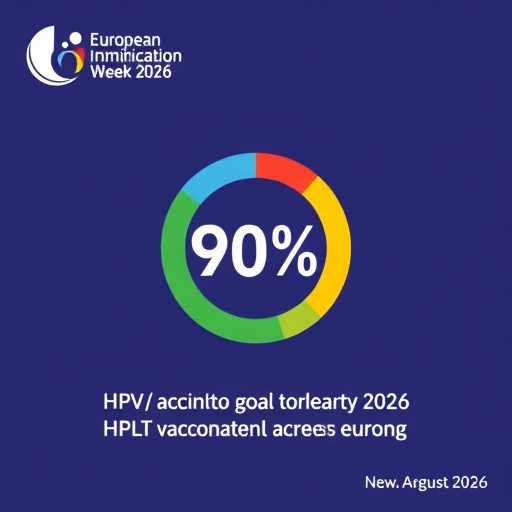
The implications of this policy harmonization transcend mere recommendations. It signals a coordinated public health endeavor aimed at curbing HPV transmission early in life, thereby preventing the development of HPV-associated malignancies, predominantly cervical cancer. Notably, nations such as Iceland, Portugal, and Norway have already succeeded in meeting the EU Council’s 2024 target of achieving 90% HPV vaccine coverage among girls by the age of 15. This level of coverage is essential to build herd immunity and drastically reduce the virus’s prevalence in the population.
The efficacy of HPV vaccination programs has been extensively documented over the past 15 years since their implementation in Europe. Large-scale epidemiological studies emerging from Sweden, the Netherlands, and Denmark, complemented by global research, consistently demonstrate pronounced declines in the prevalence of high-risk HPV infections and precancerous cervical lesions among vaccinated cohorts. These epidemiological trends foreshadow significant reductions in cervical cancer incidence, a testament to the vaccine’s long-term public health impact.
Among the most striking evidence is the Swedish longitudinal analysis highlighting that vaccination before 17 years of age correlates with an 88% reduction in cervical cancer incidence. Such findings underscore the critical importance of vaccinating at an age prior to HPV exposure, optimizing the vaccine’s protective capacity. Further, this sustained protection, observed in extended follow-up periods, indicates not just immediate benefits but persistent immunity and population-level cancer risk mitigation.
Central to these vaccination successes are the structural elements of immunisation delivery. The ECDC report accentuates the value of school-based vaccination programs, which have demonstrated superior uptake levels across diverse European settings. This is attributed to the accessibility, convenience, and systematic reach that educational institutions provide, enabling equitable vaccine dissemination to both females and males during a critical window of susceptibility.
However, vaccination alone, while transformative, is not sufficient to entirely eliminate cervical cancer. Given the diversity of oncogenic HPV genotypes, screening protocols remain indispensable complementary strategies. Screening enables the detection and treatment of precancerous lesions caused by HPV types not covered by current vaccines, thereby forming a multi-layered defense against cervical carcinogenesis.
In line with enhancing immunisation efforts and transparency, the ECDC has unveiled an innovative vaccination coverage dashboard. This digital platform offers real-time, harmonised data on HPV vaccination, alongside other vaccine-preventable diseases such as hepatitis B, measles, and rubella. By providing stakeholders and policymakers with immediate access to granular data, the dashboard empowers evidence-based decision-making aimed at identifying gaps, improving coverage, and optimizing immunisation strategies across Europe.
Vaccination campaigns mandate persistent, annual commitment to uphold immunity within populations. Disparities in vaccine access and consumption pose ongoing challenges, especially among vulnerable groups who may be underserved by conventional healthcare frameworks. The ECDC emphasizes that sustained investment, alongside targeted outreach and education, is vital to ensuring no demographic is left unprotected.
The prospect of cervical cancer elimination within the EU/EEA now seems within reach, contingent upon maintaining high HPV vaccination coverage and robust screening adherence. The integration of vaccination into public health frameworks epitomizes a proactive, preventive medicine paradigm, potentially transforming the epidemiology of HPV-related cancers across generations.
The upcoming European Immunization Week activities symbolize a broader call to action — a reminder that collective political will, resource allocation, and societal engagement are prerequisite to achieving and sustaining public health victories. As vaccine science advances, Europe’s model offers a template for global efforts to reduce the burden of HPV-associated cancers and other preventable infectious diseases.
Those interested in advancing their understanding of these developments are encouraged to explore the updated ECDC resources. This includes in-depth reports, the Atlas of Infectious Diseases, and interactive learning tools that provide comprehensive insights into vaccination outcomes and strategies within Europe. Furthermore, the planned ECDC-hosted events during EIW 2026 offer an unparalleled forum for knowledge exchange and interdisciplinary dialogue.
Ultimately, the current momentum in HPV vaccination coverage exemplifies what can be achieved when science, policy, and community engagement align. As research continues to strengthen the evidence base and improve vaccine technologies, Europe’s experience provides both inspiration and a strategic blueprint for accelerating cancer prevention worldwide.
Subject of Research: HPV vaccination programs and their impact on cervical cancer prevention in Europe.
Article Title: Europe Makes Historic Strides Toward HPV Vaccination and Cervical Cancer Elimination During Immunization Week 2026.
News Publication Date: 2026 European Immunization Week.
Web References:
European Centre for Disease Prevention and Control (ECDC) European Immunization Week 2026 page: https://www.ecdc.europa.eu/en/news-events/european-immunization-week-2026-every-generation-vaccines-work
ECDC vaccination coverage dashboard: https://vaccination-coverage.ecdc.europa.eu/
EU Council Recommendation on HPV vaccination coverage targets: https://data.consilium.europa.eu/doc/document/ST-10128-2024-INIT/en/pdf
Keywords: HPV vaccination, cervical cancer prevention, European Union, immunisation programmes, vaccine coverage, epidemiology, public health, cancer elimination, school-based vaccination, vaccine-preventable diseases.
Tags: cancer prevention strategies Europecervical cancer prevention EuropeECDC HPV vaccination dataEU HPV vaccination policiesEuropean Immunization Week 2026herd immunity through HPV vaccinationHPV vaccination coverage in EuropeHPV vaccine for adolescentsHPV vaccine success storiesHPV-related cancer reductionNordic countries HPV vaccinationpublic health HPV initiatives