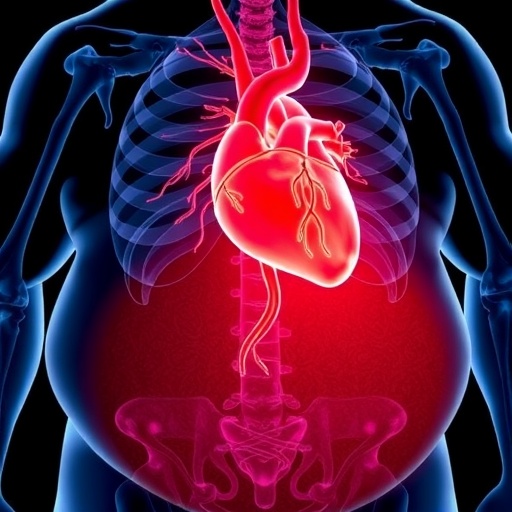
In recent years, the intersection of sarcopenia and obesity, often termed sarcopenic obesity, has emerged as a critical area of research due to its profound implications on cardiovascular health and mortality. The nuanced interaction between diminished muscle mass and excess adiposity presents a particularly insidious health risk, often overlooked in conventional diagnostic criteria that assess these conditions independently. A groundbreaking study conducted by Xu, Shi, Yu, and colleagues published in BMC Geriatrics in 2026 delves into the evolving definitions of sarcopenic obesity and elucidates its strong correlation with cardiovascular disease and mortality outcomes.
Sarcopenic obesity represents a complex syndrome where two major metabolic derangements—loss of skeletal muscle mass and function combined with excessive fat accumulation—coexist. This dual condition exacerbates the risk profile for patients far beyond that posed by either sarcopenia or obesity alone. The intricate pathophysiology involves inflammatory pathways, insulin resistance, and metabolic dysregulation that synergistically deteriorate cardiovascular integrity, leading to higher mortality rates.
One of the pivotal challenges highlighted in the study is the lack of a unified, standardized definition of sarcopenic obesity. Various diagnostic criteria exist worldwide, leveraging diverse thresholds for muscle mass, strength, and adiposity measurements. This heterogeneity has historically impeded the ability to effectively identify patients at risk and to stratify severity for clinical interventions. The study by Xu et al. synthesizes existing definitions, advocating for a refined framework that integrates advanced imaging techniques and biochemical markers to improve diagnostic accuracy.
The researchers underscore the necessity of precise quantitative assessments utilizing dual-energy X-ray absorptiometry (DEXA), bioelectrical impedance analysis (BIA), and computed tomography (CT) imaging. These tools permit accurate delineation of muscle and fat compartments, critical to diagnosing sarcopenic obesity. Moreover, incorporating muscle strength assessments, such as handgrip dynamometry, and physical performance evaluations, like gait speed, further enhances prognostic utility, bridging imaging with functional outcomes.
Mechanistically, sarcopenic obesity triggers a cascade of detrimental effects on the cardiovascular system. Excess adipose tissue, particularly visceral fat, secretes pro-inflammatory cytokines such as interleukin-6 and tumor necrosis factor-alpha, driving systemic inflammation. Simultaneously, the depletion of contractile muscle mass diminishes metabolic flexibility, amplifies insulin resistance, and impairs glucose homeostasis. These changes accelerate endothelial dysfunction, promote atherosclerosis, and increase the incidence of heart failure.
The study’s epidemiological data draw from extensive cohorts, revealing that individuals diagnosed with sarcopenic obesity exhibit significantly higher rates of coronary artery disease, stroke, and hypertensive heart disease. Moreover, mortality analyses demonstrate that this population experiences a markedly elevated risk of all-cause and cardiovascular-specific death, independent of traditional risk factors such as hypertension and dyslipidemia. These associations persist after adjustments for age, sex, and comorbidities, reinforcing the syndrome’s role as an independent predictor of adverse cardiovascular outcomes.
Importantly, the study critiques the prevalent clinical approach that often compartmentalizes treatment strategies for obesity and sarcopenia separately. Such siloed management fails to address the synergistic pathophysiology of sarcopenic obesity, undermining the efficacy of interventions. Xu and colleagues advocate for integrative therapeutic regimens that simultaneously target muscle mass restoration and adiposity reduction, incorporating resistance training, nutritional optimization, and pharmacological agents where appropriate.
Nutritional interventions emphasized include high-protein diets enriched with leucine, omega-3 fatty acids, and vitamin D supplementation to potentiate muscle anabolism and mitigate inflammation. Exercise protocols geared towards resistance and endurance training not only facilitate hypertrophic muscle adaptation but also improve cardiovascular fitness and metabolic parameters. Collectively, these multifaceted strategies promise to attenuate the progression of sarcopenic obesity and its cardiovascular sequelae.
The research also explores emerging pharmacotherapies targeting molecular pathways implicated in adipose tissue inflammation and muscle degradation. Agents modulating myostatin, a negative regulator of muscle growth, and novel anti-inflammatory compounds show potential in preclinical and early clinical trials. These innovative treatments, when combined with lifestyle modifications, may revolutionize the management paradigm of sarcopenic obesity, offering hope for improved patient outcomes.
Beyond individual health impacts, the study draws attention to the broader public health implications of sarcopenic obesity, especially in aging populations globally. As demographic shifts usher in increased longevity, the prevalence of sarcopenic obesity is anticipated to surge, placing additional burdens on healthcare systems. Early detection through refined diagnostic criteria and proactive intervention strategies must become a priority to curb the impending epidemic and reduce cardiovascular morbidity and mortality.
The authors also call for increased awareness among clinicians and policymakers regarding the significance of sarcopenic obesity. Educational programs and clinical guidelines must evolve to incorporate the syndrome’s definition and management, promoting multidisciplinary collaboration among geriatricians, cardiologists, dietitians, and physiotherapists. Such integrated care models are essential to address the multifaceted nature of sarcopenic obesity effectively.
Technological advancements in imaging and biomarker discovery further empower clinicians to monitor disease progression and therapeutic response with unprecedented precision. The integration of artificial intelligence in analyzing complex datasets may facilitate personalized medicine approaches tailored to individual risk profiles. Xu et al.’s study serves as a clarion call for leveraging these innovations to enhance outcomes in sarcopenic obesity.
In summary, the comprehensive investigation by Xu and colleagues marks a significant milestone in our understanding of sarcopenic obesity. By clarifying definitional ambiguities and linking the syndrome to cardiovascular disease and mortality, it underscores the urgent need for refined diagnostic frameworks and holistic management strategies. Addressing sarcopenic obesity holds the promise not only of reducing cardiovascular complications but also of improving overall quality of life among aging populations worldwide.
As the medical community grapples with the complexities of this condition, ongoing research spurred by studies like this one will be pivotal in unraveling the underlying mechanisms and optimizing clinical interventions. The infectious importance of recognizing sarcopenic obesity as a distinct clinical entity cannot be overstated, given its profound impact on global health outcomes.
The findings presented open avenues for future studies to explore longitudinal interventions, genetic predispositions, and the interplay with other metabolic syndromes. As sarcopenic obesity gains prominence, it beckons a paradigm shift from reactive to preventive medicine, emphasizing early identification and comprehensive care to curb its cardiovascular and mortality toll.
Subject of Research: Sarcopenic obesity definitions and their association with cardiovascular disease and mortality
Article Title: Sarcopenic obesity definitions and their association with cardiovascular disease and mortality
Article References:
Xu, Q., Shi, R.F., Yu, X.J. et al. Sarcopenic obesity definitions and their association with cardiovascular disease and mortality. BMC Geriatr (2026). https://doi.org/10.1186/s12877-026-07433-7
Image Credits: AI Generated
Tags: diagnostic challenges in sarcopenic obesitydual metabolic syndrome and heart diseasegeriatric sarcopenic obesity researchimplications of sarcopenic obesityinflammatory pathways in sarcopenic obesityinsulin resistance and cardiovascular mortalitymuscle mass loss impact on heart diseaseobesity-related metabolic dysregulationsarcopenia and obesity combined health effectssarcopenic obesity and cardiovascular risksarcopenic obesity mortality outcomesstandardized criteria for sarcopenic obesity diagnosis