In the evolving landscape of neonatal respiratory care, the nuances of Continuous Positive Airway Pressure (CPAP) therapy have taken center stage, challenging previous assumptions about the homogeneity of CPAP devices. A groundbreaking study authored by Aly and Mohamed, soon to be published in the Journal of Perinatology, exposes the critical variability in device architectures and interface mechanics that directly impact therapeutic outcomes. As the neonatal community seeks to optimize respiratory support for preterm and critically ill infants, this research underscores the imperative for a deeper understanding of the technological intricacies underlying CPAP systems.
Continuous Positive Airway Pressure, long regarded as a cornerstone in managing respiratory distress syndrome and other pulmonary complications in neonates, is generally viewed as a uniform intervention. However, this new analysis dismantles that notion by revealing that not all CPAP devices deliver pressure and flow in an identical manner. The study meticulously compares different CPAP architectures, focusing on how their mechanical designs and interface interactions influence the pressure stability, patient comfort, and overall efficacy of the therapy.
One of the central themes elucidated in this research is the distinction between bubble CPAP, variable flow CPAP, and newer generation devices that integrate advanced sensor technologies. Each system’s mechanism of maintaining airway pressure differs significantly; bubble CPAP relies on submerged exhalation tubes creating oscillatory pressure waves, while variable flow devices utilize dynamic flow adjustments through sophisticated valves and sensors. These differences are not merely academic—they translate into varied physiological responses, with certain designs supporting better alveolar recruitment and gas exchange than others.
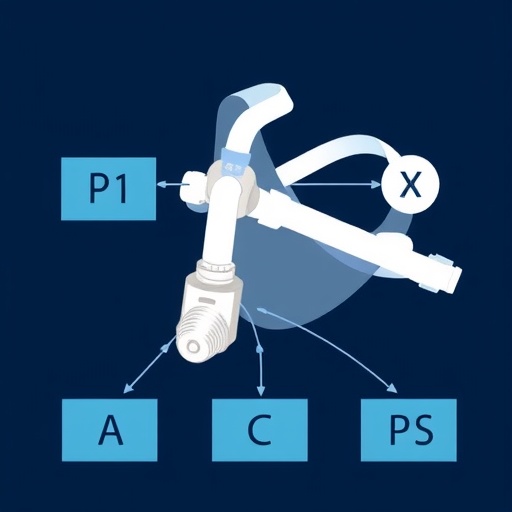
Further adding complexity, the interface mechanics—the manner in which CPAP devices connect and deliver pressure to the infant’s airway—have been shown to have profound implications on comfort, skin integrity, and effective pressure transmission. The study spotlights nasal prongs versus nasal masks, highlighting that material flexibility, fit, and the seal’s consistency can markedly alter therapeutic performance. Incorrect or ill-fitting interfaces can lead to pressure leaks, increased work of breathing, and even nasal injury, factors that may be overlooked in clinical protocols focusing solely on device selection.
Aly and Mohamed’s investigative scope also extends into the realm of flow dynamics, emphasizing how subtle variations in the architecture of tubing and connectors influence the constancy and magnitude of positive airway pressure. The research discusses the damping effect seen in longer or more compliant tubing, which can attenuate pressure delivery, resulting in suboptimal support. This insight invites a reconsideration of current neonatal care setups, which often default to standard equipment without accommodating these critical mechanical differences.
The study investigates patient-device interaction through advanced computational modeling and bench testing, providing a granular view of pressure fluctuations within different CPAP systems under variable respiratory conditions. This approach reveals that some devices maintain consistent airway pressure despite fluctuations in infant breathing patterns, while others exhibit significant variability that could compromise respiratory support during periods of apnea or hypoventilation.
In parallel, the article delves into the implications of these findings for clinical practice, urging neonatologists and respiratory therapists to tailor CPAP selection not just based on availability or cost but through a nuanced understanding of device mechanics and patient-specific needs. The authors call for more comprehensive training to recognize how device design influences outcomes and propose potential updates to clinical guidelines that integrate these engineering insights.
Moreover, the research challenges manufacturers to innovate beyond traditional designs, advocating for the integration of real-time feedback mechanisms and adaptive interfaces that can adjust pressure parameters dynamically, ensuring optimal support tailored to individual neonates’ respiratory patterns. This vision for next-generation CPAP could revolutionize neonatal respiratory care, reducing complications and improving survival and long-term pulmonary outcomes.
Behind these technical revelations lies a broader narrative about patient safety and the ethical imperative to provide the best possible care for the most vulnerable patients. Aly and Mohamed highlight that suboptimal CPAP application, often stemming from ignorance about device differences, may inadvertently contribute to avoidable morbidity. Their work sparks a call to action across healthcare systems to prioritize device evaluation and education.
Importantly, the study’s methodology, blending rigorous engineering analysis with clinical insight, sets a precedent for future interdisciplinary research in medical device technology. By bridging the gap between mechanical design and patient-centered outcomes, this work offers a template for enhancing many forms of biomedical support equipment beyond CPAP.
As awareness of these device-specific factors grows, the neonatal respiratory care community can anticipate a paradigm shift, moving away from a one-size-fits-all approach toward precision respiratory support. Such individualized care, informed by an intimate knowledge of device mechanics, holds the promise of dramatically improving neonatal health trajectories.
In summary, Aly and Mohamed’s forthcoming article shines a spotlight on a critical yet underappreciated facet of neonatal respiratory therapy. Not all CPAP devices are created equal, and this differentiation matters profoundly in clinical outcomes. Their compelling evidence advocates for a reevaluation of current practices, a call for innovation, and a renewed focus on the intersection of technology and patient care.
This pivotal research opens avenues for further exploration, such as longitudinal studies examining how device-specific characteristics influence long-term respiratory health, and clinical trials testing the efficacy of adaptive CPAP interfaces. It lays a robust foundation on which health professionals and engineers alike can build to enhance neonatal care.
In the face of these insights, neonatal intensive care units worldwide are encouraged to assess their CPAP equipment critically, train staff rigorously, and collaborate with manufacturers to embrace technological advancements. The ultimate beneficiaries of this concerted effort are the tiniest patients, whose fragile lungs depend on the subtle yet crucial differences in CPAP device architecture and interface mechanics elucidated by this landmark study.
Subject of Research: Neonatal Continuous Positive Airway Pressure (CPAP) device design and interface mechanics.
Article Title: Not all CPAP is created equal: device architecture and interface mechanics.
Article References: Aly, H., Mohamed, M.A. Not all CPAP is created equal: device architecture and interface mechanics. Journal of Perinatology (2026). https://doi.org/10.1038/s41372-026-02680-3
Image Credits: AI Generated
DOI: 10.1038/s41372-026-02680-3
Tags: advanced sensor technology in CPAPbubble CPAP vs variable flow CPAPcontinuous positive airway pressure therapyCPAP device architectureCPAP patient comfort optimizationCPAP pressure stabilityCPAP therapeutic outcomesneonatal CPAP interface mechanicsneonatal respiratory careneonatal respiratory device performanceneonatal respiratory distress syndrome treatmentpreterm infant respiratory support